



Anglo Burmese Table
An anglo burmese table brings dense colonial carving and rich tropical hardwoods into domestic spaces.
Anglo Burmese Table
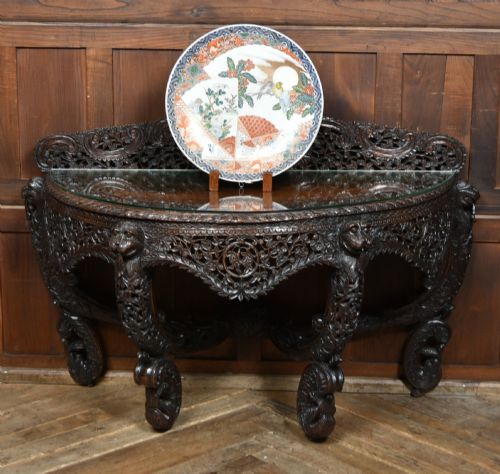
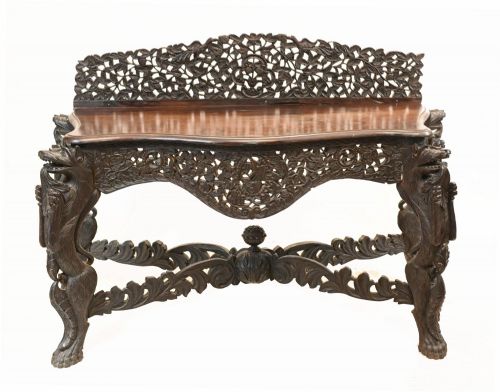
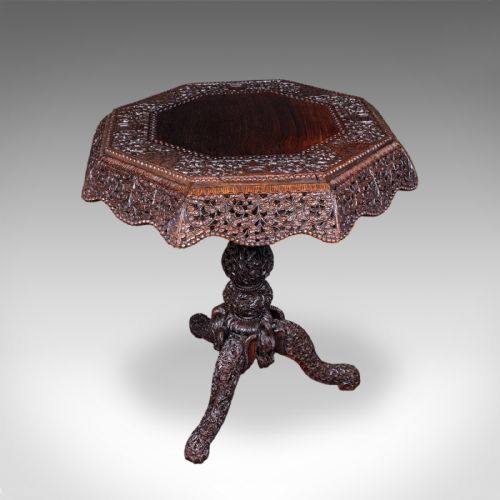
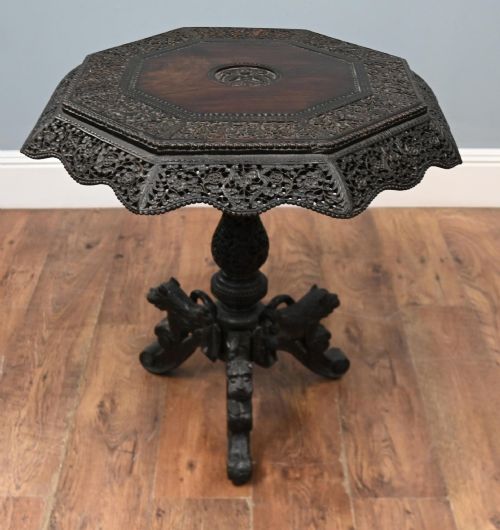
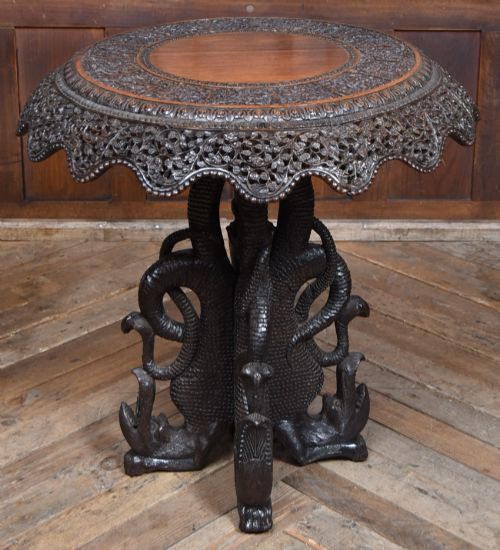
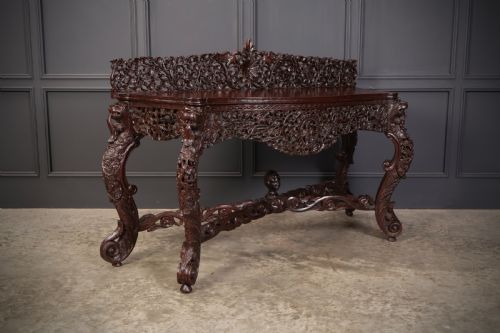
An anglo burmese table bridges British colonial interior design with traditional Burmese woodworking traditions. These pieces include side tables, occasional tables, console tables, and multi-tiered buffets dating primarily from the nineteenth century. The form reflects the aesthetic taste of the British in Burma who commissioned furniture combining local craftsmanship with familiar European furniture shapes.
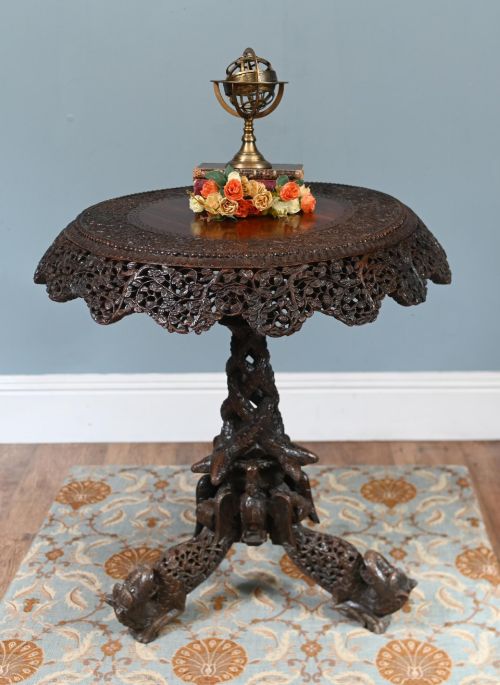
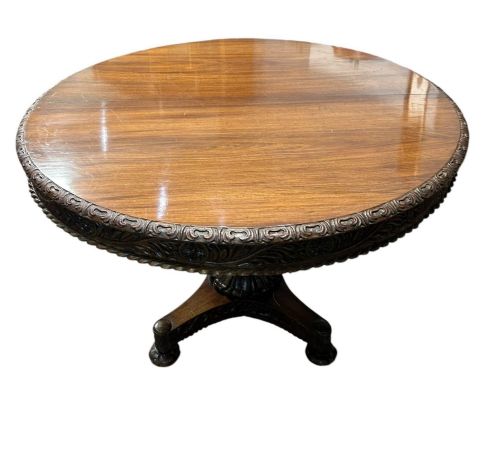
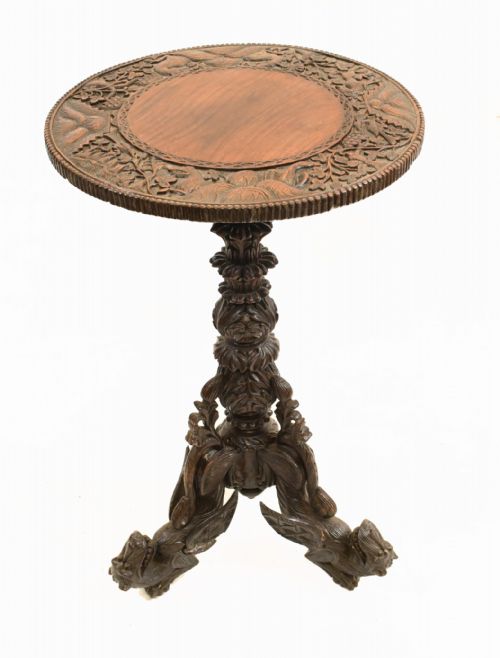
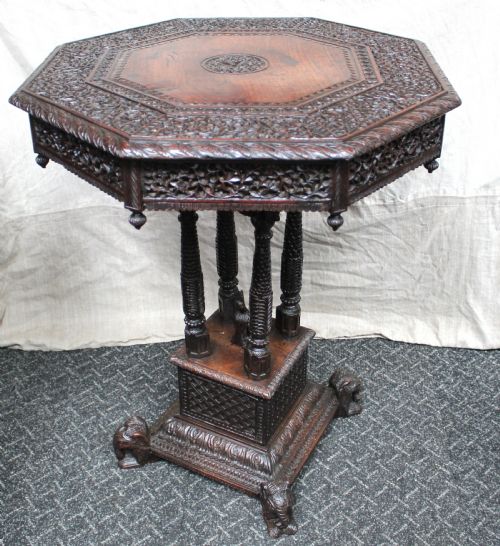
Most examples found here are side tables, tilt-top tables, and occasional tables featuring elaborate hand-carved surfaces. Makers utilised dense tropical woods and incorporated regional motifs such as elephant legs and deep foliate relief. These furnishings served practical domestic roles in colonial households while displaying intricate orientalist ornamentation.
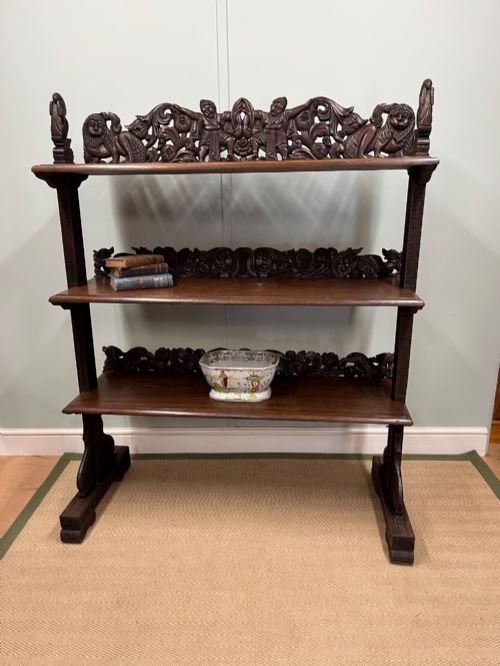
The construction spans several decades of the nineteenth and early twentieth centuries, encompassing Victorian interpretations and vernacular styles. Pieces range from simple folding book stands to heavily carved round tables and three-tier buffets. Each item demonstrates the distinct cultural exchange between British domestic demand and Burmese artisan skill.
Quality factors
The depth and clarity of the hand-carving separate superior examples from simpler production. Master carvers achieved crisp undercutting and balanced composition across complex surfaces like elephant legs and tiered buffets, whereas lesser pieces display shallow or repetitive stamping. The precision of the joinery and the structural integrity of folding mechanisms also distinguish high-grade items.
Material selection plays a primary role in overall standard, with rich figured padauk and seasoned teak commanding greater appreciation than plain secondary woods. The condition of the original lacquer, the preservation of fine bone details, and the proportional harmony of the overall silhouette determine the standing of each piece.
Anglo Burmese Table Retail Price Guide 2026
Typical asking prices for anglo burmese table among the pieces listed under this phrase on Sellingantiques today, from the lower quarter to the upper quarter. They describe what is for sale here now, not the wider market.
Object types include console tables, tilt-top tables, and multi-tier buffets alongside standard side tables.
The Anglo Burmese Table Glossary
- Padauk wood
- A dense tropical timber valued for its reddish-brown colour and durability. It provides a stable base for intricate carving.
- Tilt top table
- A table featuring a mechanism that allows the surface to pivot vertically when not in use. This design saved space in colonial interiors.
- Tiered buffet
- A piece of furniture featuring multiple horizontal surfaces supported by carved columns. These were utilised for display and service.
- Lacquer
- A protective and decorative coating applied to wood surfaces. It provides a smooth sheen and guards against humidity.
Anglo Burmese Table: Frequently Asked Questions
How do I date an anglo burmese table?
Dating relies on stylistic clues, construction methods, and recorded periods within nineteenth-century production. Victorian examples often match specific British domestic formats of the era.
Changes in carving depth and the introduction of later lacquered finishes in the twentieth century help narrow the timeline further.
What wood was used for these tables?
Artisans primarily employed teak and padauk wood due to their local availability and structural strength. These dense hardwoods resisted tropical conditions and accepted deep relief carving.
Secondary woods and occasional bone elements also appear depending on the specific workshop origin.
Were these tables made for export?
British officers, administrators, and merchants residing in Burma commissioned or purchased these furnishings for colonial use and eventual return to Britain. The forms mirrored familiar European tables while incorporating local motifs.
This exchange created a distinct category of Anglo-Burmese and Anglo-Indian decorative arts.
How do I care for a carved wooden table?
Maintain stable indoor humidity levels and keep the wood away from direct heat sources to prevent cracking. Dust carved recesses regularly with a soft brush.
Avoid harsh chemical polishes and instead use appropriate natural waxes sparingly to preserve the timber and lacquer.