
Aneroid Weather Barometer
An aneroid weather barometer brings precision and style to a room, measuring atmospheric pressure without the hassle of mercury.
Aneroid Weather Barometer
When you search for an aneroid weather barometer, you encounter domestic scientific instruments designed to measure atmospheric changes and forecast the weather. The selection spans domestic wall pieces, desk items, and portable pocket versions.
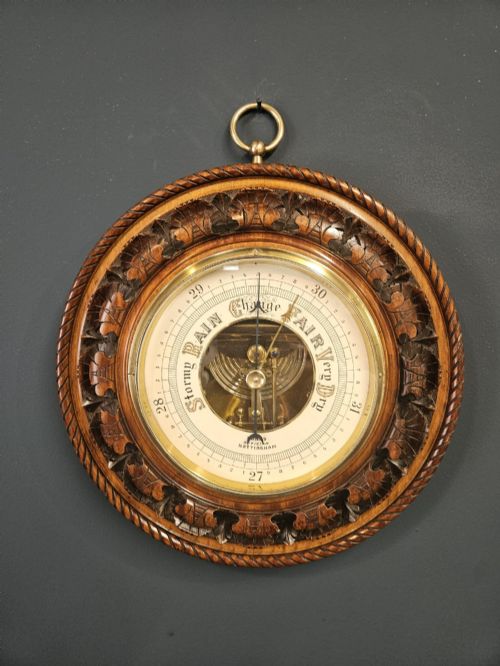
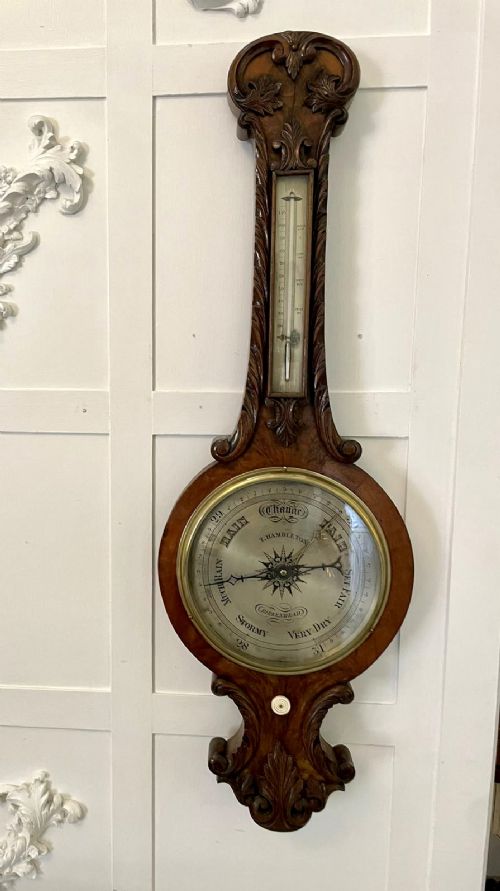
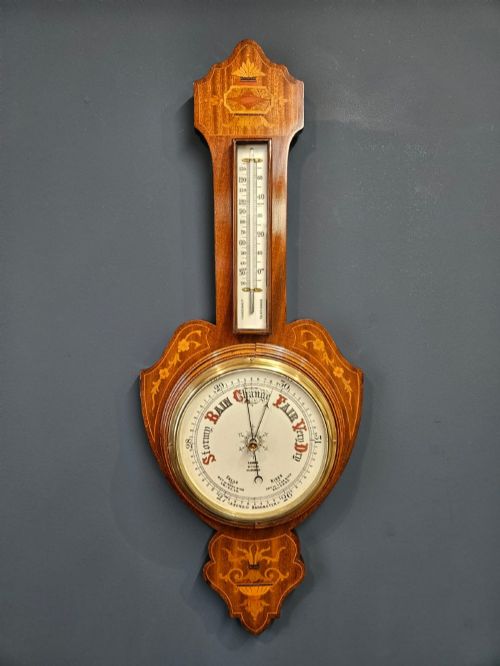
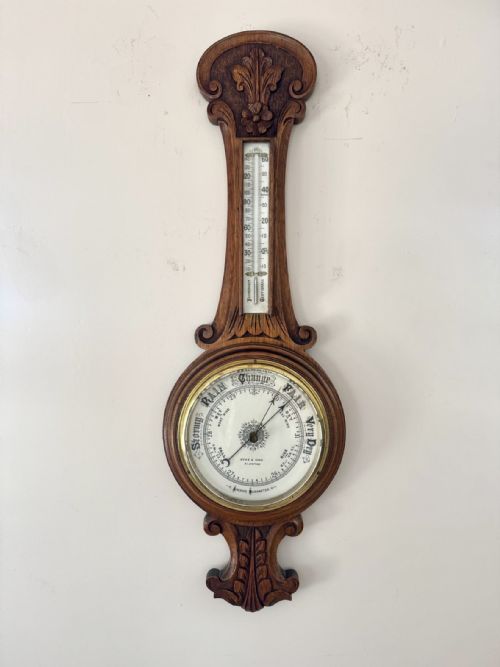
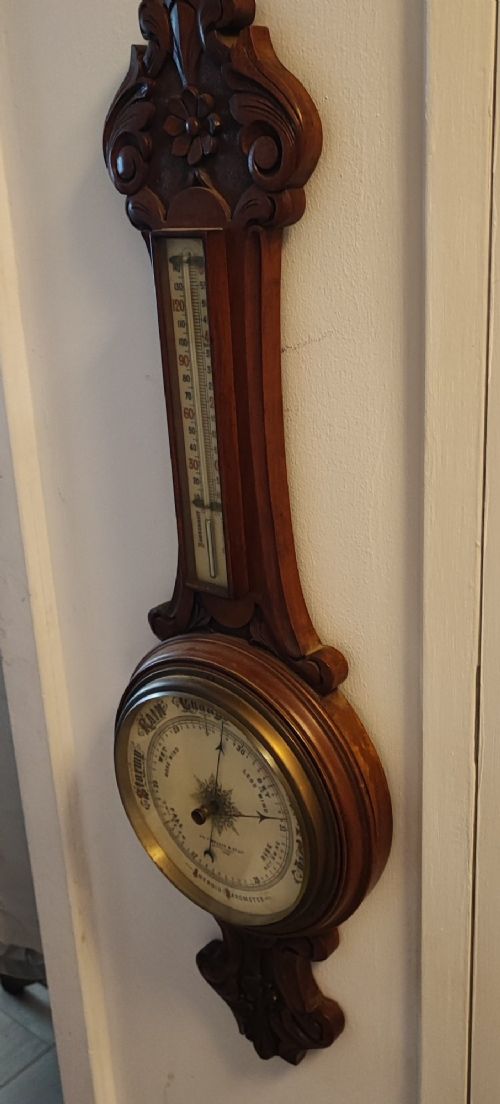
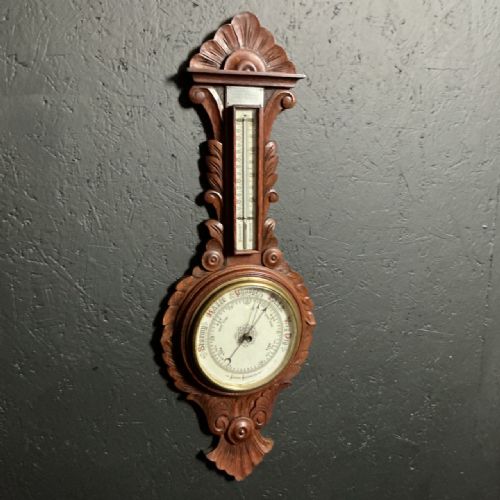
You are most likely to meet Victorian and Edwardian wall-mounted banjo barometers framed in oak or mahogany. These examples often incorporate thermometers alongside the main dial.
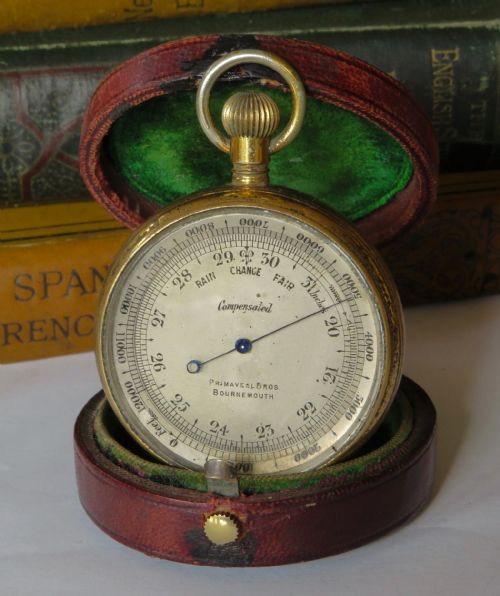
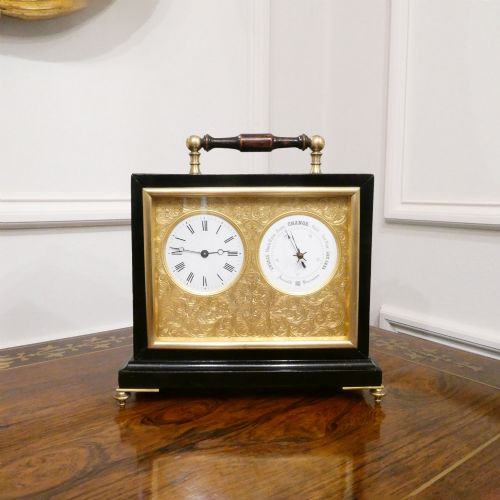
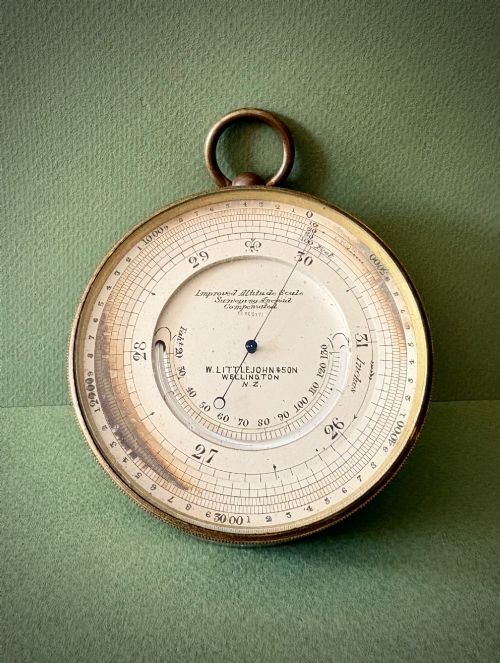
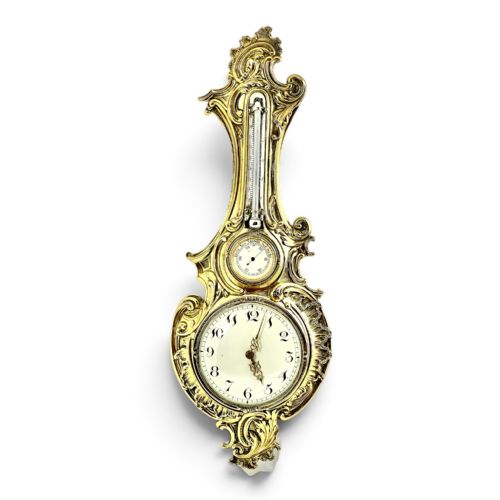
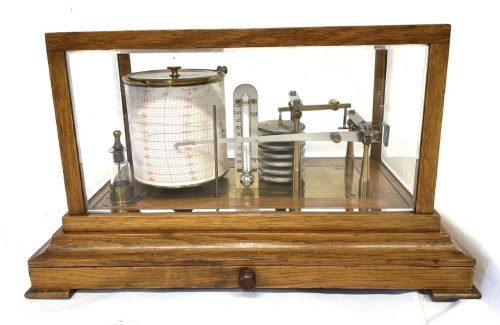
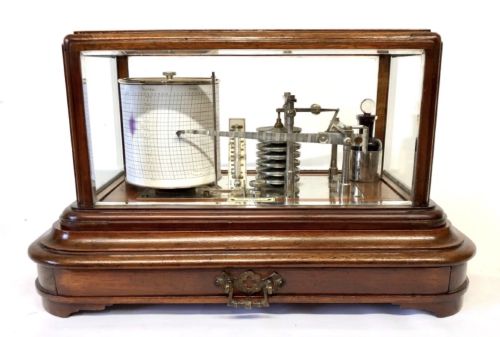
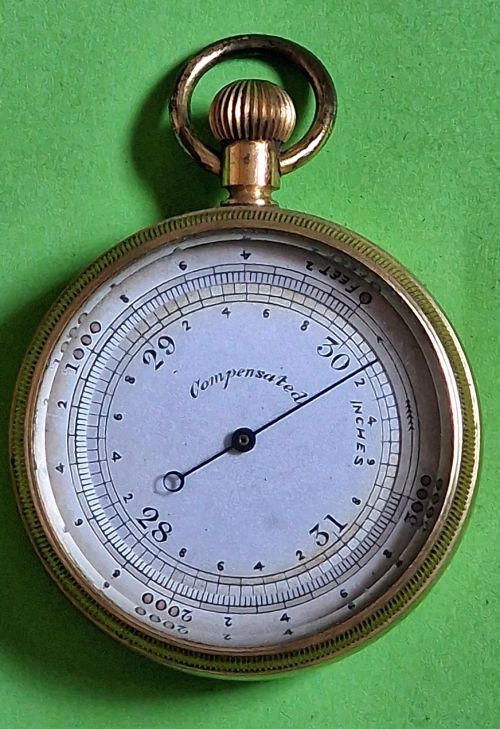
The category also embraces compact pocket barometers, desk mantel clocks combined with barometers, and mechanical barographs housed in glazed wooden cases.
Materials and construction
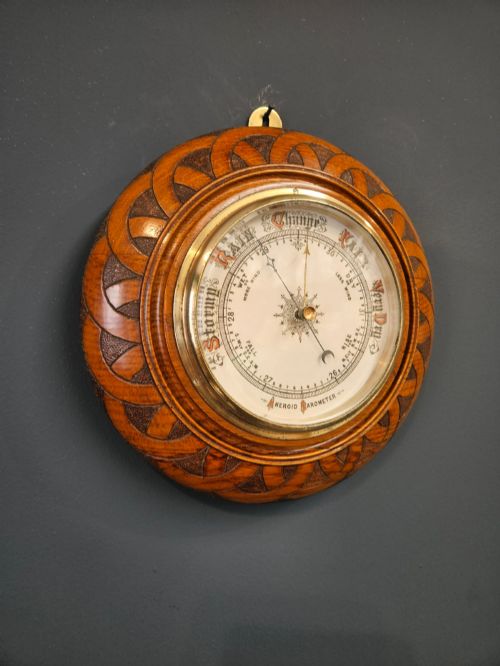
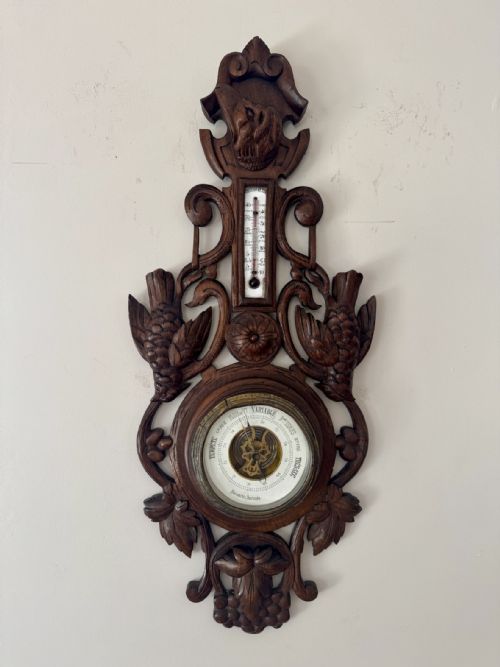
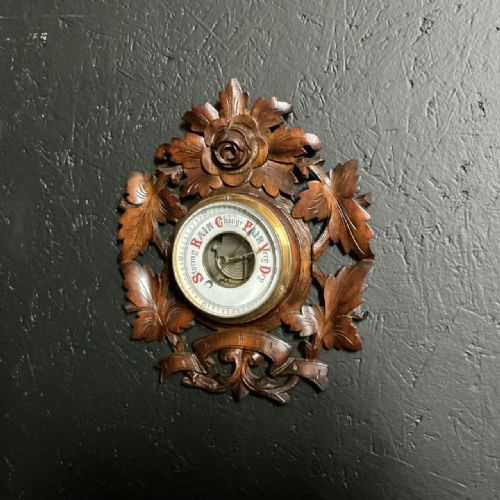
Makers housed the sensitive internal metal vacuum chambers within robust timber frames of oak, walnut, and mahogany, frequently applying carved or inlaid ornamentation. Stylistic variations range from elaborate Victorian Black Forest carvings to clean geometric lines of the Art Deco era.
Dials are protected by bevelled glass and fashioned from silvered metal, brass, or enamelled surfaces, often accompanied by mercury or spirit thermometers. Cabinetmakers utilised carved wood and brass to construct these durable housings.
The inventory spans Victorian, Edwardian, and Art Deco periods, utilising oak, mahogany, walnut, and brass.
Judging quality
Quality rests in the crispness of the timber carving, the legibility of the silvered or enamelled dial, and the presence of makers' signatures on the mechanism. Finer pieces demonstrate precision engineering within the aneroid movement alongside high-grade cabinet work.
The presence of bevelled glass, auxiliary instruments like thermometers, and intact original fitted cases elevate an example above standard production.
Primavesi·Negretti & Zambra·Hyde & Sons Sleaford·Gaupp & Co·Aitchison·Short & Mason·Elliott Brothers·Bramwell & Harbron·Weathercraft
The Aneroid Weather Barometer Glossary
- Aneroid barometer
- An instrument measuring atmospheric pressure by the expansion and contraction of a flexible metal capsule, avoiding liquid mercury. This mechanism allowed barometers to be made portable and mounted on walls.
- Barograph
- A self-recording aneroid barometer that plots atmospheric pressure over time on a rotating paper chart. These are typically housed in glazed wooden boxes with chart drawers.
- Banjo barometer
- A wall barometer shaped like a banjo, featuring a large circular dial at the base and a long trunk often holding a thermometer. This form dominated domestic interiors through the Victorian and Edwardian periods.
- Pocket barometer
- A compact, watch-like aneroid instrument used outdoors for altitude measurement or forecasting. They often survive in their original fitted leather or velvet-lined cases.
- Silvered dial
- A metal dial treated to achieve a frosted silver finish, carrying engraved scale markings and numerals. These dials provide high contrast for reading pressure changes.
Aneroid Weather Barometer: Frequently Asked Questions
How do I read an aneroid barometer?
Read the main pointer against the scale marked on the dial, noting whether pressure is rising or falling by using the movable setting hand.
Most dials feature descriptive weather words alongside millibars or inches of mercury to guide your forecasting.
Where should I hang a wall barometer?
Hang your barometer on an internal wall away from direct sunlight, radiators, and heavy draughts to ensure accurate pressure readings.
Stable indoor temperatures prevent the metal mechanism from reacting to local heat rather than genuine atmospheric shifts.
What is the difference between a barometer and a barograph?
A standard barometer displays current atmospheric pressure on a dial at a single glance.
A barograph records continuous pressure changes onto a revolving paper chart, providing a visual history of weather patterns over a week.
How do I date an antique barometer?
Examine the timber, decorative style, and dial typography to narrow down the period of manufacture.
Victorian pieces often display rich carving or marquetry, while Art Deco examples favour streamlined geometric shapes and 1930s materials.