


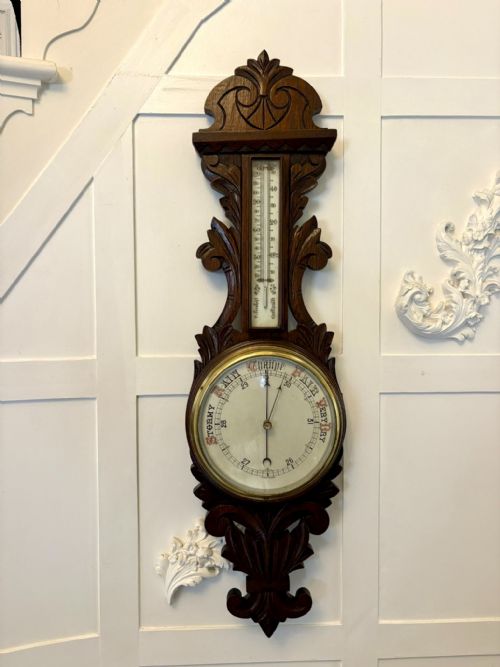


Victorian Wall Weather Station
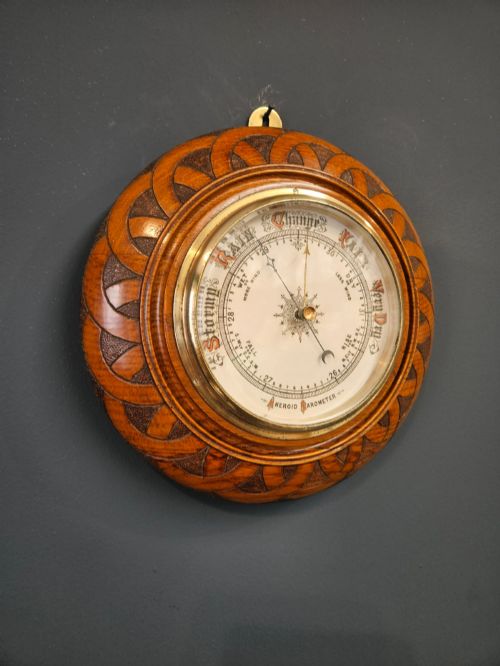
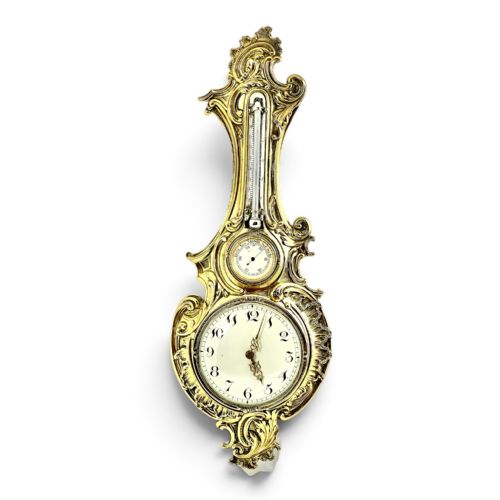
These Victorian wall weather station instruments combine barometers, thermometers and clocks in carved wood cases to measure atmospheric pressure.
Victorian Wall Weather Station
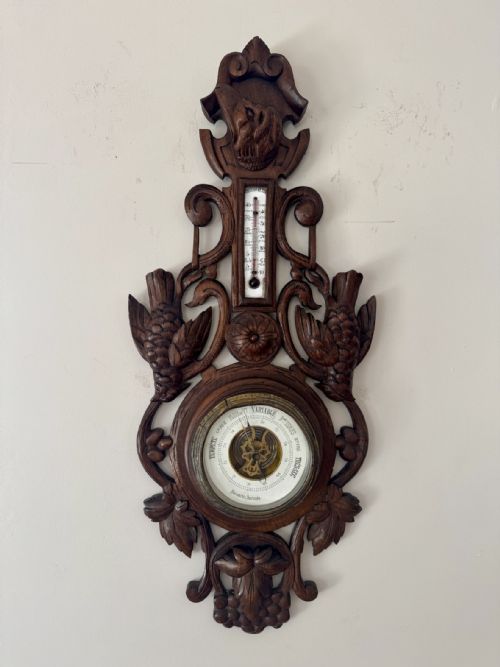
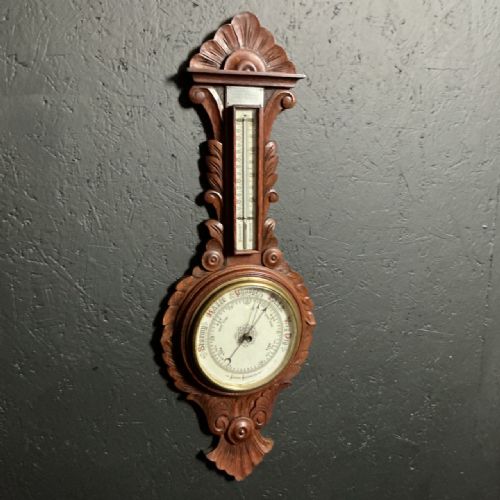
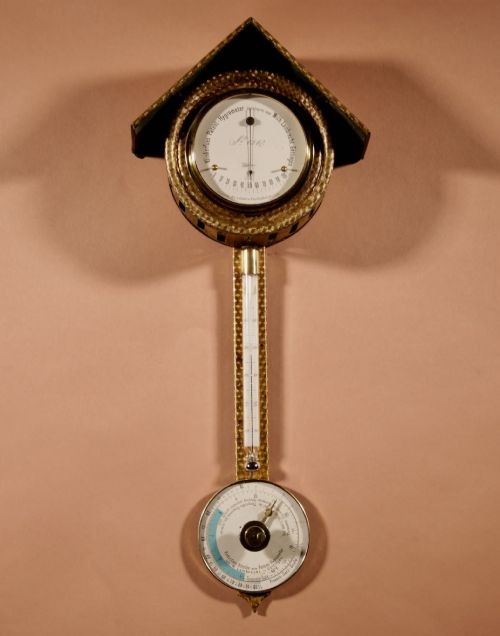
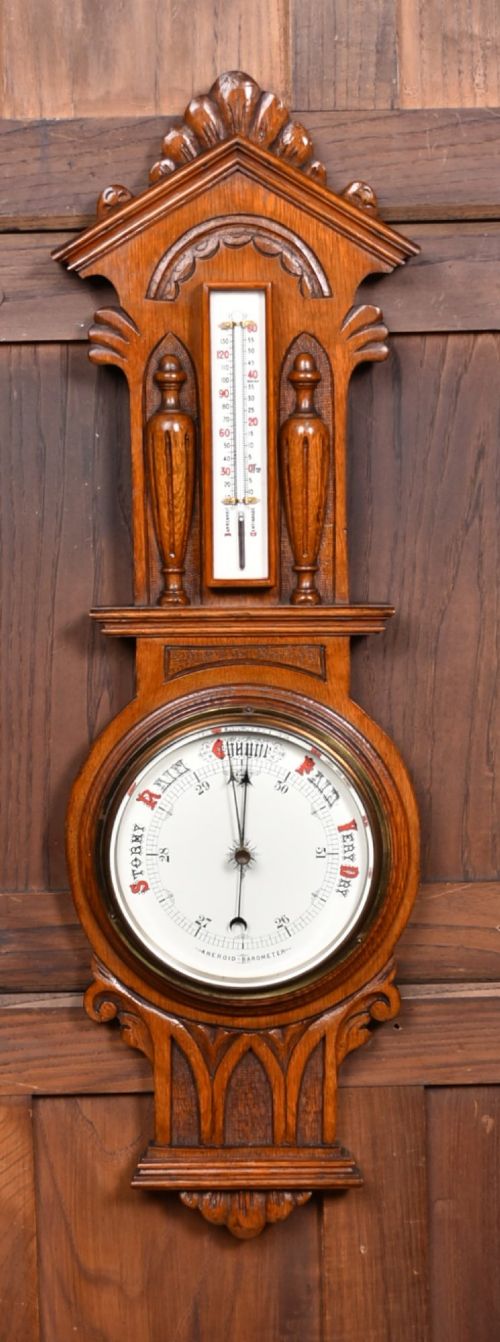
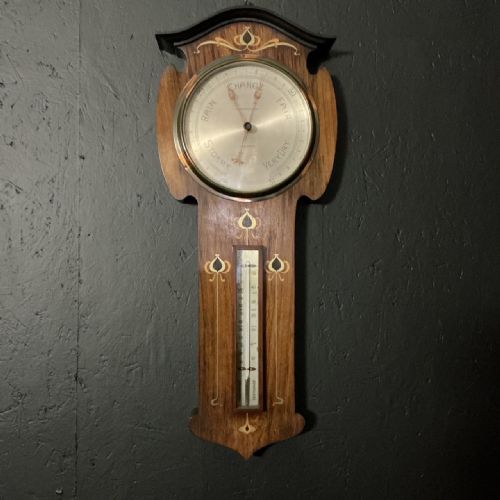
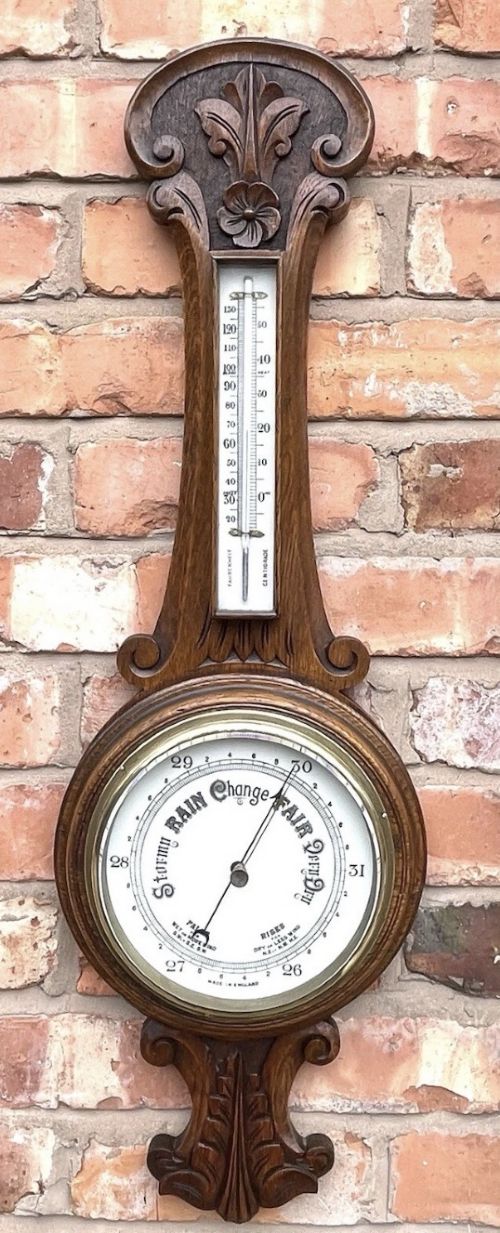
A Victorian wall weather station brings together multiple meteorological instruments mounted onto a single wooden backplate intended for hanging on a domestic wall. You will most frequently encounter carved oak and walnut banjo barometers, often paired with thermometers and occasionally clocks.
The selections span from the mid-nineteenth century through the Edwardian period, drawing on Victorian scientific and Black Forest carving traditions. Many examples integrate several dials to show atmospheric changes alongside temperature and time.
Makers ranged from notable London opticians and instrument makers to continental workshops producing ornate wooden frames. These pieces served both a practical domestic purpose in forecasting local weather and a decorative role in the Victorian hallway or study.
Materials and construction
Cases were predominantly fashioned from dense timbers such as oak, mahogany and walnut, selected for stability and suitability for deep carving. Continental examples often utilised rich Black Forest carved wood designs featuring foliage or animal motifs.
Internal mechanisms combined brass framing, glass dial covers, enamel or porcelain scales, and delicate steel or mercury indicators. Instrument makers employed mercury columns for stick barometers and aneroid capsule movements for dial and banjo instruments.
Object types include wall clocks, barometers, weather stations, thermometers and barographs.
Assessing craftsmanship and execution
Quality rests heavily on the depth and crispness of the wood carving, particularly on oak and walnut banjo cases and Black Forest variants. Sharp relief work and well-defined floral or scroll elements distinguish finer workshop output from simpler commercial production.
The distinction also lies in the precision and signature of the instrument maker inscribed upon the dial or backplate. Signed dials by established scientific makers indicate higher grade movements and more meticulous dial engraving.
Wilh. Lambrecht·Elliott Brothers·W Watson & Sons·Jenkins Of Old Swindon·J Hughes London·Negretti & Zambra·Maple & Co·Antoine Redier·Blake & Son·Dollond London·James Pitkin·S&B Solomons
The Victorian Wall Weather Station Glossary
- Aneroid barometer
- An instrument that measures atmospheric pressure without liquids by using a flexible metal capsule. Changes in pressure cause the capsule to expand or contract, moving a pointer across a dial.
- Stick barometer
- A tall, vertical barometer utilising a glass tube filled with mercury over a cistern. This traditional form offers a direct reading of atmospheric pressure changes.
- Banjo barometer
- A wall barometer housed in a symmetrical wooden case shaped roughly like a banjo. The large circular dial at the base usually pairs with a thermometer or hygrometer higher up.
- Hygrometer
- An instrument for measuring humidity in the air. Specialised hair hygrometer variants utilise treated animal hair to register moisture levels.
- Barograph
- A recording meteorological instrument that draws a continuous line of barometric pressure onto a rotating paper drum. These mechanical devices often feature clockwork mechanisms housed beneath glass.
Victorian Wall Weather Station: Frequently Asked Questions
How do I read an aneroid barometer?
Read the main pointer against the pressure scale marked on the dial. Many instruments include a secondary manual hand that you set over the primary pointer to track whether pressure rises or falls.
Changes in the weather generally follow pressure trends rather than immediate readings. High pressure usually indicates settled conditions, while falling pressure points toward rain or wind.
Where should I hang a wall weather station?
Choose an interior wall free from direct sunlight and away from radiators, draughts or active fireplaces. Sudden temperature shifts affect the internal mechanisms and distort instrument accuracy.
Secure the piece firmly to a wall plug or stud using the original hanging bracket or eyelet. Because these instruments contain delicate glass and sometimes mercury, stability is essential.
How do I tell an aneroid from a mercury barometer?
Aneroid barometers feature a circular dial with a pointer moving across printed numbers like a clock face. They contain no visible liquid and rely on internal metal springs and vacuum chambers.
Mercury barometers typically take the form of a vertical stick barometer with a long exposed glass tube and a cistern at the base. You can see the silvery column of mercury rising and falling inside the tube.
How do I care for antique instrument cases?
Dust carved wooden cases regularly with a soft, dry brush to prevent dirt settling into deep crevices. Avoid modern spray polishes that build up sticky residue over time.
Feed dry timber occasionally with a quality microcrystalline wax to preserve the finish. Keep the glass dials clean using a dry microfibre cloth without touching any exposed paper or enamel scales.