


Aneroid Barograph Instrument
An aneroid barograph instrument records atmospheric pressure continuously on paper charts, combining scientific utility with handsome cabinet work.
Aneroid Barograph Instrument
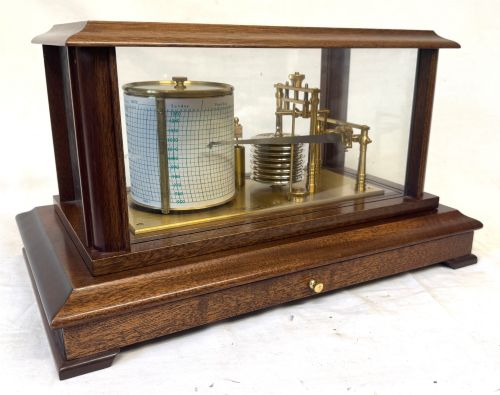
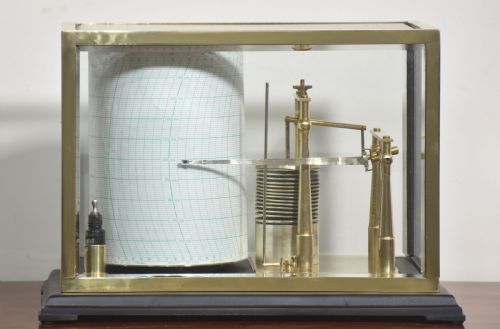
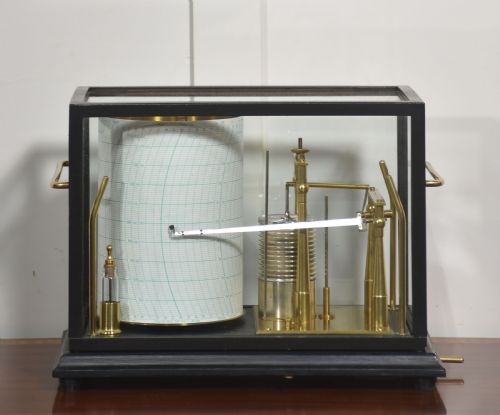
An aneroid barograph instrument is a mechanical weather-recording device housed in a protective case, predominantly taking the form of a rectangular box with glass panels for viewing the movement inside. These instruments measure air pressure fluctuations over time without using liquid mercury, tracing the changes onto a paper chart fitted to a revolving drum.
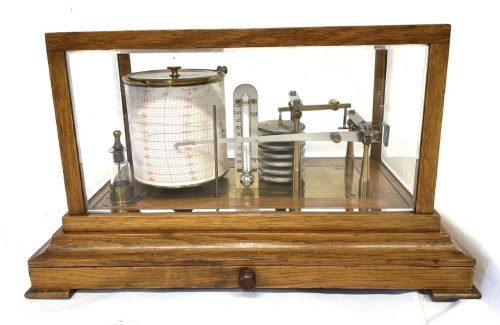
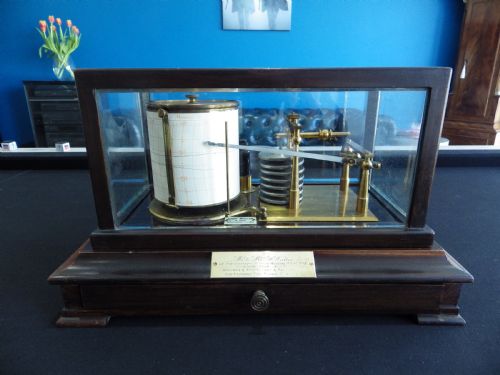
The versions most commonly met on this page date from the late nineteenth century through to the mid twentieth century, encompassing Victorian, Edwardian and interwar periods. Cabinet styles range from plain oak and rich mahogany to walnut enclosures, often incorporating bevelled glass and lower drawers for storing spare paper charts.
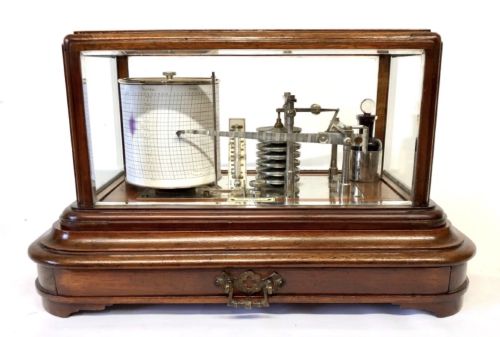
Many examples combine the recording mechanism with a thermometer or a separate barometer dial mounted on the wooden base. While desk or table models dominate the selection, wall-mounted variants also appear alongside miniature versions designed for portability or compact spaces.
Materials and construction
Cabinet makers utilised dense hardwoods such as mahogany, oak, and walnut to build the protective housings, frequently adding brass handles, feet, and corner mounts for structural durability and decorative contrast. Bevelled glass panes were fitted into the sides and hinged lids to allow clear observation of the internal mechanism while protecting the delicate levers from dust.
Inside the case, the aneroid mechanism relies on brass, steel, and other metals working together to translate expansion and contraction of vacuum chambers into movement. A pen arm tipped with ink traces the pressure line onto specially printed paper secured around a clockwork-driven drum.
Several examples include handy chart drawers at the base, proving that even Victorian meteorologists appreciated a tidy desk.
Assessing quality and finish
Quality in these instruments rests upon the precision of the brass mechanism and the cabinet work of the wooden enclosure. Finer pieces display crisp maker signatures, smooth clockwork rotations, and careful joinery such as dovetail drawers designed to hold replacement charts.
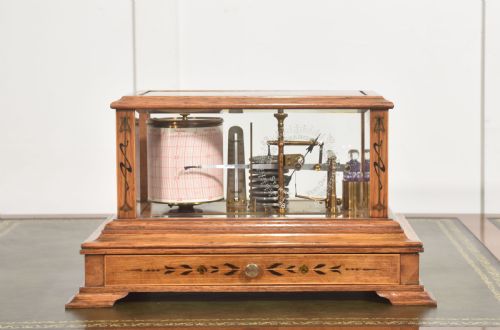
The presence of inlaid decoration, such as Art Nouveau motifs on oak cases, or secondary instruments like integrated thermometers and supplementary barometer dials, elevates the execution. Original paperwork and intact glass panels further distinguish superior survivals from standard examples.
Short and Mason·Negretti and Zambra·Richard Freres·Jules Richard·R Fuess
The Aneroid Barograph Instrument Glossary
- Aneroid
- Operating without liquid. This mechanism uses sealed metal bellows that expand or contract as air pressure changes.
- Barograph
- A self-recording barometer. It draws a continuous line on a paper chart to show weather trends over a week.
- Bevelled glass
- Glass with edges ground and polished to an angle. This treatment adds a decorative finish to the inspection windows of the wooden case.
- Chart drawer
- A small compartment built into the base of the wooden housing. It stores spare weekly recording papers and spare ink bottles.
Aneroid Barograph Instrument: Frequently Asked Questions
How does an aneroid barograph instrument work?
Sealed metal chambers expand and contract as atmospheric pressure rises and falls. A system of multiplying levers transmits this movement to an arm holding an ink pen.
The pen rests against a paper chart wrapped around a clockwork cylinder that rotates once a week. This continuous line creates a visual record of weather patterns.
How do I change the chart paper?
Lift the glass lid of the wooden case to access the rotating drum cylinder. The old paper chart is removed and a fresh weekly chart is wrapped tightly around the drum.
Ensure the pen is gently lifted off the paper before changing the sheet to avoid bending the delicate arm. Add a drop of specialised ink to the nib if the trace appears faint.
Where should I place a barograph in my home?
Position the instrument on a sturdy, level surface away from direct sunlight, radiators, and exterior doors. Temperature extremes and strong vibrations can affect the internal metal bellows and clockwork movement.
A study, hallway, or living room table provides a stable environment where the mechanical action and rotating drum can be observed safely.
How do I identify the date of a barograph?
Examine the maker signature engraved on the brass bedplate or printed on the paper charts. Maker names and address styles often correspond to specific operating decades.
Cabinet woods, construction methods, and decorative details like Art Nouveau inlay provide further clues to the period of manufacture.