
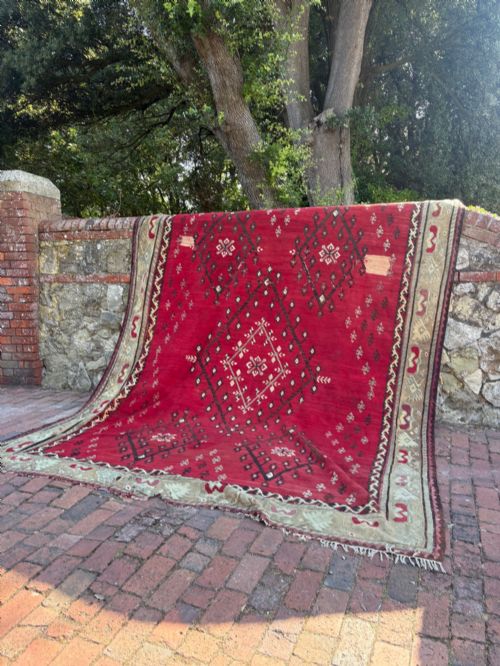


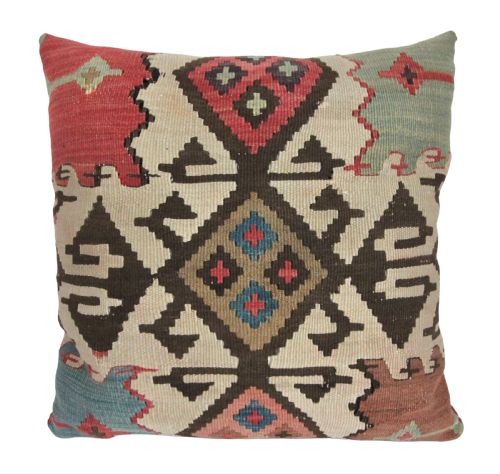


Anatolian Flatweave Rug
An anatolian flatweave rug brings tribal textiles into a modern room through flat tapestry-woven designs and rich wool textures.
Anatolian Flatweave Rug
An anatolian flatweave rug encompasses traditional kilims, runners, prayer kilims, and cushions made across various Turkish regions. The pieces listed span from the mid-nineteenth century through to the mid-twentieth century.
Buyers will encounter large formats alongside smaller runner rugs, wall hanging panels, and smaller decorative cushions fashioned from woven textiles. Regional origins such as Konya, Malatya, and Sarkoy define the specific geometric and traditional styles found on this page.
How they were made
Weavers constructed these textiles primarily using wool and cotton fibres, often employing a slit-tapery technique where weft threads are looped back at colour boundaries. Certain regional examples, such as those from the Bergama and Reyhanli areas, were woven in two separate parts and joined together.
Some specialised pieces incorporate supplementary embroidery techniques, particularly seen in Cicim panels and finger kelims, adding texture and pattern to the flat foundation.
Anatolian Flatweave Rug Retail Price Guide 2026
Typical asking prices for anatolian flatweave rug among the pieces listed under this phrase on Sellingantiques today, from the lower quarter to the upper quarter. They describe what is for sale here now, not the wider market.
The listings on this page span several decades, featuring materials such as wool and cotton across regional styles from Konya to Malatya.
What varies in quality
The sophistication of the dye palette and the clarity of the traditional design separate individual pieces. Examples displaying saturated, balanced colours often reflect superior natural dyeing traditions.
Structural integrity and the precision of the tapestry weave also influence quality. Large formats maintaining an even tension across wool and cotton foundations show higher levels of weaving skill.
The Anatolian Flatweave Rug Glossary
- Kilim
- An un-knotted flatweave textile produced by tightly interweaving warp and weft strands. This technique creates a smooth surface without a pile.
- Warp
- The vertical threads stretched upon a loom that provide the foundational structure for the rug. Weft threads are woven horizontally across these stationary lines.
- Weft
- The horizontal threads passed through the warp to build the visual pattern and colour fields. In flatweaves, these coloured yarns completely conceal the warp.
- Prayer kilim
- A specific rug format featuring a mihrab or niche design historically used for directional prayer. These compositions focus the eye toward a pointed arch motif.
- Cicim
- A supplementary weft-float embroidery technique applied to a woven ground. It creates raised decorative patterns on the surface of the textile.
Anatolian Flatweave Rug: Frequently Asked Questions
How were anatolian flatweave rug pieces used?
These textiles served practical functions on floors as coverings, insulation, and bedding within traditional nomadic and village households. They were also utilised for storage bags and wall decorations.
Today, many examples function as decorative floor coverings, runners, or are repurposed into cushions and wall hangings for modern interiors.
How do I clean an anatolian flatweave rug?
Gentle surface cleaning and regular light vacuuming without a rotating brush help maintain wool and cotton flatweaves. Professional textile cleaning is recommended for deep maintenance.
Avoiding excessive moisture and direct sunlight preserves the natural dyes and fibres of nineteenth and twentieth century pieces.
How do I identify regional styles?
Regional styles are identified through distinct motifs, colour palettes, and weaving structures associated with specific towns such as Konya, Malatya, or Ushak. Certain areas traditionally produced prayer formats or woven two-part constructions.
Comparing geometric layouts and border designs helps connect a textile to its Anatolian place of origin.
Are these rugs made from wool?
The pieces listed are constructed from wool and cotton, with wool typically forming the visible flatweave surface and structural foundation. Cotton is also utilised in specific components.
These natural fibres provide the durability and texture characteristic of traditional Turkish flatweaves.