
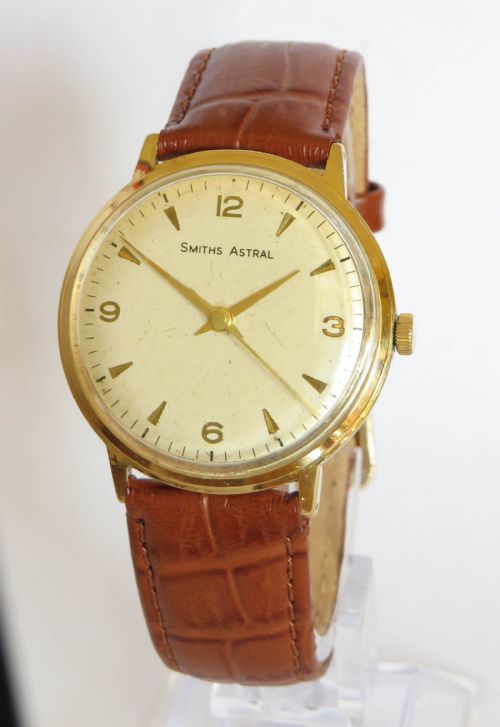


Analogue Dress Watch
An analogue dress watch offers a reliable mechanical or automatic movement housed in a clean mid-century case, perfect for daily wear.
Analogue Dress Watch
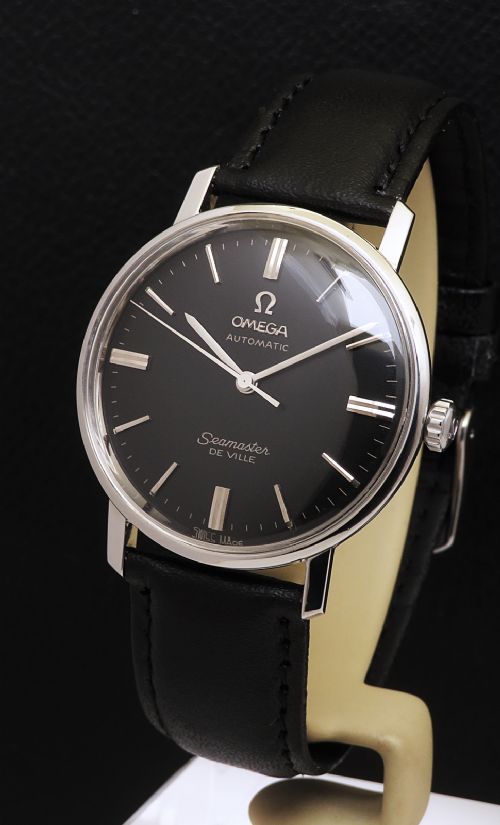
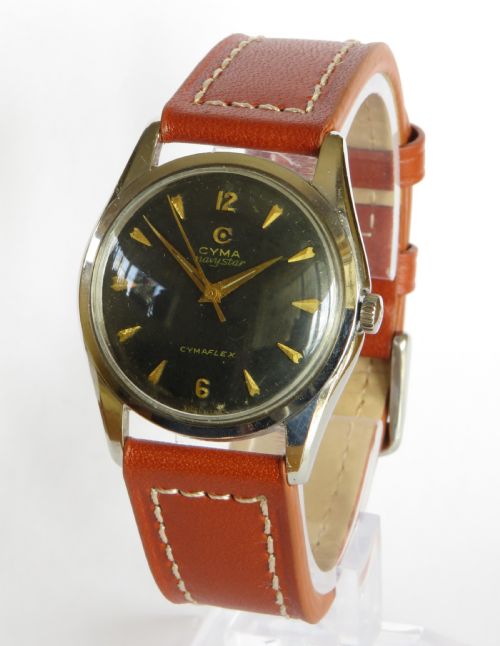
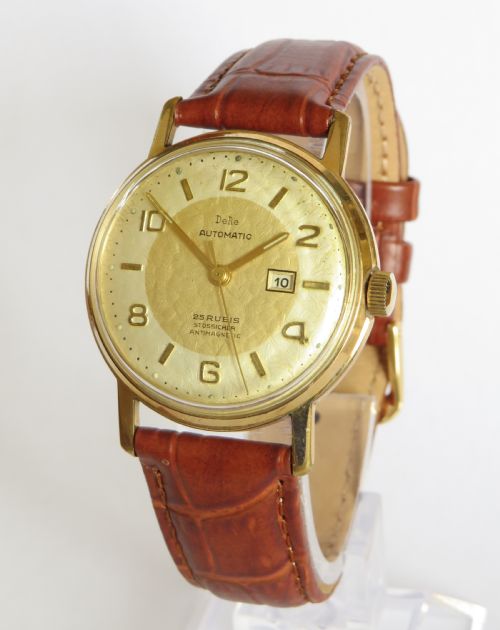
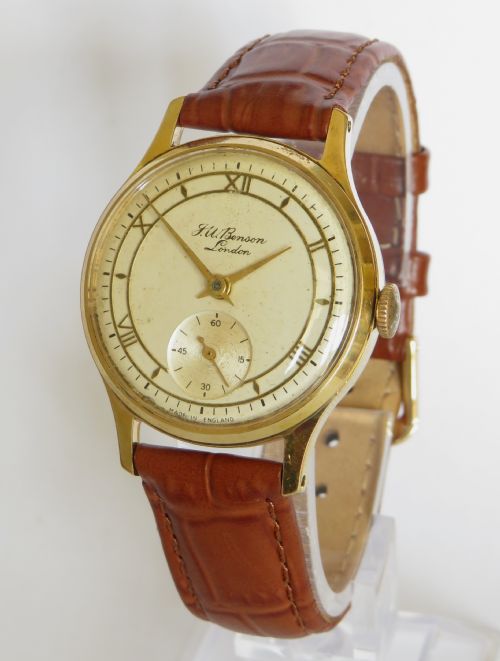
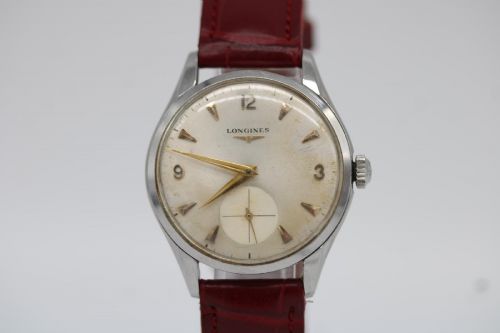
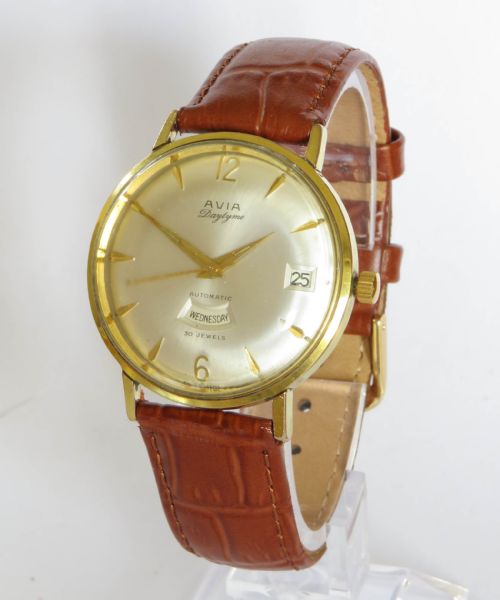
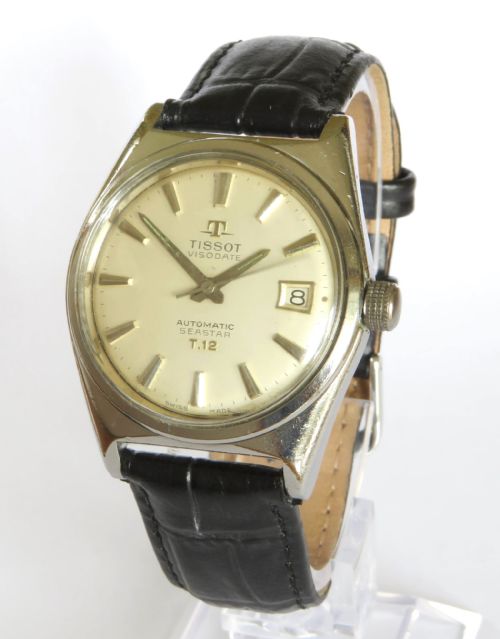
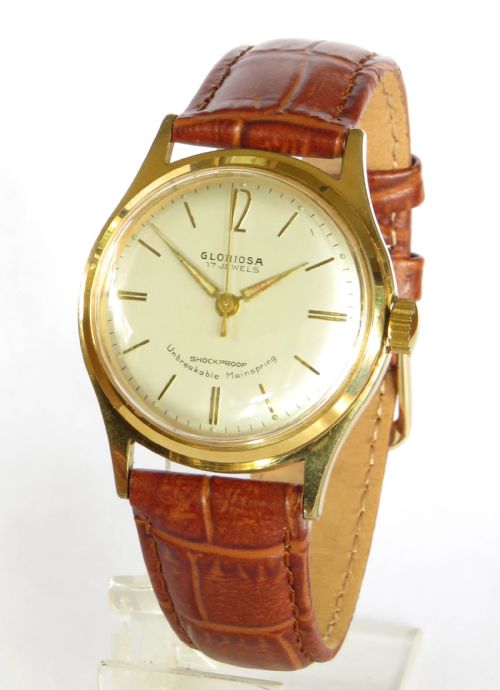
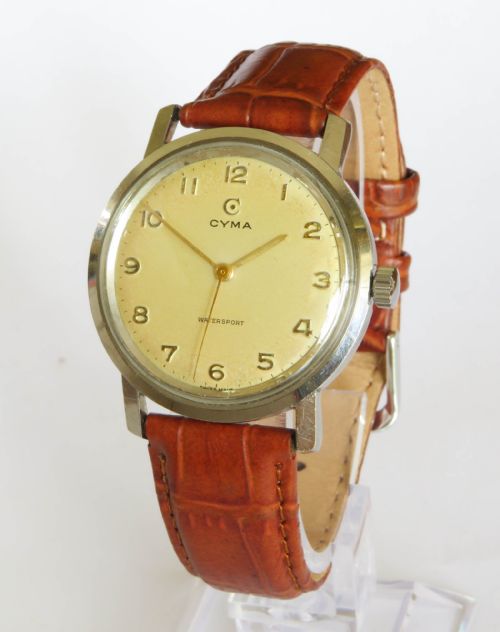
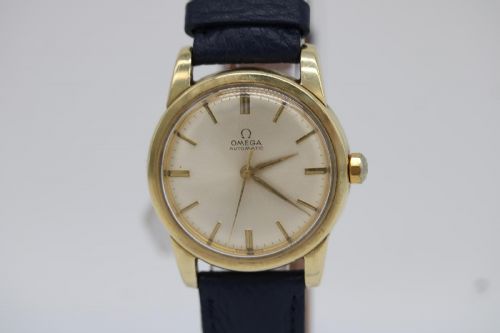
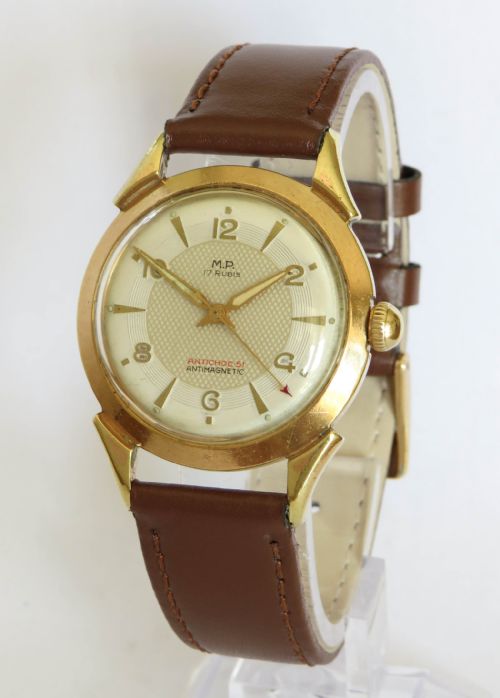
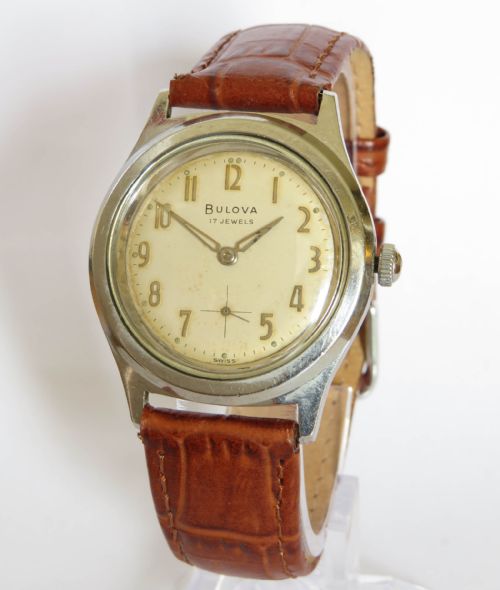
An analogue dress watch is primarily represented here by gents wristwatches spanning the 1940s, 1950s, and 1960s. These pieces reflect mid-century modern and art deco design sensibilities, focusing on slim profiles and clear dials.
The selection includes manual wind and automatic movements housed in various case materials, originating from established Swiss and British makers.
Materials and construction
Cases are formed from stainless steel, gold plate, and general metal, paired with glass, acrylic, or acrylic glass crystals to protect the dial. These materials provide durability while maintaining a refined profile suitable for formal or daily attire.
Straps typically utilise leather or fabric to secure the timepiece to the wrist. The internal mechanical movements rely on precision engineering, often featuring manual wind or automatic calibres.
Some models arrived with their original boxes, preserving a tiny time capsule of mid-century retail packaging.
Distinguishing quality
Quality in these watches rests on the execution of the movement and the preservation of the case and dial. Pieces from renowned makers often feature sophisticated mechanical calibres that demonstrate superior longevity and precision.
The integrity of the case plating, the clarity of the crystal, and the originality of the dial components further separate standard examples from finer collector pieces.
Omega·Cyma·Smiths·Longines·Tissot·Bulova·Eterna·Girard Perregaux
The Analogue Dress Watch Glossary
- Manual wind
- A mechanical movement that requires the wearer to manually turn the crown to tension the mainspring. This traditional mechanism allows for a thinner watch case.
- Automatic
- A self-winding mechanical movement that uses a weighted rotor to wind the mainspring using the natural motion of the wearer's wrist.
- Acrylic glass
- A lightweight, shatter-resistant plastic material used for watch crystals during the mid-century period. It can be easily polished to remove minor surface scratches.
- Gold plate
- A layer of gold applied to a base metal core, providing the appearance of solid gold at a different production tier.
Analogue Dress Watch: Frequently Asked Questions
How do I wind a manual watch?
Gently turn the crown clockwise between your thumb and forefinger until you feel slight resistance. Stop immediately to avoid damaging the mainspring.
Most vintage manual watches require winding once a day, ideally at the same time each morning.
Are these watches waterproof?
Mid-century dress watches generally lack modern waterproof seals and gaskets. Even models with names suggesting water resistance should be kept away from moisture and submersion.
Splashes from handwashing or rain can easily penetrate older crowns and crystals, causing internal rust.
What size are vintage dress watches?
Analogue dress watches from the 1940s to the 1960s typically feature smaller case diameters than modern timepieces. Sizes often range between thirty-two and thirty-five millimetres.
This understated proportion was standard for the period, designed to slip easily beneath a shirt cuff.
How often do they need servicing?
Mechanical timepieces benefit from professional servicing every three to five years to maintain lubricating oils and accuracy. A watchmaker cleans the internal gears and replaces worn components during this process.
Regular care ensures the movement continues to function reliably for daily wear.