
Amethyst Gemstone Jewellery
Amethyst gemstone jewellery brings together deep purple quartz and precious metals across periods from Georgian to Mid-Century.
Amethyst Gemstone Jewellery
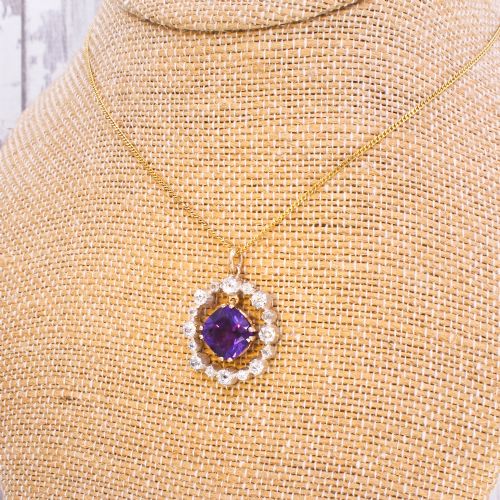
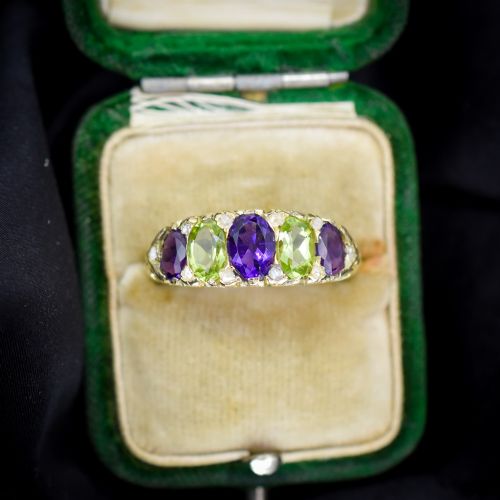
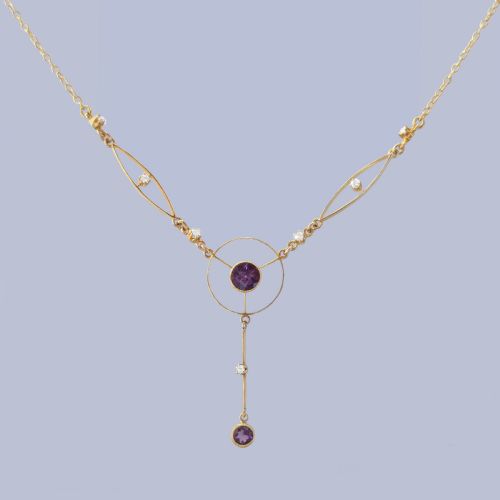
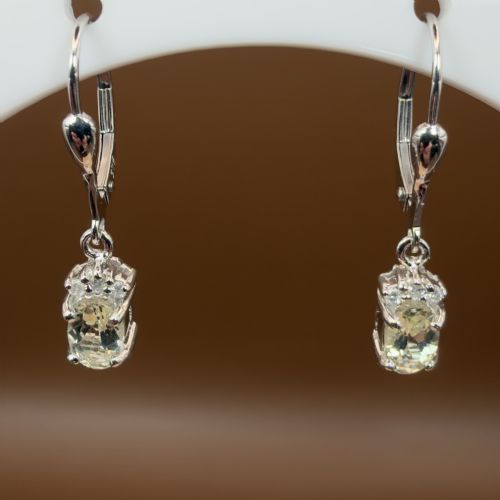
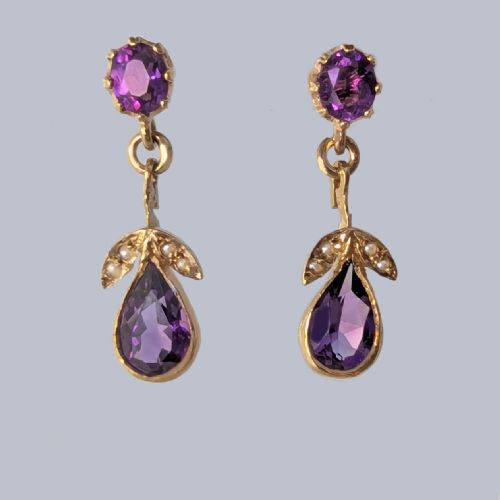
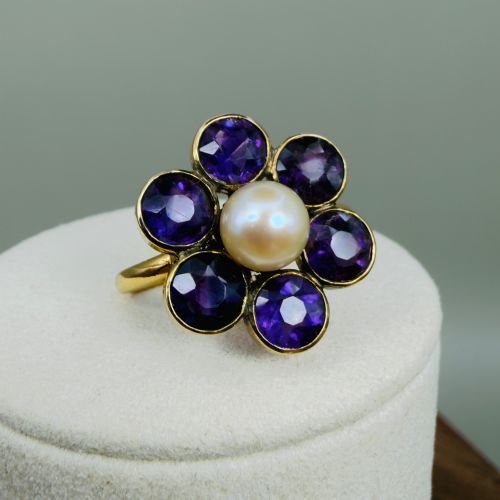
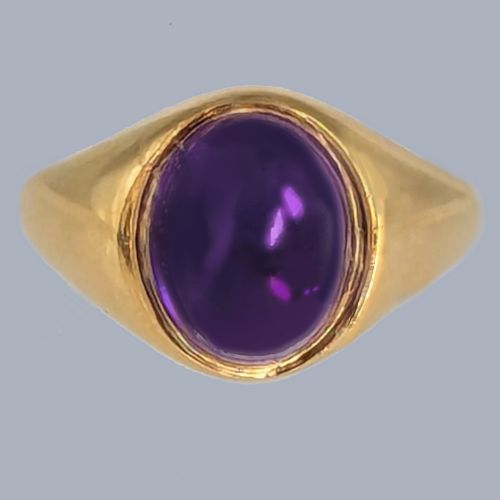
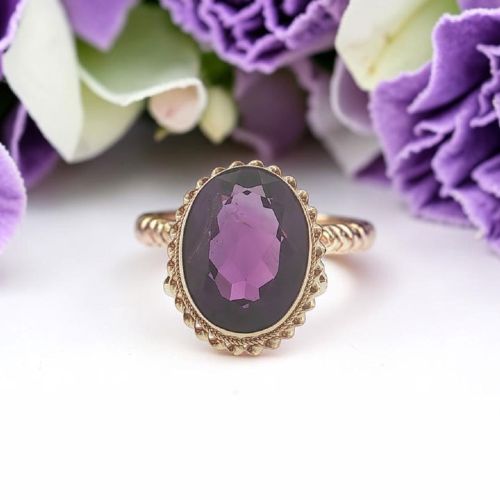
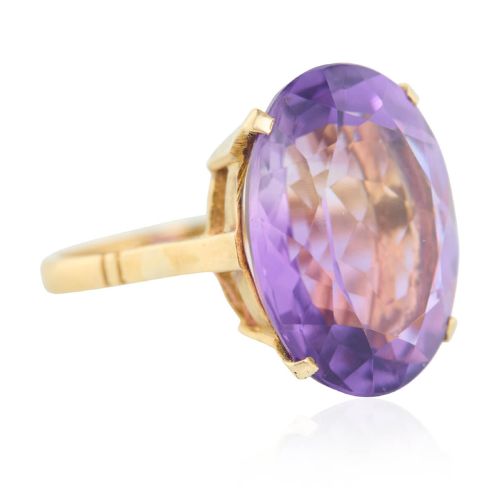
Amethyst gemstone jewellery encompasses rings, pendants, brooches, necklaces, earrings, and bracelets set with purple quartz. The selection spans Georgian, Victorian, Edwardian, Art Nouveau, Art Deco, and Mid-Century designs, reflecting shifting tastes in goldsmithing and gemstone cutting over two centuries.
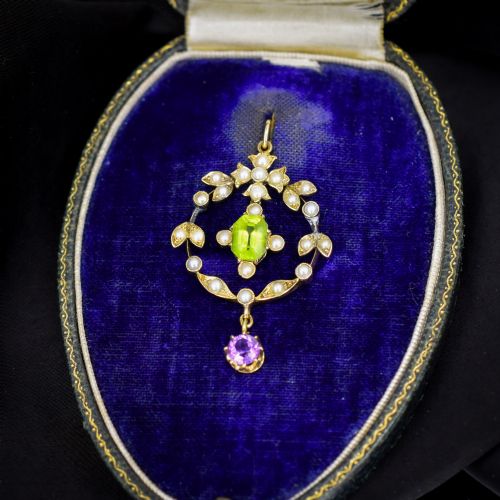
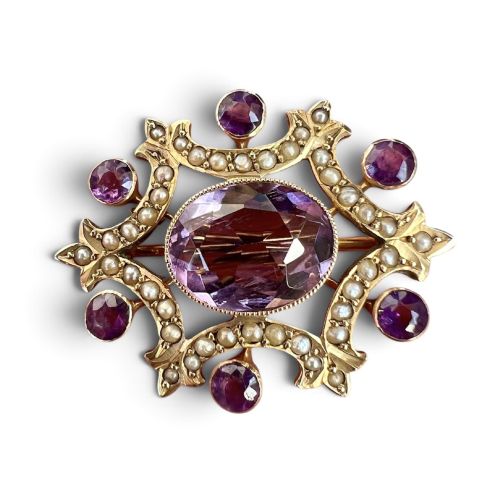
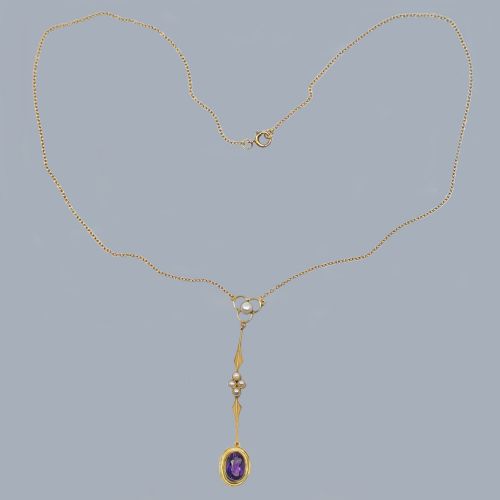
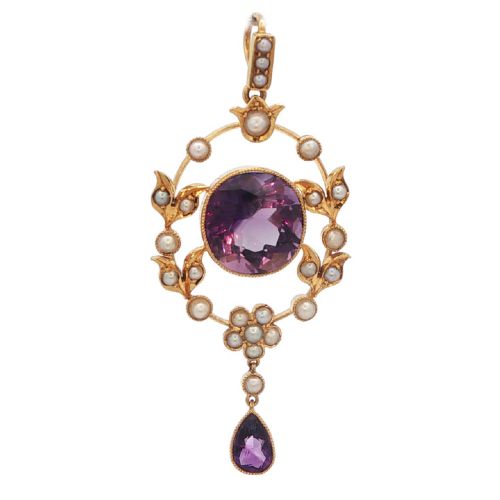
Edwardian and late-Victorian pieces dominate the available range, frequently pairing amethysts with seed pearls and peridots in yellow gold settings. Buyers encounter delicate lavalier pendants, cluster rings, and bar brooches alongside bolder cocktail rings and drop earrings from later decades.
How they were made
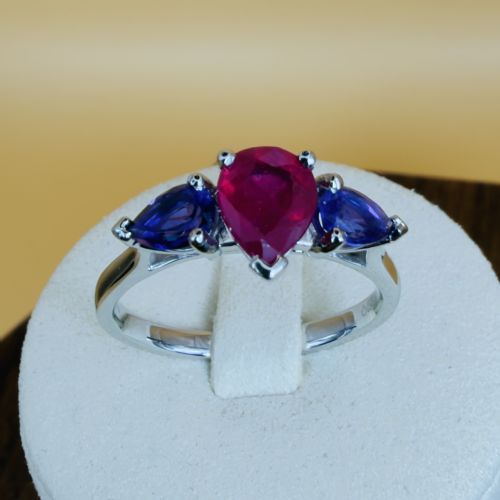
Goldsmiths utilised varying purities of gold, notably 9ct, 15ct, and 18ct, alongside platinum and silver. Stones are cut in oval, round, emerald, cabochon, and pear facets to maximise the purple colour saturation.
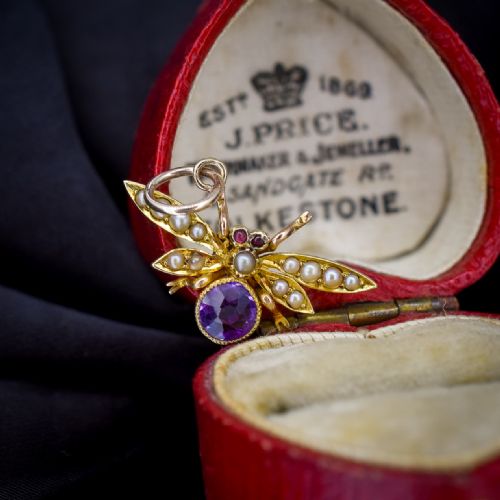
Craftsmen secured delicate seed pearls with fine wire or natural adhesives within open-backed collet settings that allowed light to pass through the transparent quartz stones.
The listings span eight distinct decades and styles, from Georgian gold clusters to 1970s cocktail rings.
What varies in quality
Quality rests upon the depth and uniformity of the purple colour within the quartz, alongside the crispness of the stone facets. Well-matched stone groupings in multi-stone rings and pendants indicate deliberate selection by the original maker.
The sophistication of metalwork, from hand-pierced Art Nouveau floral scrolls to substantial cast mid-century cocktail settings, dictates the standing of each piece.
S. Blanckensee & Son
The Amethyst Gemstone Jewellery Glossary
- Lavalier
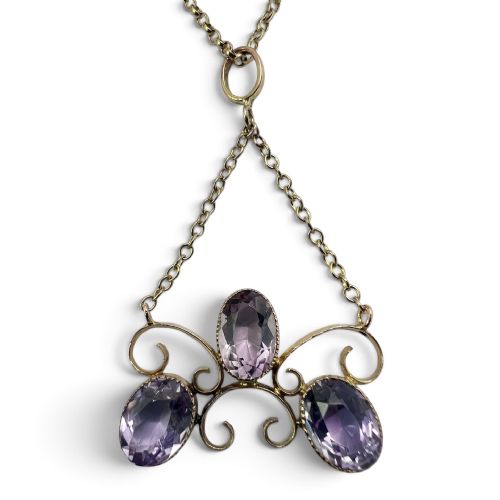
- A pendant featuring a gemstone drop suspended below a smaller motif, popular during the Edwardian period. These pieces often incorporate seed pearls and fine chains.
- Collet
- A band of metal that encircles and holds a gemstone in place. Open-backed collets let light enter the back of the amethyst.
- Seed pearl
- A very small natural or saltwater pearl, often undrilled or half-drilled, used extensively in Victorian and Edwardian cluster jewellery.
- Suffragette
- A colour palette of amethyst, peridot, and white pearl associated with the women's suffrage movement. These stones symbolised dignity, freedom, and hope.
- Cabochon
- A gemstone shaped and polished with a smooth, convex upper surface rather than faceted edges. This cut is common in vintage rings.
Amethyst Gemstone Jewellery: Frequently Asked Questions
How do I date an amethyst ring?
Dating relies on hallmarks, gold carat standards, and setting styles. Georgian and Victorian pieces often feature closed backs or pinchbeck, while Edwardian items lean towards delicate openwork in higher carat gold.
Mid-century rings display heavier cast bands and bolder stone cuts like emerald or step-cut quartz. Hallmarks stamped inside the shank provide specific assay office and year letter confirmation.
What is a lavalier pendant?
A lavalier is a drop necklace design featuring a central stone or motif suspended on a slender chain. They became fashionable in the early twentieth century during the Edwardian era.
These pendants frequently combine amethysts with seed pearls and delicate gold wirework. Their lightweight construction distinguishes them from heavier Victorian necklace designs.
Are amethyst and green amethyst the same?
Green amethyst, also known as prasiolite, is a green variety of quartz sharing the same crystal structure as purple amethyst. It appears in mid-century and modern jewellery settings.
Traditional antique pieces exclusively feature the classic purple variety. Green quartz varieties emerge more frequently in post-war designs alongside diamonds and white gold.
How should I care for antique amethyst?
Amethyst is a durable quartz measuring seven on the Mohs scale, but historic settings require gentle handling. Avoid ultrasonic cleaners, harsh chemicals, and prolonged direct sunlight to protect the stone colour.
Store pieces individually in soft pouches to prevent scratching neighbouring items. Check seed pearl settings periodically since historic adhesives can weaken over time.