



Amboyna Credenza
An amboyna credenza brings striking exotic timber and refined nineteenth-century craftsmanship into a room.
Amboyna Credenza
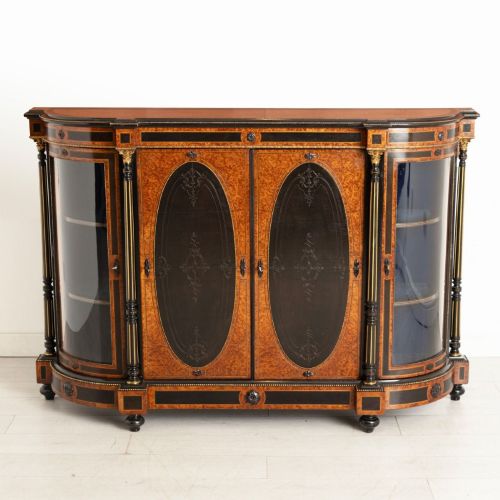
An amboyna credenza is a low, substantial cabinet designed for display and storage in nineteenth-century principal rooms. These pieces combine architectural presence with decorative surfaces intended to catch the eye.
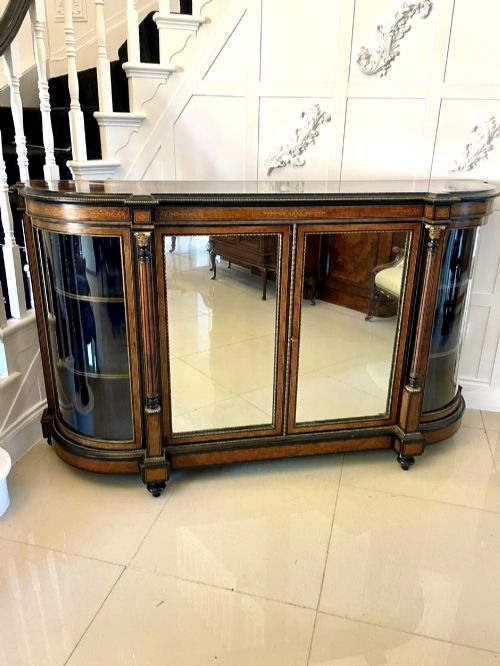
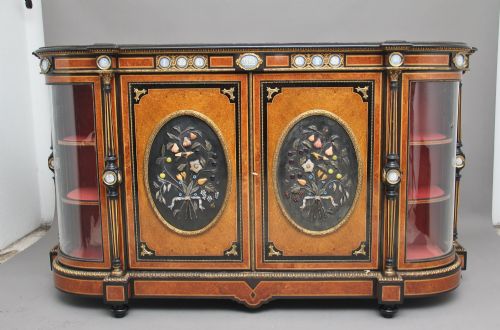
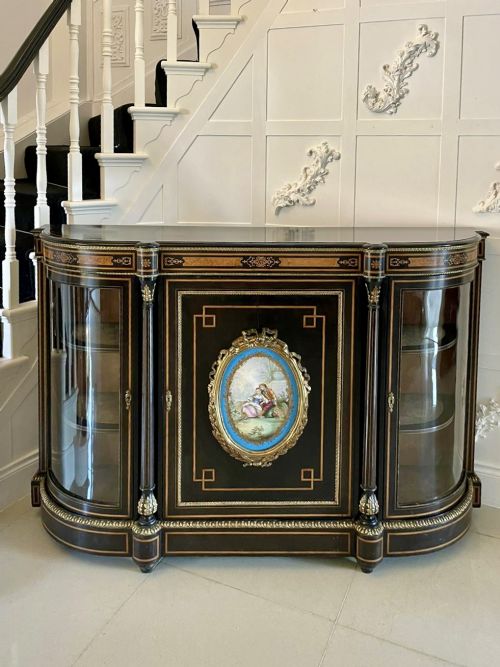
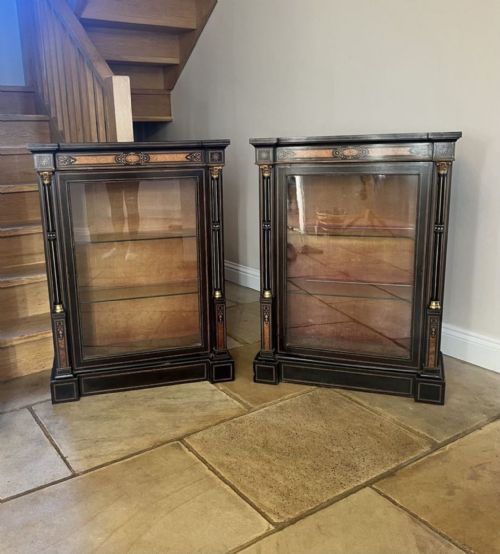
The versions met most often on this page date from the Victorian and Regency periods, frequently incorporating breakfront shapes, glazed doors, and side cabinets. Walnut, ebonised wood, and burr walnut frequently accompany the primary amboyna veneer.
Makers of the era utilised these cabinets to showcase fine timber grains and intricate inlay work, often pairing the central compartments with flanking display sections.
How they were made
Cabinet makers applied thin veneers of highly figured amboyna wood over robust secondary timbers to create the distinctive mottled surface pattern. Ebonised wood often provided a dark, contrasting border to frame the lighter golden-brown grain.
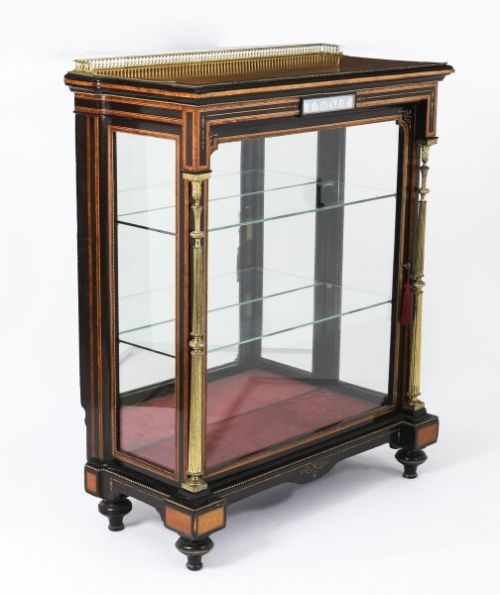
Mounts in ormolu and fine brass stringing added precise linear detail to the cabinet fronts and doors. Glass panels were fitted into wooden frames to form display compartments for ceramics and valued objects.
The evidence shows breakfront designs spanning multiple decades, incorporating glazed doors, brass stringing, and burr walnut.
What varies in quality
The distinction between standard and superior pieces rests on the choice of timber and the complexity of the internal configuration. Highly figured amboyna veneer with deep, swirling eyes commands greater attention than plain sections.
The precision of the brass inlay and the casting quality of the ormolu mounts signal the workshop's standard. Breakfront structures and three-door designs demonstrate more ambitious joinery than simpler rectangular forms.
Lamb of Manchester
The Amboyna Credenza Glossary
- Credenza
- A low dining or reception room cabinet used for serving or display, typically featuring a central cupboard flanked by glass-fronted side cabinets. Victorian examples often incorporated breakfront silhouettes.
- Ebonised
- Wood treated with a chemical process or stain to resemble expensive ebony. This dark finish provided a sharp visual contrast against lighter amboyna veneer and gilt brass mounts.
- Ormolu
- Gilded bronze used for decorative mounts and feet on nineteenth-century furniture. The metal was cast and fire-gilded to add metallic highlights to the wooden facade.
- Pier cabinet
- A narrow display cabinet designed to fit against the wall space between windows. These pieces often featured glazed doors and intricate marquetry.
Amboyna Credenza: Frequently Asked Questions
What is an amboyna credenza?
An amboyna credenza is a nineteenth-century low cabinet veneered in exotic amboyna wood, often combined with ebonised framing and glass display doors.
These pieces served as formal storage and display furniture in Victorian and Regency drawing rooms, showcasing elaborate timber grain and brass inlay.
How were these cabinets used?
Owners used them to display porcelain, glassware, and decorative objects behind glazed doors while storing other items in the central cupboards.
They stood against drawing room walls, frequently positioned in pier spaces between windows or as the focal point of a reception room.
How do I date a credenza?
Dating relies on stylistic clues such as Victorian aesthetic movement motifs, Regency proportions, or ebonised surfaces characteristic of the mid to late nineteenth century.
Construction methods, timber combinations, and the presence of specific brass or ormolu mounts also help narrow the decade of manufacture.
How do I live with one?
Place the cabinet away from direct sunlight and strong heat sources to protect the delicate amboyna veneer from drying and cracking over time.
Maintain a stable indoor humidity level and clean the wooden surfaces with a soft, dry cloth rather than harsh modern polishes.