

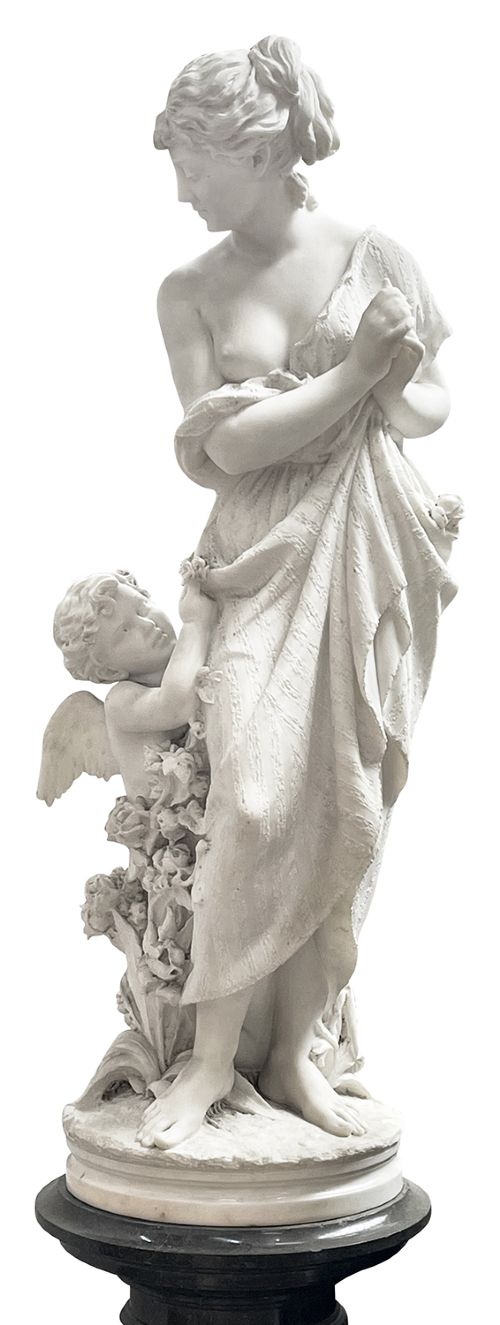
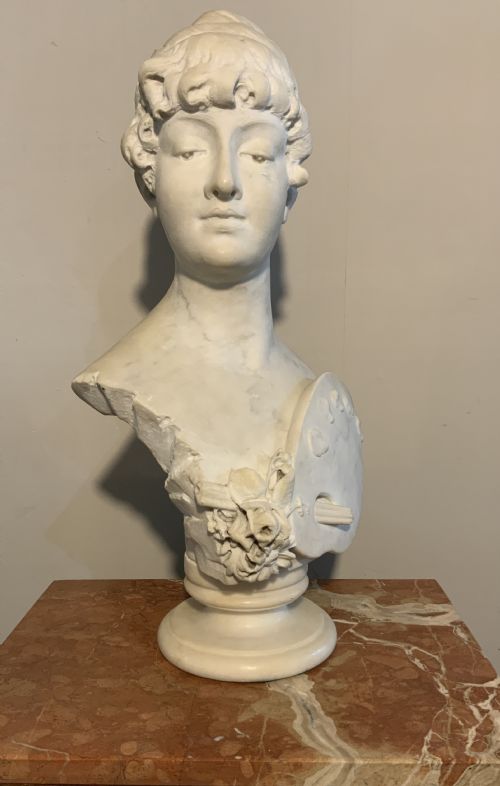
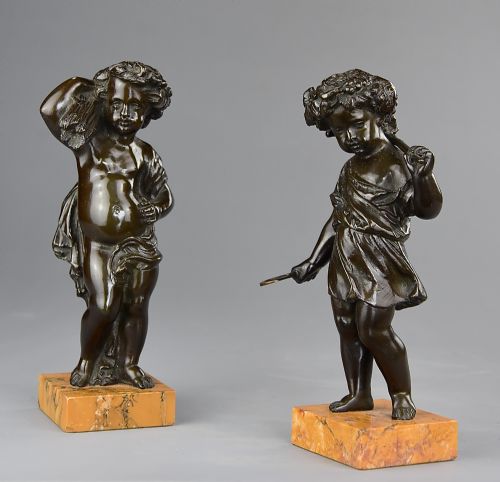
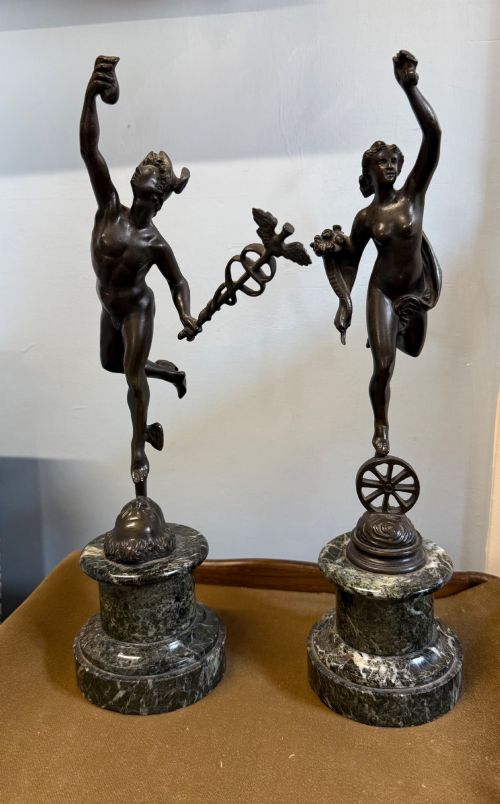
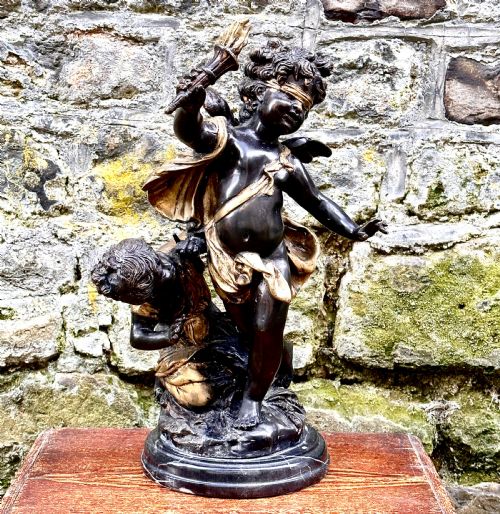
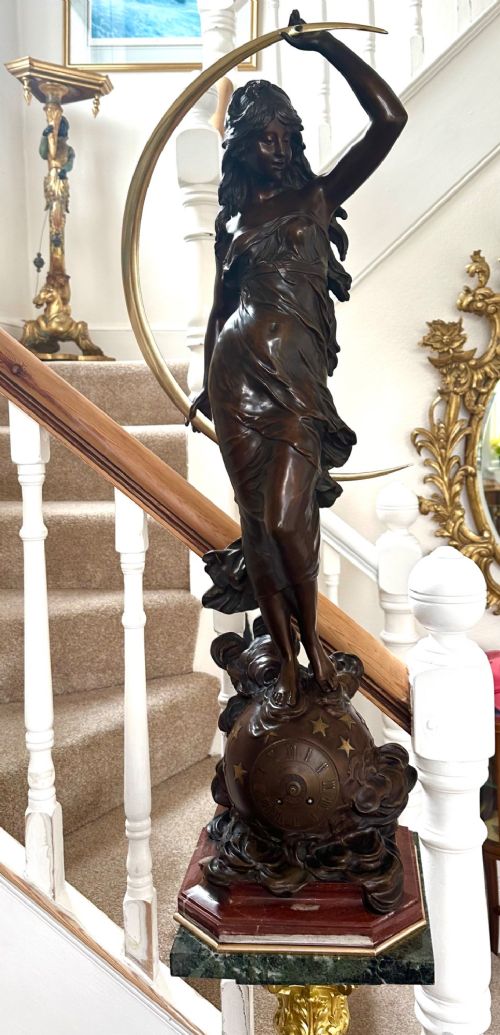


Allegorical Marble Statue
An allegorical marble statue brings classical personification and sculptural grace into a room, offering enduring narrative and physical presence.
Allegorical Marble Statue
When you search for an allegorical marble statue, you are looking at carved figurative works that embody abstract concepts like nature, dawn, or mythic figures such as Psyche and Una. These pieces range from substantial Carrara marble carvings to solid alabaster female sculptures and sculptural mantel clocks.
You are most likely to meet nineteenth-century interpretations on this page, spanning Victorian and Edwardian periods as well as Art Nouveau designs. They frequently pair carved stone figures with bronze bases, gilt elements, or marble plinths.
The subjects draw heavily on neoclassical traditions and French revival styles, depicting putti, classical deities, and allegorical heroines. They serve as focal points for mantelpieces, pedestals, and display surfaces.
How they were made
The makers of these pieces worked primarily in carved white and Carrara marble, alongside fine alabaster for softer translucency. Artisans also utilised cast bronze, patinated bronze, and gilded bronze to create mixed-media figures and mounts.
Sculptors combined hand-carving techniques for the stone components with traditional lost-wax or sand casting for the metal elements. Bases of green or plain marble provided stable plinths for the heavier bronze and stone compositions.
Allegorical Marble Statue Retail Price Guide 2026
Typical asking prices for allegorical marble statue among the pieces listed under this phrase on Sellingantiques today, from the lower quarter to the upper quarter. They describe what is for sale here now, not the wider market.
Listings feature works from the nineteenth century through to the nineteen-thirties, encompassing Victorian and Edwardian periods.
What varies in quality
The standard of carving in the marble and alabaster determines how convincingly drapery folds, facial expressions, and anatomical details are rendered. Softer stone details and crisp chisel work separate ambitious sculptural commissions from simpler decorative items.
The integration between the bronze elements and the marble bases affects the overall coherence of the piece. Finer patination, careful chasing on metal surfaces, and the choice of supportive materials indicate superior craftsmanship.
Romanelli·Claude Michael Clodion·August Moreau·Ernst Barrias·Pugi
The Allegorical Marble Statue Glossary
- Carrara marble
- A type of white or blue-grey marble quarried in the city of Carrara in Tuscany, prized for its use in classical and nineteenth-century sculpture.
- Putti
- Representations of small winged infants, frequently appearing in classical and revival art as attendants or personifications of harvest and myth.
- Patinated bronze
- Bronze that has been treated with chemical solutions to produce a specific surface colour or dark finish.
- Alabaster
- A fine-grained, translucent stone often used for detailed figurative carvings and smaller sculptural works.
Allegorical Marble Statue: Frequently Asked Questions
Where should I place an allegorical marble statue?
These sculptures suit stable, level surfaces such as strong sideboards, dedicated pedestals, or wide mantelpieces where their weight is safely supported.
Keep them away from direct heat sources and sudden temperature changes to protect both the stone and any attached metal elements.
How do I clean an allegorical marble statue?
Dust the stone and bronze surfaces gently with a soft, dry microfibre cloth or a clean artist brush to remove everyday particles.
Avoid using water, chemical sprays, or abrasive household cleaners, as these can damage patinated metal finishes and etch porous marble.
What is the difference between marble and alabaster?
Marble is a hard metamorphic rock formed from recrystallised carbonate minerals, capable of holding sharp carved details over centuries.
Alabaster is a softer, more translucent mineral that allows light to penetrate slightly beneath the surface, giving figures a distinct glow.
How can I tell the period of a statue?
Look closely at the styling of the hair, drapery, and pedestal designs, which often reflect Victorian, Art Nouveau, or Neoclassical tastes.
Signatures, foundry marks, and the material composition of the base offer further clues to the date of manufacture.