


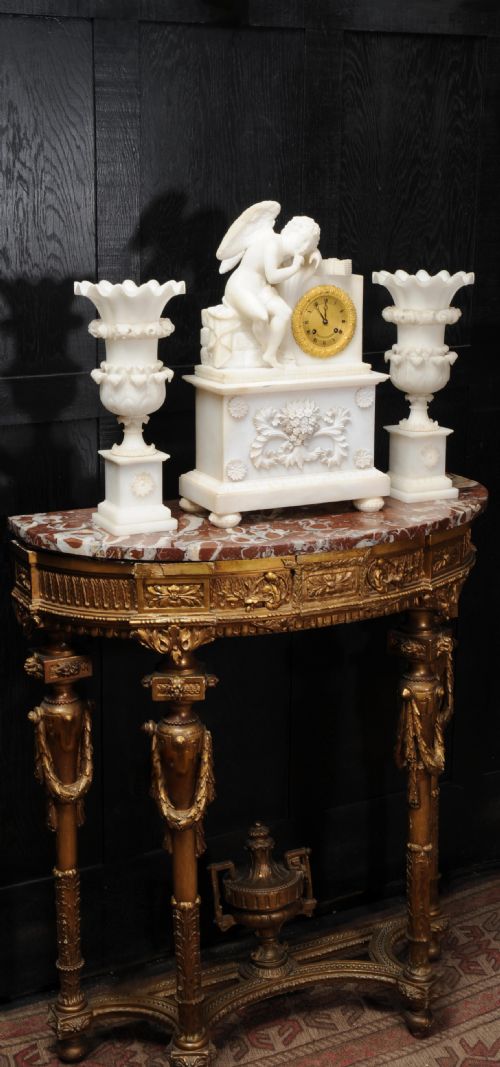
Alabaster Mantel Clock
These alabaster mantel clocks are heavy, sculptural timepieces carved from pale stone and mounted with gilt bronze, built to command a Victorian drawing room.

Alabaster Mantel Clock
Alabaster mantel clocks combine carved white stone with metal mounts, appearing primarily in nineteenth-century domestic interiors across Britain and France. When you examine this phrase, you find pieces ranging from simple portico timepieces to large garnitures flanked by candelabras.
The most common form on this page is the French or Victorian mantel clock, often paired with matching side ornaments under glass domes. These clocks sit solidly on flat surfaces, driven by reliable eight-day movements that chime the hours.
Makers housed these mechanisms within columns, urn shapes, and architectural porticos carved from soft alabaster or marble. The style shifts from ornate Louis XIV revivals to clean-lined art deco versions from later decades.
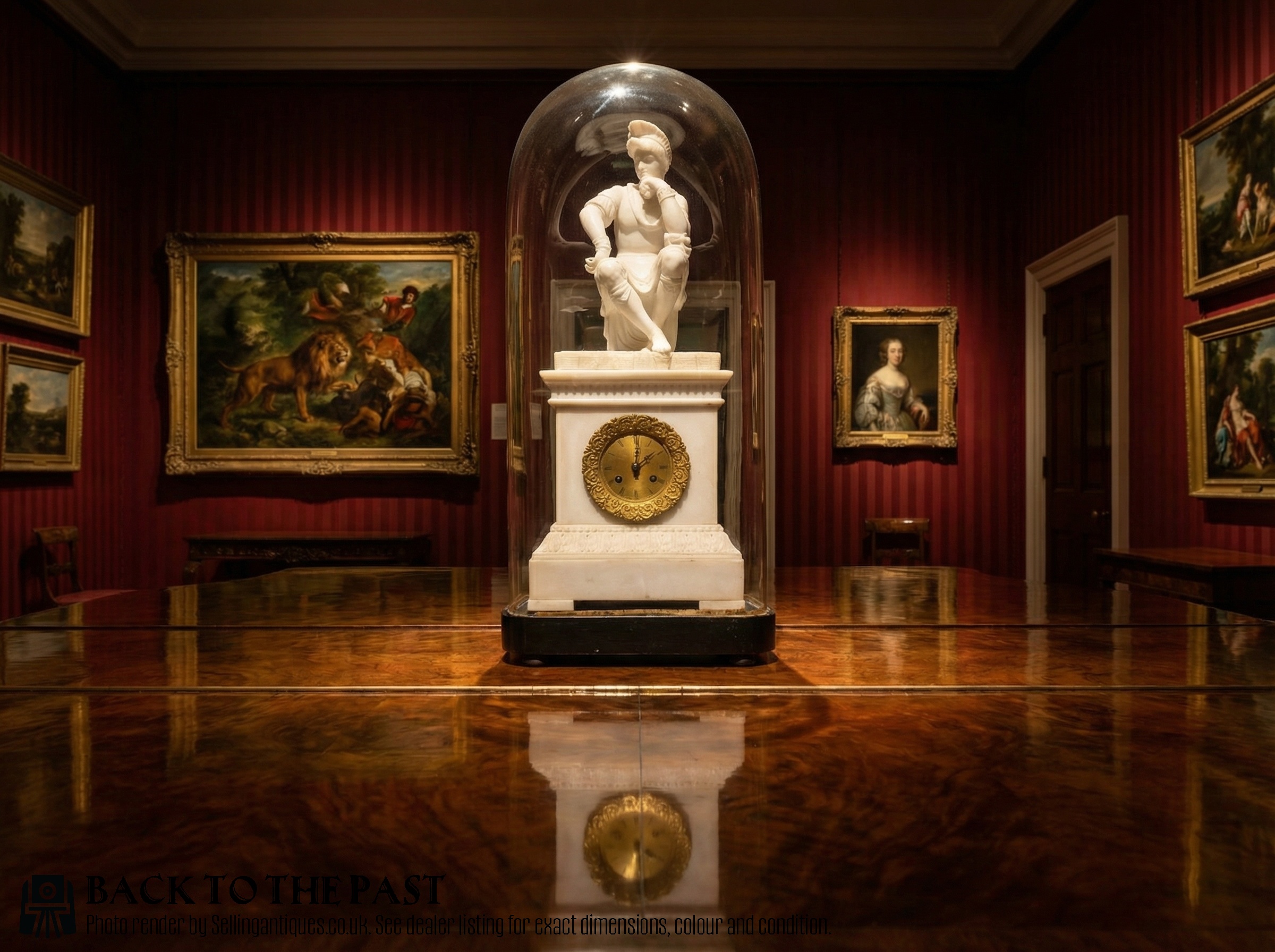
Quality variations
The fineness of the stone carving dictates the upper tier of quality, showing crisp architectural lines and smooth, unblemished surfaces without natural fissures. Heavy, detailed ormolu mounts with deep chasing separate superior examples from plain cast brass.
Movement quality underpins the value of any clock, evidenced by signed French mechanisms and single fusee or eight-day escapements that run reliably. Complete garnitures retaining their original candelabras and glass domes represent the highest grade.
Alabaster Mantel Clock Retail Price Guide 2026
Typical asking prices for alabaster mantel clock among the pieces listed under this phrase on Sellingantiques today, from the lower quarter to the upper quarter. They describe what is for sale here now, not the wider market.
Some cherubs swing back and forth as the clock ticks, keeping busy while the hands stand still.
James Ritchie And Son·Farcot
The Alabaster Mantel Clock Glossary
- Garniture
- A set consisting of a central clock and matching side ornaments such as urns or candelabras. These balanced sets decorated nineteenth-century mantelpieces.
- Ormolu
- Finely ground high-carat gold mercury-gilded to a bronze base metal. It provides a durable, bright finish on metal mounts.
- Portico clock
- A clock case styled with architectural columns supporting a central pediment. The pendulum often swings visibly between the pillars.
- Fusee
- A conical pulley used in clock movements to maintain even force as the mainspring unwinds. This mechanism improves timekeeping accuracy.
- Bezel
- The metal ring that holds the glass protecting the clock face. It usually hinges open to allow hand-setting.
Alabaster Mantel Clock: Frequently Asked Questions
How do I wind an alabaster clock?
Use the provided key to turn the winding squares on the enamel dial gently until you feel resistance. Do not overwind the mainspring.
Most nineteenth-century movements require a weekly turn to keep accurate time across the eight-day cycle.
Why does the clock run fast or slow?
Temperature changes and settling furniture can alter the beat of the pendulum. Adjust the small regulation nut on the pendulum rod to speed up or slow down the movement.
Clockmakers can also regulate the escapement if minor adjustments fail to correct the timekeeping.
How do I identify a French movement?
French movements often bear stamped foundry marks or serial numbers on the backplate of the brass mechanism. These makers supplied movements to retailers across Europe.
Many require a matching pendulum numbered to the movement to keep proper time.