



Afghan Tribal Mat
When you examine an afghan tribal mat, you encounter hand-knotted village weaving shaped by nomadic traditions from the nineteenth and early twentieth centuries.
Afghan Tribal Mat
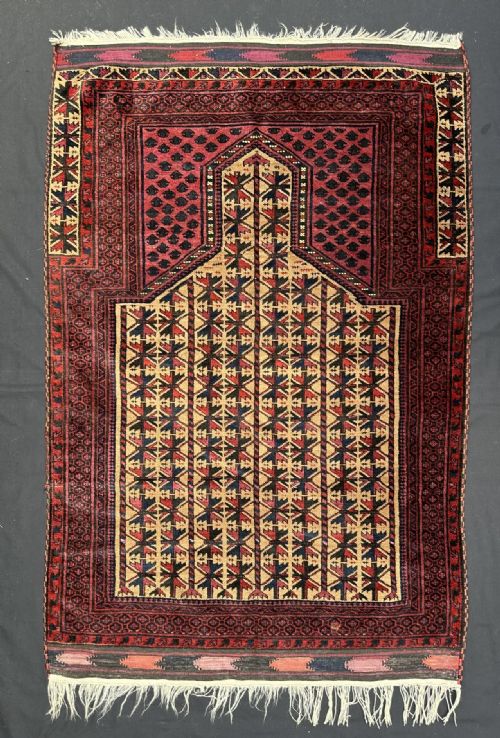
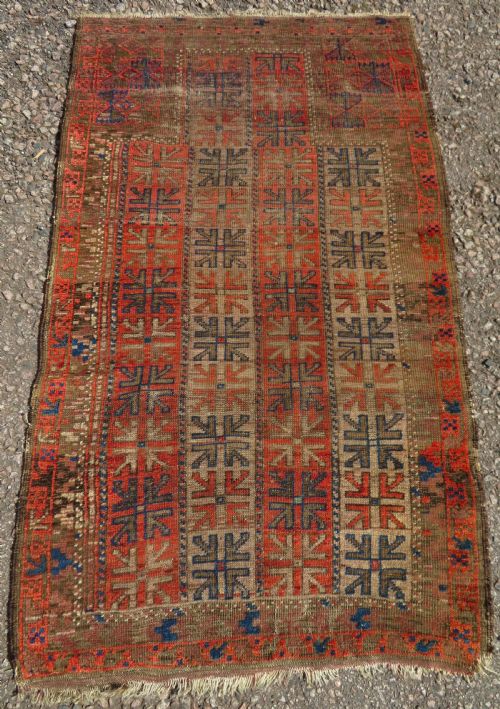
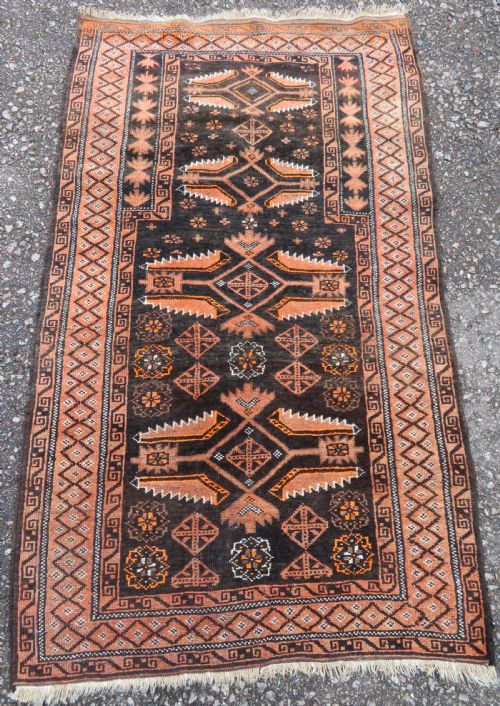
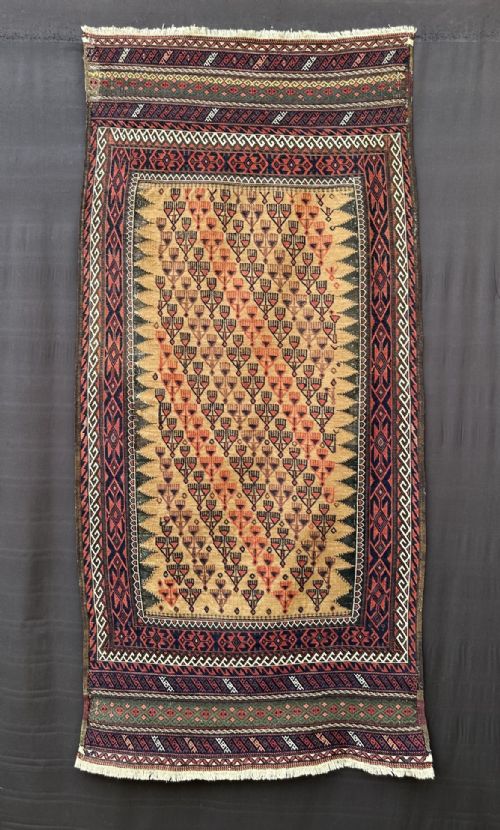
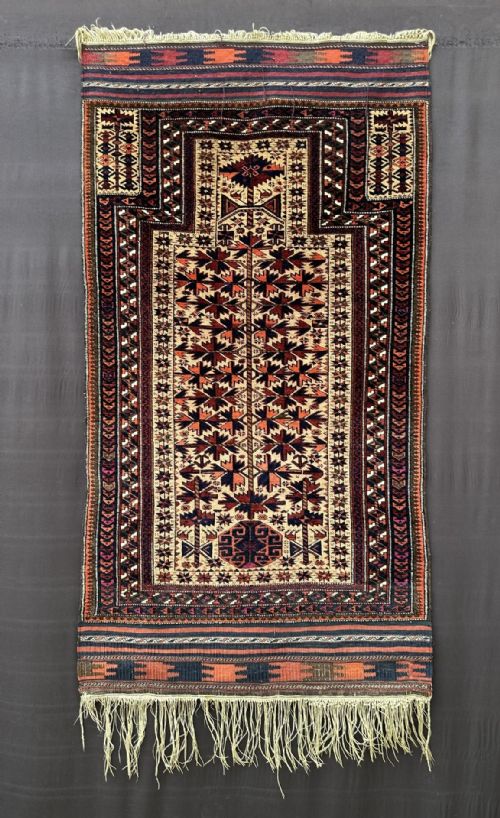
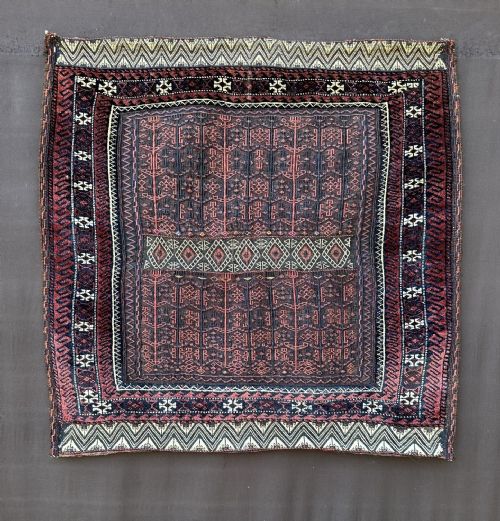
An afghan tribal mat encompasses practical floor coverings, dining sofrehs, bread sofrehs, and devotional prayer rugs created by various tribes and regional groups. Most examples encountered here originate from the borderlands of northeast Persia and northwest Afghanistan, bearing the distinct aesthetic of Baluch, Timuri, and Kizil Ayak makers.
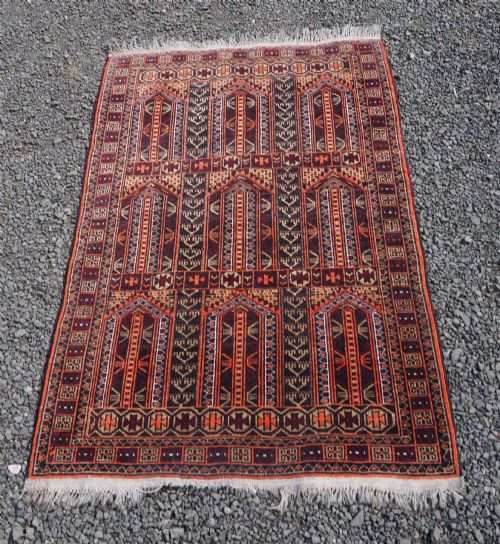
The formats frequently feature specialised architectural motifs such as single, double, or seh mihrab designs, mosque layouts, and geometric guls. Pieces span production dates primarily from the late nineteenth century through the early decades of the twentieth century, reflecting traditional nomadic and village lifestyles.
How they were made
Weavers utilised local resources, predominantly employing hand-spun wool for pile construction alongside cotton foundations and structural additions of goat hair or camel hair. These natural fibres provided durable substrates suited to daily utilitarian use in tents and village homes.
Colours derived from natural dyes, yielding deep hues and soft faded patinas that develop character over decades of exposure and wear. Mixed technique constructions and long kilim ends further distinguish regional production methods.
Certain village rugs incorporate unexpected animal figures and peafowl alongside traditional geometric prayer arches.
What varies in quality
The standard of an afghan tribal mat depends upon the precision of the knotting, the handling of the wool, and the depth of the palette achieved through natural dye use. Tighter foundations and well-balanced proportions separate finer tribal weaving from coarser village production.
Design complexity and regional scarcity influence character, with uncommon formats like multi-mihrab layouts, specific tribal attributions, and inscribed dates representing the more distinctive tier of surviving textile work.
The Afghan Tribal Mat Glossary
- Mihrab
- The prayer niche design found on devotional rugs, often rendered with single, double, or multiple arched contours pointing toward Mecca.
- Sofreh
- A utilitarian spread or cloth used for dining or bread preparation, woven in flatweave or pile techniques by nomadic groups.
- Gul
- A repeating medallion or octagonal motif traditional to Turkmen and Baluch tribal weaving traditions.
- Kilim
- A flatweave textile structure, frequently appearing as extended plain-weave end panels on village and tribal rugs.
- Patina
- The soft surface appearance and mellowed colour transition acquired by natural wool and dyes over long periods of time.
Afghan Tribal Mat: Frequently Asked Questions
How were these mats used originally?
Nomadic and village communities utilised these textiles as floor coverings, sitting mats, and dedicated prayer spaces within temporary or permanent dwellings.
Larger variants such as sofrehs served specific domestic functions for communal dining and bread making within tribal households.
How do I care for an antique wool rug?
Gentle vacuuming without a rotating power brush helps remove embedded dust while protecting fragile wool pile and flatweave ends.
Professional textile conservation cleaning is advisable for older pieces to preserve natural dyes and structural integrity.
How do I identify a prayer rug?
Prayer rugs feature a distinct architectural arch known as a mihrab, which directed the placement of the textile during daily devotion.
Designs often incorporate mosque lamps, geometric borders, or multiple mihrab arches arranged in rows.
What indicates a Baluch attribution?
Baluch tribal pieces typically display deep indigo and brown tones, geometric guls, and goat hair selvedges characteristic of nomadic production.
Many examples originate from the borderlands between Persia and Afghanistan, reflecting shared cultural motifs.