


Aesthetic Movement Silver
Aesthetic movement silver brings together the stylized naturalism and geometric discipline of late nineteenth-century design in objects made for daily use and display.

Aesthetic Movement Silver
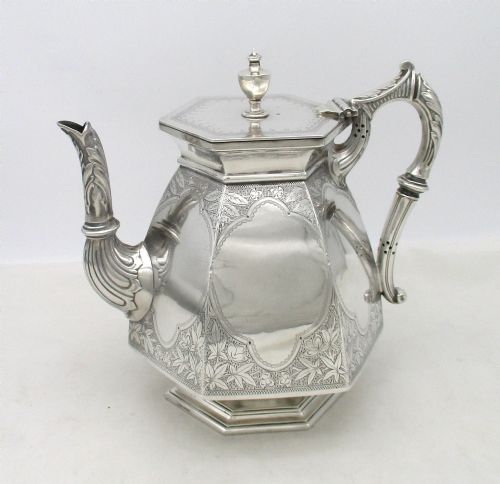
Aesthetic movement silver encompasses domestic items, personal accessories, and tableware produced primarily during the Victorian era. When searching for aesthetic movement silver, buyers encounter functional and decorative forms such as claret jugs, napkin rings, scent bottles, bangles, and teapots.
The objects stem from the late nineteenth century, spanning decades from the 1860s through to 1900. Pieces range from sterling silver and solid silver items to electroplated nickel silver, often paired with glass, ceramic, or tortoiseshell.
On this page, buyers frequently meet table wares and personal ornaments bearing hallmarks or attribution to designers like Christopher Dresser and makers such as Hukin & Heath. The selection captures both utilitarian dining pieces and wearable jewellery reflecting the distinctive artistic ethos of the period.
How They Were Made
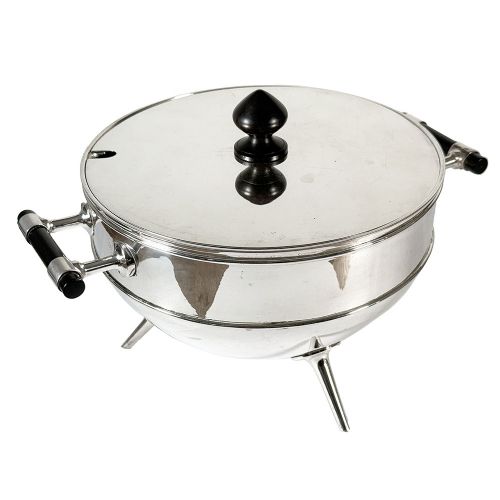
Makers utilised sterling silver and silver plate combined with materials like cut glass, opaline glass, ceramic, and ebonised wood. Metalworking techniques involved casting, stamping, engraving, and parcel-silvering to create tactile surfaces.
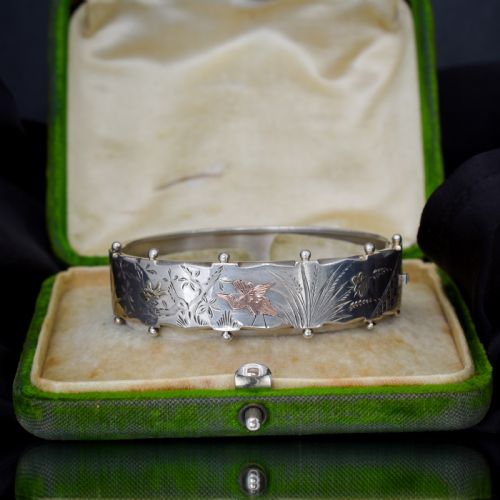
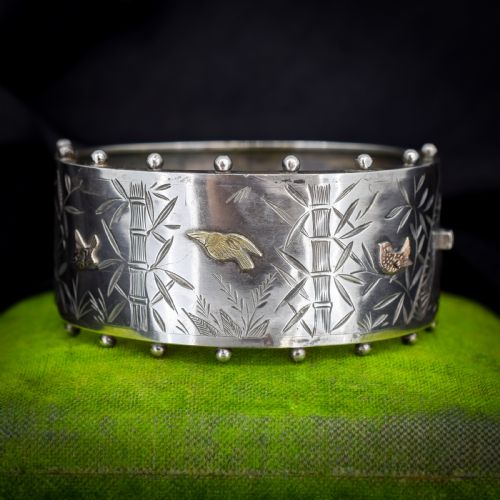
Workshops employed electroplated nickel silver for larger vessels, applying precise geometric engraving and naturalist motifs. Artisans integrated mixed metals such as gold accents on silver bangles and incorporated organic elements like bamboo patterns directly into the metalwork.
A tiny silver bird on a bamboo bangle still watches the room after more than a century.
What Varies In Quality
Quality rests upon the crispness of the engraving and the integration of diverse materials within a single piece. Superior examples display deliberate weight, secure mountings for glass or stone liners, and balanced proportions.
Authoritative design attribution and maker marks elevate certain items beyond standard production. The distinction lies in the fidelity of execution, whether in the precision of a modernist toast rack or the depth of hand-chased bird and foliage motifs.
Christopher Dresser·Hukin & Heath·Roberts and Belk·James Hennell·Horace Woodward & Co·Walter & John Barnard·Sampson Mordan·Martin Hall & Co·Deakin & Sons·George Adams·Levi & Salaman·Stokes & Ireland
The Aesthetic Movement Silver Glossary
- Sterling silver
- A silver alloy containing 92.5 percent pure silver by mass and 7.5 percent other metals, usually copper. This standard composition ensured durability for domestic tableware and personal accessories.
- Electroplated nickel silver
- A base metal alloy of copper, nickel, and zinc coated with a thin layer of pure silver through electrolysis. Manufacturers used this method to produce accessible yet decorative tableware.
- Claret jug
- A large pouring vessel designed specifically for serving red wine at the dining table. These jugs often featured silver mounts combined with cut glass bodies.
- Vesta case
- A small portable box used for holding matches, typically fitted with a striking surface on the base. Victorian examples in this category frequently display engraved aesthetic motifs.
- Salt cellar
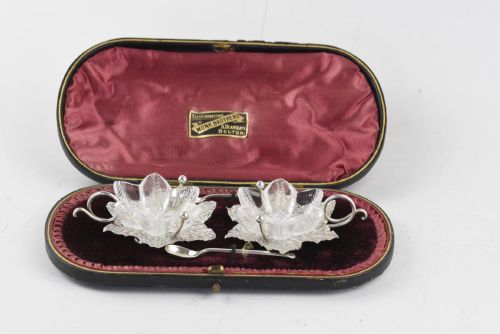
- A small open container or vessel used to hold salt for individual diners at the table. They were commonly paired with matching spoons and blue glass liners.
Aesthetic Movement Silver: Frequently Asked Questions
What is aesthetic movement silver?
Aesthetic movement silver refers to decorative and utilitarian metalwork produced during the late Victorian period that prioritised artistic design over strict historical revivalism. These pieces drew inspiration from Japanese art, nature, and geometry.
Items range from dining table accessories like claret jugs and napkin rings to personal adornments such as bangles and lockets. They represent a distinct shift toward asymmetrical compositions and stylised motifs.
How do I care for silver plate?
Silver plate requires gentle cleaning with a soft cloth and a specialised silver polish formulated to protect the underlying plated layer. Avoid abrasive materials that can wear down the thin silver coating over time.
Store pieces in a dry environment away from direct sunlight and humidity. Regular handling and gentle dusting help maintain the lustre without harming engraved details.
How were these items used originally?
These objects served both practical and decorative functions in middle and upper-class Victorian households. Tableware items like salt cellars, teapots, and muffin dishes were active components of formal dining and tea rituals.
Personal items such as scent bottles, card cases, and bangles were carried or worn as daily accessories. They functioned as expressions of personal taste and refinement during social interactions.
How do I identify a period piece?
Identifying a period piece involves examining hallmarks, maker stamps, and stylistic characteristics typical of the late nineteenth century. British silver often bears date letters and assay office marks that pinpoint the exact year of manufacture.
Stylistic cues include asymmetrical plant motifs, flattened perspectives, and integrated mixed metals. Comparing construction methods against known examples helps confirm authenticity.