


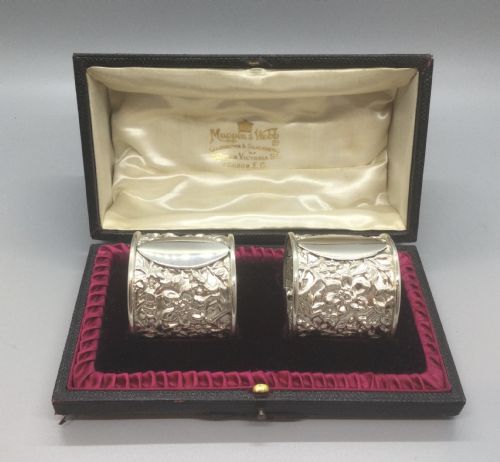

Victorian Serviette Ring
These Victorian serviette ring examples in sterling silver, silver plate, and hardwood offer a touch of nineteenth-century dining elegance for the modern table.

Victorian Serviette Ring
When you search for a victorian serviette ring, you encounter small circular bands designed to hold individual dining napkins at the table. These pieces emerge chiefly from the Victorian and Edwardian periods, stretching from the nineteenth century into the twentieth.
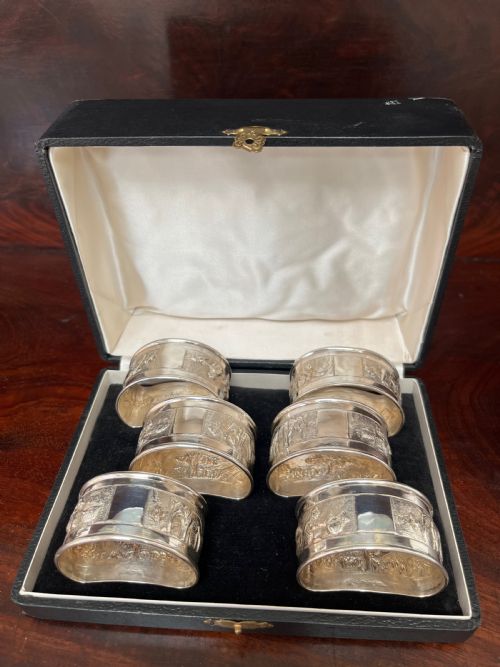
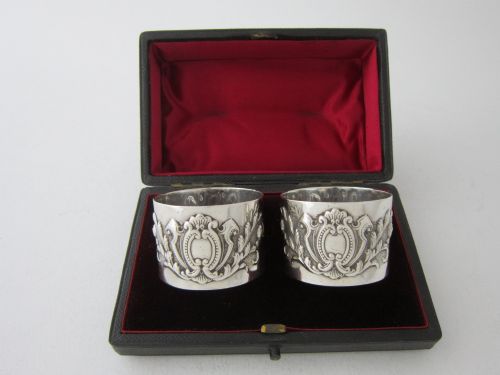
The materials span sterling silver, silver plate, and hardwood, occasionally accompanied by velvet, silk, or leatherette lining within original storage boxes. Most specimens date directly to the Victorian era, supplemented by Edwardian examples and later twentieth-century sets.
Materials and Construction
Makers shaped these items predominantly from sterling silver and silver plate, employing metalworking techniques to create cylindrical bands and decorative relief motifs. Silver examples frequently carry hallmarks indicating assay offices such as Chester and London alongside specific nineteenth-century dates.
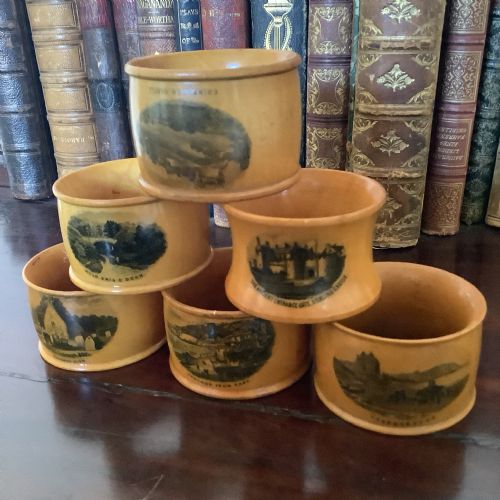
Alternative pieces utilise turned hardwood, notably represented by Mauchline ware constructions that showcase distinct woodworking skills of the period. Cased sets incorporate protective housings lined with materials like velvet, silk, and leatherette to safeguard the metal or wooden rings.
Listings feature items from the Victorian, Edwardian, and mid-twentieth-century periods, constructed in sterling silver, silver plate, and hardwood.
Assessing Quality and Merit
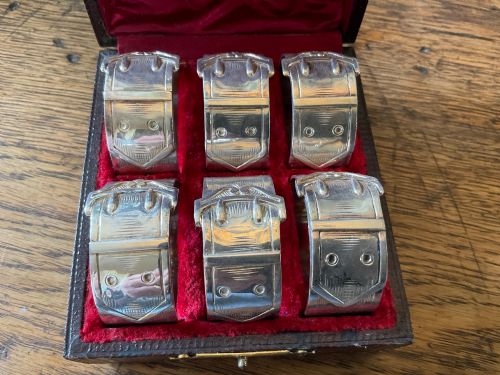
The distinction between standard items and superior examples rests upon the crispness of the manufacturing work, whether in the depth of silver hallmarks and buckle relief or the precision of turned hardwood grain. Complete sets housed within their original fitted presentation cases carry greater uniformity than assembled groups.
Material choice and preservation also define the range, with solid sterling silver and intact velvet or silk linings holding more intrinsic interest than silver plate or damaged cases. The presence of clear maker marks and legible dates from the nineteenth century adds definitive historical context.
The Victorian Serviette Ring Glossary
- Serviette ring
- A small ring used to hold a table napkin. These items keep individual napkins identified through meals.
- Sterling silver
- A silver alloy containing ninety-two point five percent pure silver by mass. This material forms the primary metal for the best-regarded examples.
- Mauchline ware
- Nineteenth-century wooden souvenirs and treen named after a Scottish town. These pieces utilise turned hardwood construction.
- Hallmark
- An official stamp applied to precious metals indicating standard of purity and origin. These marks reveal assay locations like London or Chester and production years.
- Silver plate
- A base metal coated with a thin layer of silver. This technique provided an accessible alternative to solid silver dining accessories.
Victorian Serviette Ring: Frequently Asked Questions
What is a victorian serviette ring used for?
These rings hold individual table napkins during meals, keeping them neatly rolled or folded between uses.
Historically, they assigned specific napkins to family members or guests across multiple dining occasions before daily laundering became standard.
How do I clean silver serviette rings?
Silver pieces benefit from gentle cleaning with a specialised soft polishing cloth designed for precious metals.
Harsh abrasive dips should be avoided to protect any engraved patterns, hallmarks, or applied relief details.
Are these napkin rings sold in sets?
Many examples appear as individual pieces or pairs, while others survive as complete sets of six.
Larger groupings are frequently housed within their original fitted presentation cases lined with silk or velvet.
How can I date a silver ring?
Dating relies upon examining the stamped hallmarks which indicate the specific assay office and active year of production.
Nineteenth-century pieces often display clear Victorian date ciphers alongside maker marks.