
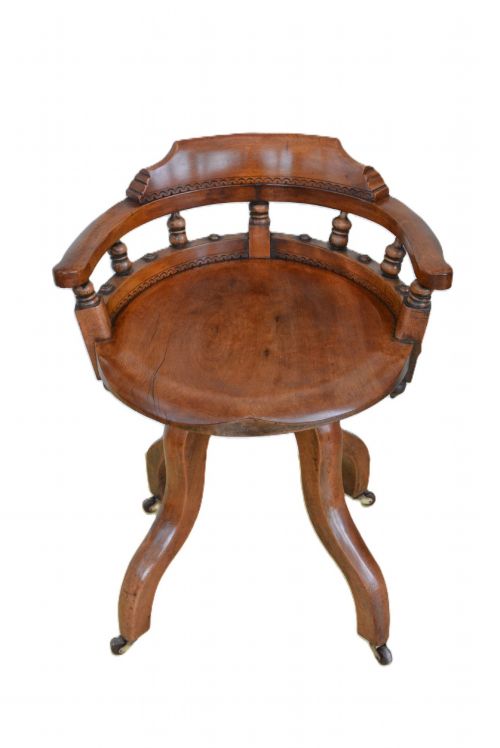
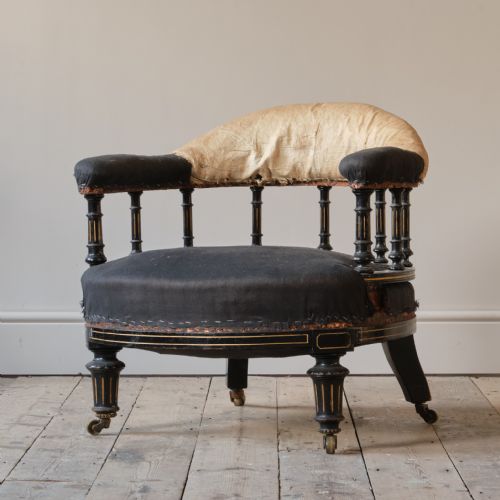


Aesthetic Movement Armchair
An aesthetic movement armchair brings late nineteenth-century reform and artistic polish into a modern room through honest construction and ebonised wood.
Aesthetic Movement Armchair
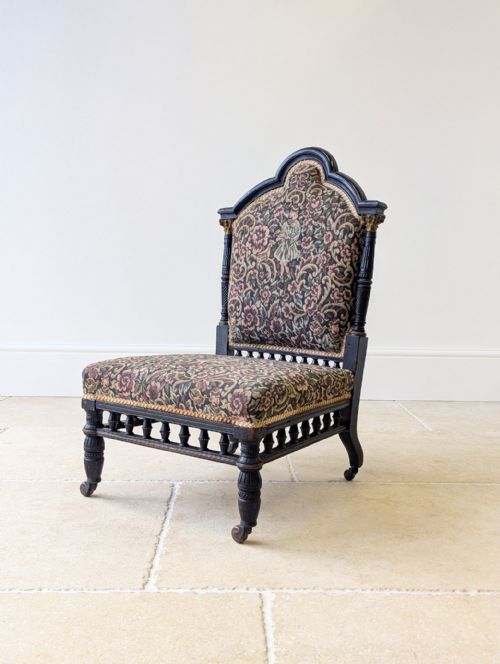
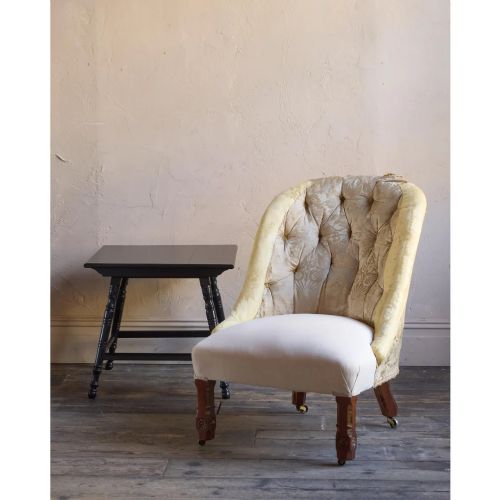
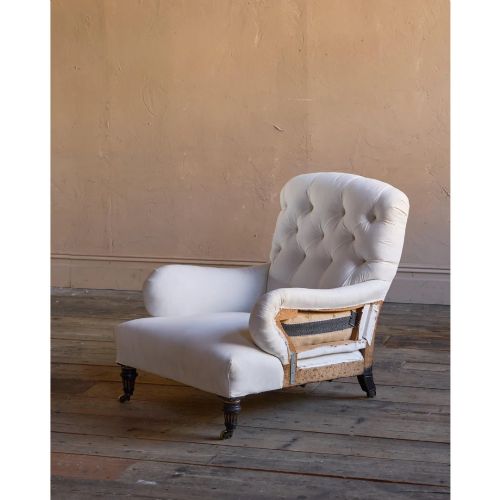
An aesthetic movement armchair sits within the wider landscape of nineteenth-century seating, drawing on Victorian production methods while rejecting heavy historicism in favour of lighter, more artistic forms. These chairs appear frequently in ebonised wood or walnut, taking the shape of low salon chairs, open armchairs, and nursing chairs designed for comfort and visual balance.
The pieces on this page emerge from the Victorian period, spanning the eighteen-seventies through to nineteen hundred, with specific manifestations in Anglo-Moorish, Gothic Revival, and Arts and Crafts crossover styles. Buyers encounter both modest bedroom seating and substantial library or desk chairs bearing turned members, spindle galleries, and characteristic low-slung proportions.
How they were made
Cabinetmakers constructed these frames using dense timbers like mahogany, walnut, and oak, frequently ebonising the surface to mimic the prized black woods of Japanese export pieces. Gilt highlights, subtle carved details, and inlaid panels often accentuate the structure without obscuring the clean architectural lines demanded by the style.
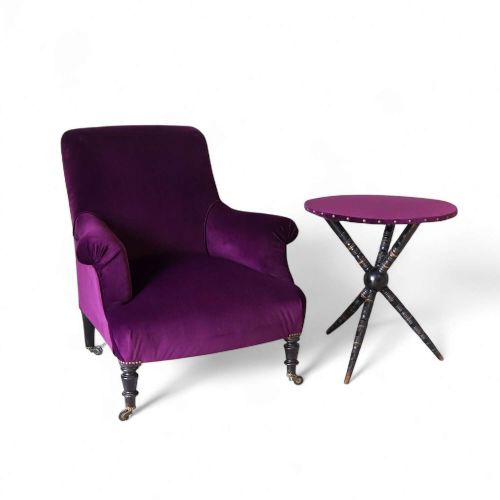
Upholstery materials range from contemporary velvet and designers guild purple fabric to traditional button-backed leather, rush seats, and simpler textiles tailored to specific forms like nursing chairs or swivel desk chairs. Brass castors and hardware appear regularly on heavier oak and walnut library models to aid movement across nineteenth-century floor coverings.
Several chairs include swivelling mechanisms, proving that nineteenth-century scholars appreciated ergonomic office comfort just as much as modern desk users do.
What varies in quality
Quality rests in the architectural integrity of the frame and the sharpness of any carved or ebonised detailing, distinguishing standard commercial production from workshop pieces designed by leading architects. Chairs attributed to specific makers or rendered in rarer configurations like swivelling desk mechanisms command greater attention from collectors.
The survival of original surface finishes, whether parcel gilt accents or polished ebonised coats, dictates the visual success of the piece. Subtle variations in proportion, from generous armchair dimensions to delicate corner chair turnings, reflect the differing ambitions of makers ranging from large London firms to individual designers.
E W Godwin·Gillows·Liberty and Co·Collier and Plucknett·Charles Bevan·James Shoolbred·Maple and Co
The Aesthetic Movement Armchair Glossary
- Ebonised wood
- Timber treated with stain or paint to achieve a dense, polished black finish that imitates ebony. This treatment defined much of the fashionable furniture produced during the late Victorian period.
- Anglo-Moorish
- A sub-style within the aesthetic movement incorporating Islamic architectural motifs, intricate turned grilles, and Mashrabiya panels. These elements arrived on English seating via cosmopolitan exhibition displays.
- Parcel gilt
- A decorative technique where small portions of a finished surface receive a thin layer of gold leaf. It highlights structural joints and carved details on ebonised chairs.
- Mashrabiya
- A type of projecting wooden window or balcony screen formed of turned wooden elements, adapted by Victorian makers into furniture panels and corner chair backs.
- Rush seat
- A seating surface woven from dried marsh plants, commonly found on simpler vernacular and Arts and Crafts influenced chairs. It provides a tactile, organic contrast to polished wooden frames.
Aesthetic Movement Armchair: Frequently Asked Questions
How do I identify an aesthetic movement armchair?
Look for ebonised or dark wood frames, clean structural lines, and stylistic influences drawn from Japanese or Anglo-Moorish design rather than heavy classical revival forms. These chairs often feature turned spindles, low proportions, and subtle gilt highlights.
Check the construction methods and period materials, as nineteenth-century examples frequently employ walnut, mahogany, or oak alongside original fabric or leather upholstery.
Were these chairs used in bedrooms or reception rooms?
Aesthetic movement seating served multiple domestic functions, appearing as low salon chairs in formal entertaining spaces, nursing chairs by firesides, and bedroom chairs of varying proportions. Their lighter frames allowed for easy movement around Victorian interiors.
Heavier oak or walnut versions functioned as desk chairs, library armchairs, or swivel chairs for dedicated studies and offices.
What is the difference between aesthetic movement and arts and crafts chairs?
Aesthetic movement furniture emerged earlier in the nineteenth century, prioritising visual harmony, eclectic global influences, and polished ebonised surfaces designed for refined urban interiors. Arts and crafts pieces tended to emphasise visible handcraftsmanship, unpainted natural timbers, and structural honesty.
Many makers bridged both worlds, producing clean-lined oak and walnut seating that reflected the evolution of reform design towards the turn of the century.
How should I care for an ebonised wooden frame?
Maintain ebonised surfaces by dusting with a soft, dry cloth and avoiding modern liquid polishes that can degrade the historic finish. Keep the chair away from direct sunlight and sudden humidity shifts to protect both the timber and any gilt highlights.
If the piece retains antique upholstery or delicate textiles, handle the seat edges with care and consult a specialist restorer for deep cleaning.