


Gilded Ebonised Chair
A gilded ebonised chair brings dark wood and bright metal together in a striking piece of seating designed to catch the eye in any room.
Gilded Ebonised Chair
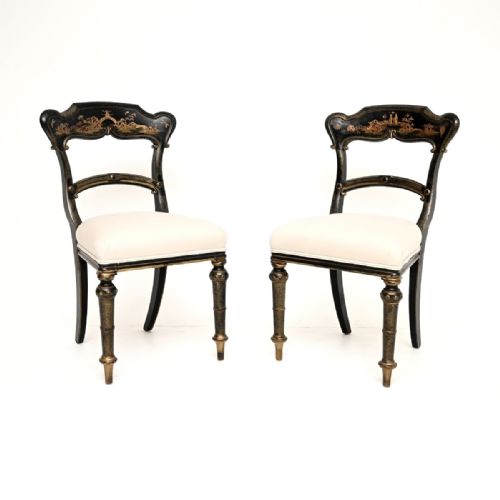
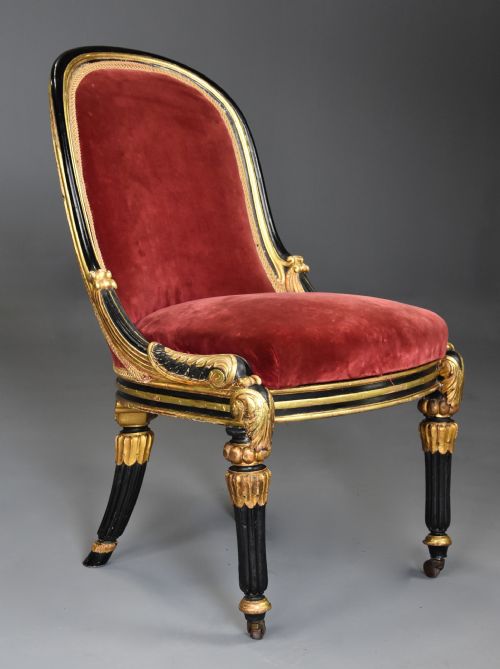
A gilded ebonised chair is a seat made from dark or blackened timber highlighted with gold leaf or gilt ornamentation. These pieces span the nineteenth century and into the early twentieth century, taking forms such as side chairs, armchairs, and piano stools.
You are most likely to meet Victorian and Regency examples on this page, often built as side chairs, hall chairs, or bedroom chairs. The styles range from English Regency and French Empire to the later Aesthetic Movement and Victorian Chinoiserie.
Makers utilised ebonised wood alongside brass, velvet, and fabric to create decorative seating for parlours, bedrooms, and drawing rooms. The physical evidence shows both single items and matched pairs designed for formal or domestic spaces.
How they were made
Craftsmen built these frames from timber treated to achieve a deep ebonised finish, mimicking expensive ebony wood. Artisans then applied gold leaf or parcel gilt highlights by hand to accentuate carved details, mouldings, and turned legs.
Upholstered versions incorporated traditional stuffing methods and fabrics such as velvet, while other forms relied on smooth lacquered wood surfaces. Workshops occasionally utilised papier-mâché for specific furniture types like lightweight bedroom chairs.
Some nineteenth-century makers achieved the ebonised look using ordinary fruitwood stained so deeply that only an expert eye could tell the difference.
What varies in quality
The standard of a gilded ebonised chair depends heavily on the crispness of the carving and the precision of the gilding applied over the dark wood. Superior examples display clean joinery and well-preserved metal leaf that has aged evenly without heavy flaking.
The choice of secondary materials, from durable hardwood frames to fine upholstery fabrics, dictates the refinement of the piece. Later reproductions or simpler utility chairs often lack the delicate proportions and hand-finished details found in higher-grade period items.
Bruce J Talbert·Holland and Son·Jennens and Bettridge
The Gilded Ebonised Chair Glossary
- Ebonised wood
- Timber stained or painted black to imitate costly ebony. This dark finish provides a strong contrast against gold leaf.
- Gilt
- A thin layer of gold or gold-like material applied to the surface of wood. It catches the light and highlights carved decorative motifs.
- Aesthetic Movement
- A late nineteenth-century design style focusing on beauty and craftsmanship rather than narrative or moral function. Pieces from this movement often feature ebonised surfaces with gilt detailing.
- Side chair
- A small, lightweight chair without arms designed for dining or occasional use around a room. They frequently appear in matched pairs in the historical record.
Gilded Ebonised Chair: Frequently Asked Questions
What rooms suit a gilded ebonised chair?
These pieces function well in drawing rooms, studies, and bedrooms where their dark finishes and metallic highlights add visual weight. They serve equally as occasional seating or as decorative accents against neutral walls.
Because they take various forms from armchairs to piano stools, you can place them beside desks, dressing tables, or in quiet corners. Their compact size makes them adaptable to diverse interior layouts.
How do I care for the gilt finish?
Gold leaf requires gentle handling to prevent the thin metallic layer from wearing away over time. Dust the surface regularly with a soft, dry cloth without applying harsh cleaning chemicals.
Keep these chairs away from direct sunlight and damp environments to protect both the ebonised wood and the delicate gilding. Proper humidity control prevents the timber from moving and cracking the finish.
Are these chairs comfortable for daily use?
Many of these pieces were built for formal parlours, reception rooms, or bedrooms rather than long lounging sessions. Upholstered variants offer padded seating, while wooden side chairs provide firmer support.
Consider how you plan to use the chair in your daily routine when selecting between a plush armchair, a low nursing chair, or a rigid hall chair.
How do Regency and Victorian pieces differ?
Regency seating often draws inspiration from classical antiquity with clean lines and restrained ornamentation. Victorian examples tend towards heavier proportions, richer upholstery, and varied stylistic revivals including Chinoiserie and the Aesthetic Movement.
Examining the turning of the legs and the style of the gilt decoration helps distinguish between the classical restraint of the early nineteenth century and the later Victorian decorative phases.