
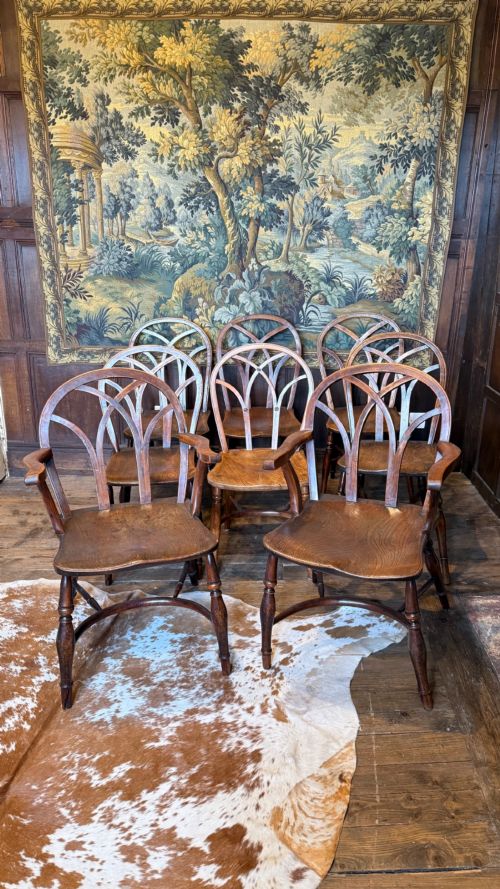


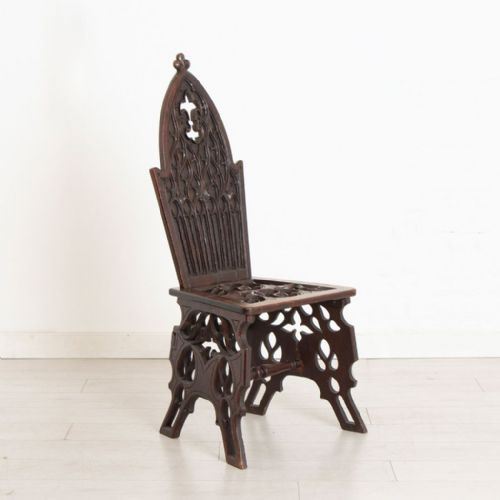


Gothic Arch Dining Chair
These gothic arch dining chair selections bring architectural pointed silhouettes straight to the table with solid historic presence.
Gothic Arch Dining Chair
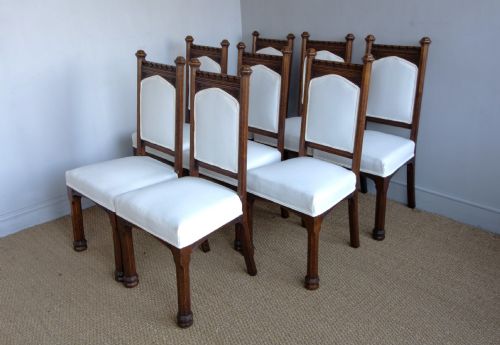
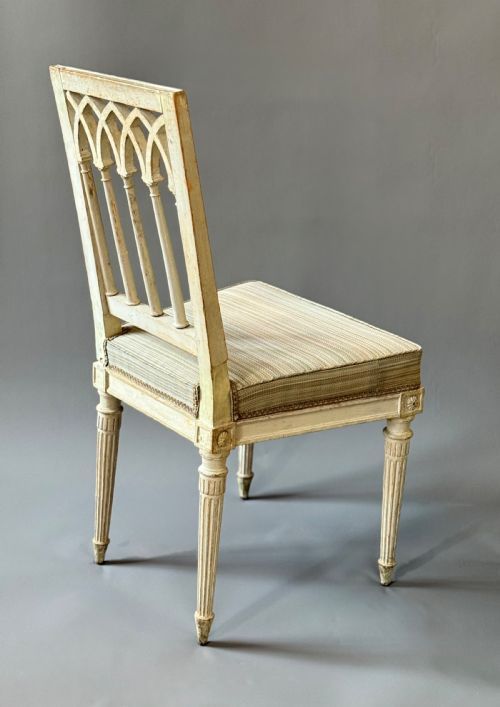
A gothic arch dining chair draws upon medieval cathedral architecture, featuring pointed arched splats and vertical lancet motifs adapted for domestic seating. You will encounter these pieces in forms ranging from single hall chairs and armchairs to full dining sets.
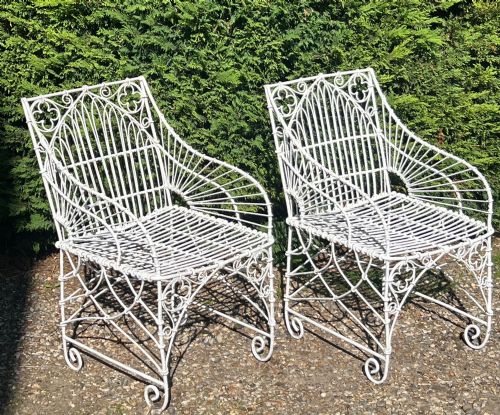
The material palette spans sturdy oak and rich mahogany alongside painted wood and wrought iron. Makers applied these designs across the eighteenth and nineteenth centuries, spanning Georgian Gothick, Victorian Gothic Revival, and early twentieth-century garden pieces.
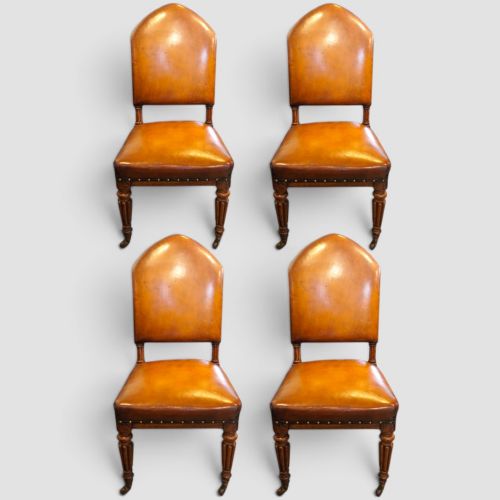
Seating options within this category include plain timber panels, upholstered pads in fabric, and fitted leather inserts. These chairs function equally well gathered around a formal dining table or placed as statement pieces in a hallway.
Materials and construction
Carpenters constructed these chairs predominantly from heavy hardwoods like oak and mahogany, relying on traditional joinery to frame the architectural backrests. Selected examples incorporate painted finishes or wrought iron work tailored for exterior or robust interior use.
Upholstered variations integrate leather seats or fabric cushions secured over internal padding to balance rigid wooden framing with functional comfort. Brass detailing and shaped wooden panels frequently accent the primary structural timbers.
Even iron garden chairs occasionally borrowed cathedral window patterns, proving that nineteenth-century plants deserved proper gothic shelter.
Assessing quality
Quality rests in the precision of the carved tracery and the structural integrity of the timber frame. Pieces attributed to specific workshops or produced during the Georgian and Victorian periods display superior depth and relief in their architectural motifs.
The choice of primary wood and the preservation of original leather or fabric surfaces dictate the overall standing of an individual chair. Matching sets demonstrate greater consistency in proportion and hand-carved detail than assembled groups.
The Gothic Arch Dining Chair Glossary
- Gothic Revival
- A design movement that revived medieval architectural forms, notably pointed arches and trefoils, during the eighteenth and nineteenth centuries. This style heavily influenced domestic furniture and church decoration.
- Gothick
- An eighteenth-century precursor to full revivalism that playfully integrated medieval pointed arches into standard furniture silhouettes. Georgian cabinet makers utilised this lighter decorative vocabulary.
- Tracery
- The stonework framework supporting glass in a Gothic window, translated by furniture makers into carved wooden openwork on chair backs. It defines the visual rhythm of the primary arch.
- Splat
- The central vertical strip of wood in the back of a chair, shaped here to mimic ecclesiastical pointed windows and lancets. It bears the main decorative weight of the design.
- Lancet
- A slender pointed window shape characteristic of early Gothic architecture that frequently inspires the proportions of these chair backs. It emphasises verticality in the overall silhouette.
Gothic Arch Dining Chair: Frequently Asked Questions
Are these chairs comfortable for daily dining?
Many examples feature supportive wooden backrests and upholstered leather or fabric seats designed for seated dining.
Heavier hall chairs lean more toward decorative placement, while dedicated dining sets offer practical ergonomics for regular use.
How do I date a gothic arch dining chair?
Dating relies on timber selection, construction techniques, and stylistic markers such as Georgian Gothick lightness versus Victorian heaviness.
Evidence from nineteenth-century revivals often reveals machine-assisted joinery alongside hand-carved architectural details.
Can I mix these with modern tables?
The strong architectural lines of pointed arches and carved tracery create striking contrasts against contemporary minimalist dining tables.
Pairing historic oak or mahogany frames with modern surfaces grounds the room with textural depth and historic contrast.
What is the difference between a hall chair and a dining chair?
Hall chairs are typically constructed entirely from solid wood with rigid upright backs intended for occasional seating in corridors.
Dining chairs prioritize sustained comfort and are frequently produced in matching sets with padded leather or fabric inserts.