

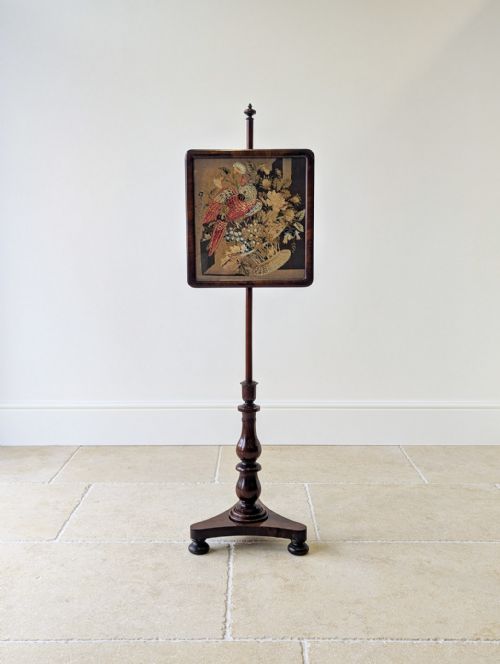


Adjustable Hearth Screen
These adjustable hearth screen designs combine a sturdy standing pole with a sliding panel to deflect the fierce heat of an open fire.
Adjustable Hearth Screen
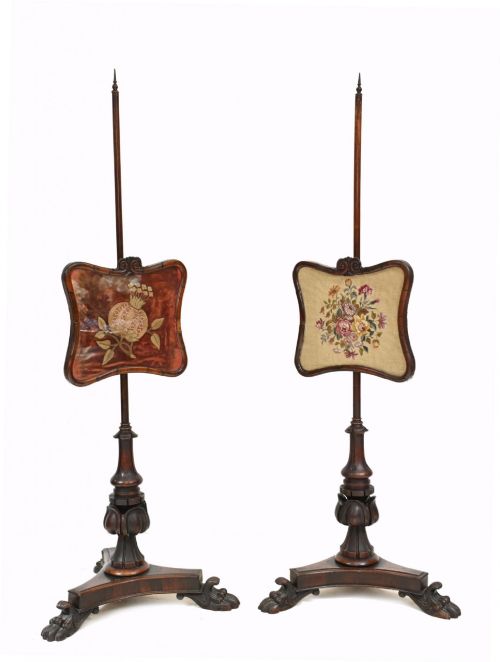
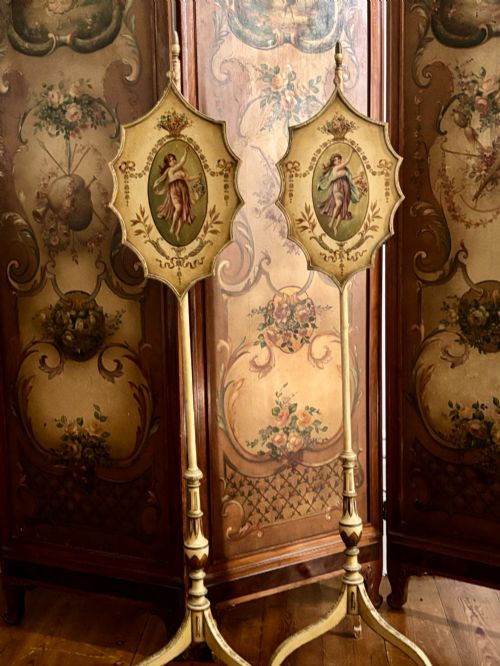
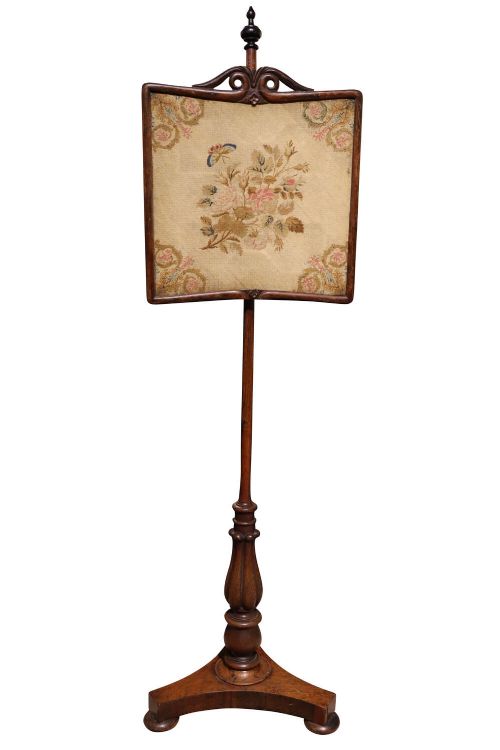
When you search for an adjustable hearth screen, you encounter tall standing pieces predominantly styled as pole screens from the Georgian, Regency, and Victorian periods. These practical furnishings utilise a vertical wooden shaft mounted on a weighted base, supporting a movable central panel that slides up and down.
How they were made
Cabinet makers constructed the vertical stands and bases using durable timbers including mahogany, rosewood, satinwood, walnut, and giltwood. Turning, carving, and spade feet formed the stable foundations required to support the height of the shaft.
The functional sliding mechanism relied on clever engineering within the panel mount to hold the screen at the desired height. Artisans embellished these central shields using embroidered wool, silk textiles, needlepoint tapestry, etched glass, and poker work.
Adjustable Hearth Screen Retail Price Guide 2026
Typical asking prices for adjustable hearth screen among the pieces listed under this phrase on Sellingantiques today, from the lower quarter to the upper quarter. They describe what is for sale here now, not the wider market.
What varies in quality
The sophistication of the timber turning and the weight of the base set superior examples apart from standard workshop output. A well-balanced pole and a smoothly functioning adjustment mechanism indicate careful construction by skilled cabinet makers.
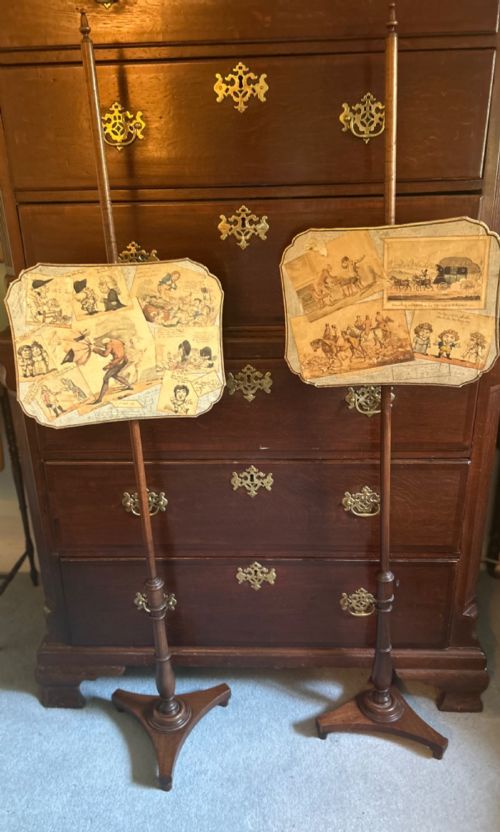
Artistic execution on the panel itself dictates the upper tier of the range, seen in finely executed needlepoint tapestries, detailed satirical prints, and delicate etched glass. The integration of materials like bronze or giltwood further elevates the execution.
The Adjustable Hearth Screen Glossary
- Pole screen
- A freestanding vertical screen with an adjustable panel designed to protect the face from fireplace heat. It typically stands on a tripod or circular weighted base.
- Needlepoint
- A type of canvas work embroidery used extensively for the decorative panels mounted within the screen frames. It frequently displays floral or pictorial designs in coloured wools.
- Reflector
- A glass or polished panel designed to bounce light and warmth back into the room rather than merely blocking radiant heat. These items often utilise clear or etched glass surfaces.
- Poker work
- The technique of burning designs into wood using a heated tool to create detailed imagery on the panel. This method produces distinctive sepia-toned artwork.
Adjustable Hearth Screen: Frequently Asked Questions
How do you adjust the panel height?
A friction collar or internal spring mechanism allows the central panel to slide smoothly along the vertical pole. You simply push the screen up or down to position it against the radiant heat.
Over decades of use, these friction mechanisms require gentle handling to preserve the timber and ensure the panel remains securely positioned at your chosen height.
Where were they placed in the room?
These screens stood directly between sitting occupants and the open hearth to shield faces from intense coal or wood fires. Their adjustable panels allowed people to sit comfortably close to the fireplace without overheating.
When not in use near the fire, they served as decorative furniture items placed against drawing room walls to display fine needlework and polished timber.
How do I identify a Regency period piece?
Regency examples often display classical influences such as rosewood graining, brass inlay, and crisp turned pillars on tripartite bases. Makers during this era favoured refined proportions and clean architectural lines.
Examining the turning style and timber selection helps distinguish these early nineteenth-century pieces from later Victorian interpretations, which tended towards heavier proportions.
What materials are the panels made from?
Panels incorporate a diverse range of artistic mediums including wool needlework, silk embroidery, woven tapestry, and paper mâché. Some specialised examples utilise glass reflectors or framed satirical prints.
The backing and frame typically match the primary timber of the stand, utilising mahogany, rosewood, or walnut to create a cohesive decorative object.