





Adjustable Desk Lectern
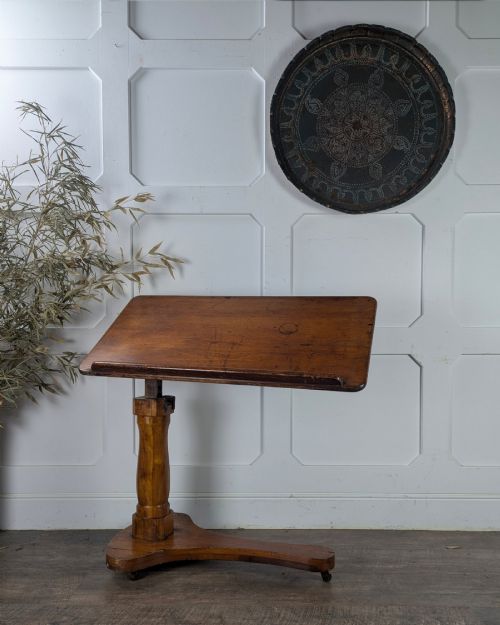
An adjustable desk lectern is a functional support for reading and writing, built to alter height and angle for the user.
Adjustable Desk Lectern
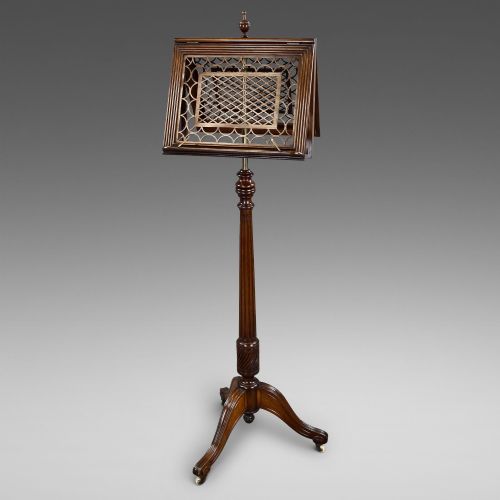
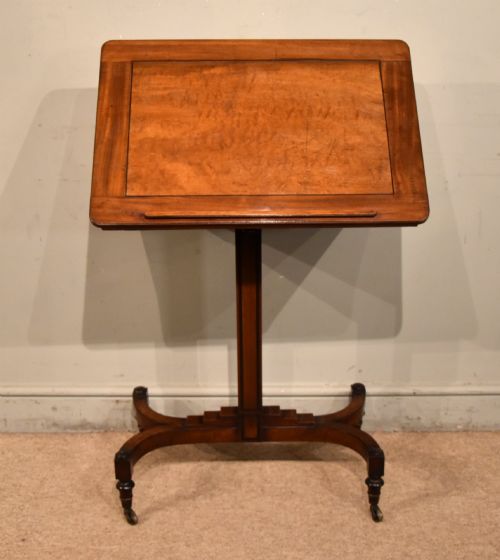
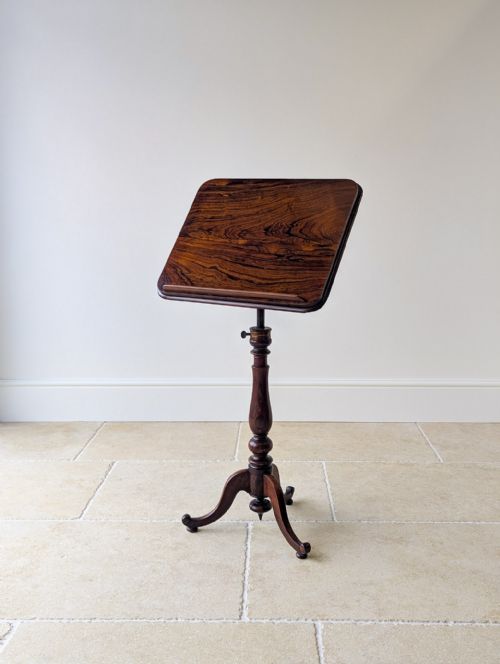
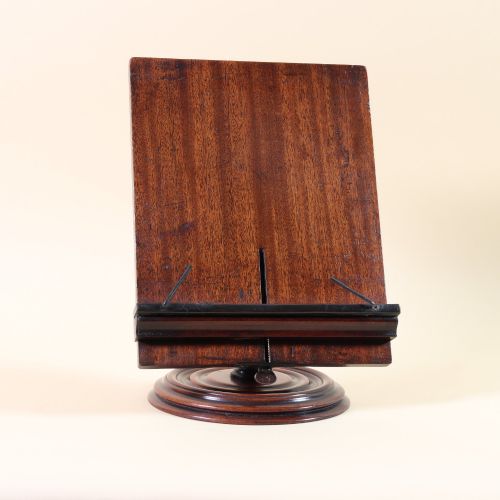
An adjustable desk lectern serves as a practical stand for books, music, and papers, designed to alter its height and angle to suit the reader. When you search for an adjustable desk lectern, you encounter items intended to hold reading material steady on a table or desk surface.
The selections span the Regency, William IV, Victorian, and Edwardian periods, alongside nineteenth-century examples. Mahogany and rosewood dominate the earlier pieces, while oak, walnut, and pine appear across the Victorian and twentieth-century eras.
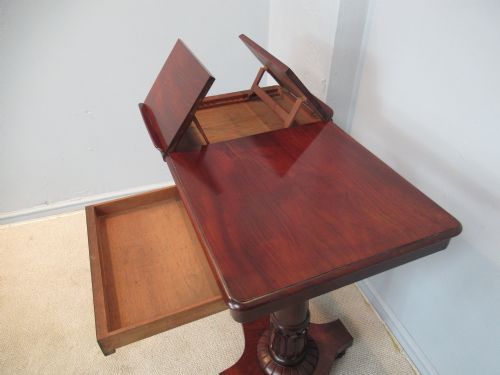
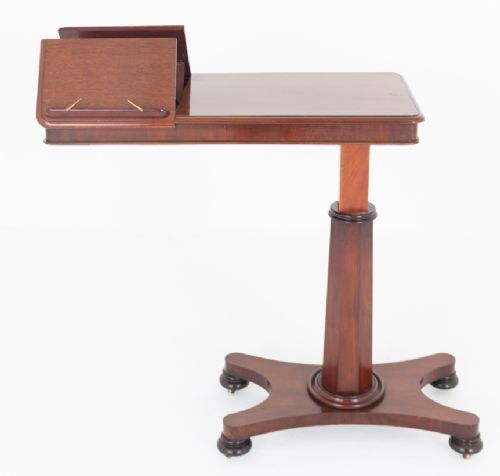
Most entries function as reading tables, music stands, book rests, or occasional tables with adjustable mechanisms. Mahogany reading tables and rosewood music stands represent the most common formats you will meet on this page.
How they were made
Cabinet makers utilised dense hardwoods such as mahogany, rosewood, and walnut for the primary framework and book rests. These timbers were selected for their stability and capacity to take fine carving and polished finishes.
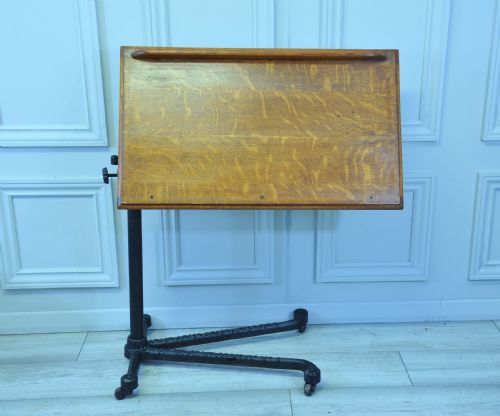
Makers integrated brass ratchets, screws, and metal fittings to enable the adjustable height and tilting actions. Cast iron also appears in combination with oak and pine on later nineteenth and early twentieth-century examples.
What varies in quality
The refinement of the timber and the complexity of the adjustable mechanism distinguish the finest pieces from simpler work. Well-figured mahogany and richly grained rosewood indicate superior selection of materials by the cabinet maker.
Sophisticated brass ratchets, smooth mechanical adjustments, and integrated folding actions demonstrate higher grade construction. Finer examples also feature careful joinery and inlaid decorative details rather than plain functional framing.
Carters Of London·Gillows
The Adjustable Desk Lectern Glossary
- Lectern
- A reading desk with a slanted top designed to hold a book at a comfortable angle for a speaker or reader. They sit upon tables or stand independently on columns.
- Ratchet
- A mechanical device with teeth and a engaging catch that allows linear or rotary motion in only one direction. In these pieces, it secures the reading slope at various angles.
- Duet stand
- A music stand wide enough to accommodate a shared sheet of music for two performers. These often feature adjustable double desks.
- Campaign
- Portable furniture designed for travel, typically featuring folding supports and robust construction. These pieces were easily packed down for transit.
- Gonçalo Alves
- A dense exotic hardwood with striking figuring, sometimes called zebrawood, used for high-status nineteenth-century furniture. It provides a distinct contrasting grain pattern.
Adjustable Desk Lectern: Frequently Asked Questions
How do I adjust the reading angle?
Most pieces use a brass ratchet mechanism mounted beneath the book rest. You lift the ledge to the desired notch to secure the slope.
Heavier stands may employ screw adjustments or friction arms to hold the desk firm.
Were these used for music or books?
They served both purposes depending on the form of the desk. Music stands often featured adjustable metal candle sconces or wide ledges for scores.
Reading tables and book rests were built with flat surfaces or book-retaining lips for volumes and papers.
Can I place these on a normal desk?
Tabletop versions sit directly on existing desks or tables without requiring floor space. They offer an elevated reading surface that folds flat when not in use.
Larger freestanding variants incorporate their own tripod or pillar bases.
What woods should I expect to find?
Mahogany and rosewood appear frequently in Regency and Victorian pieces. Walnut and oak become more common toward the middle and end of the nineteenth century.
Pine and cast iron feature in utilitarian or later examples from the twentieth century.