




Adjustable Brass Floor Lamp
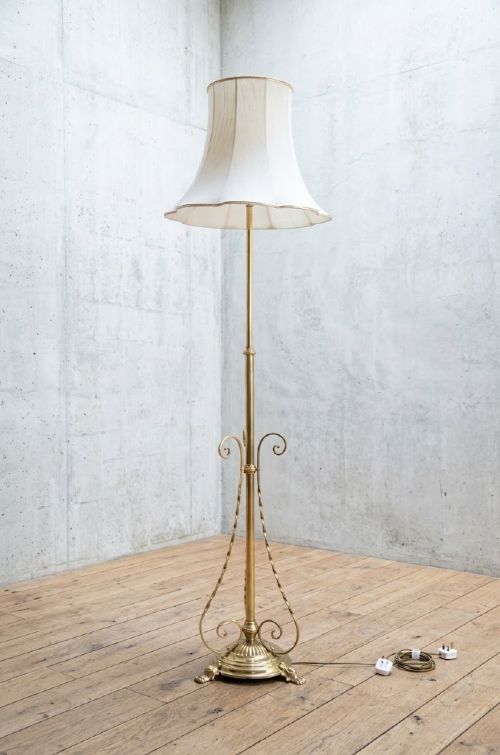
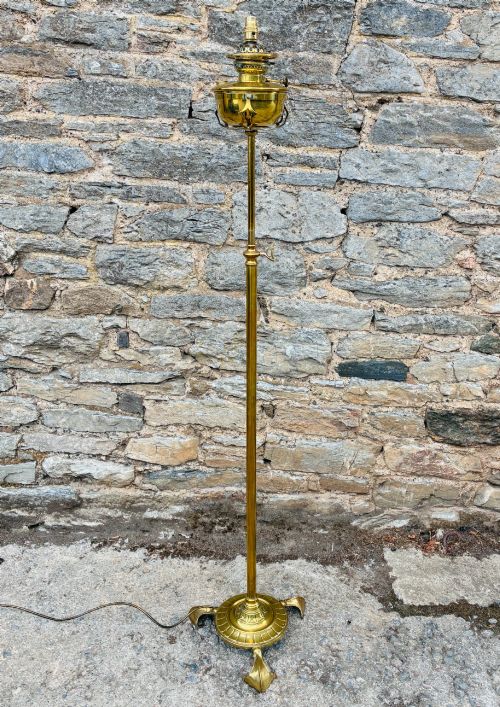
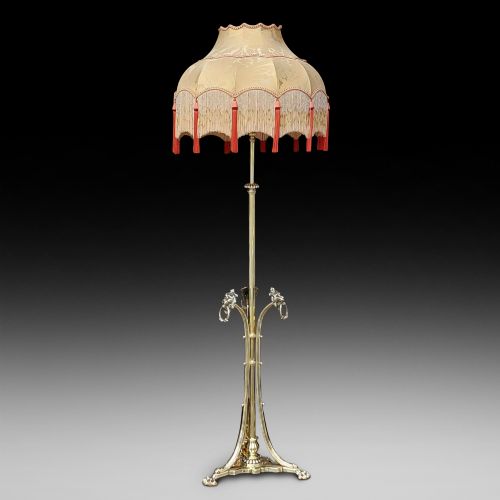
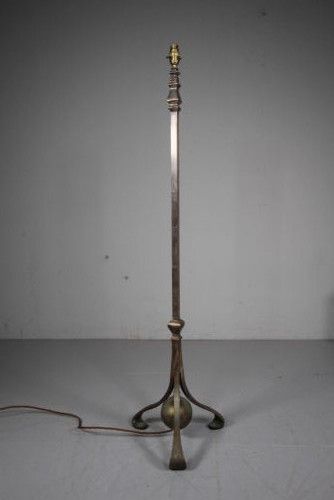
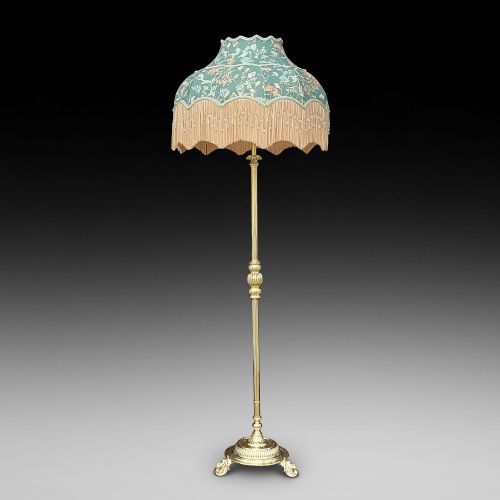
An adjustable brass floor lamp brings directional height and period weight to a room, and you will find Victorian, Edwardian, and mid-century examples here.
What these pieces are
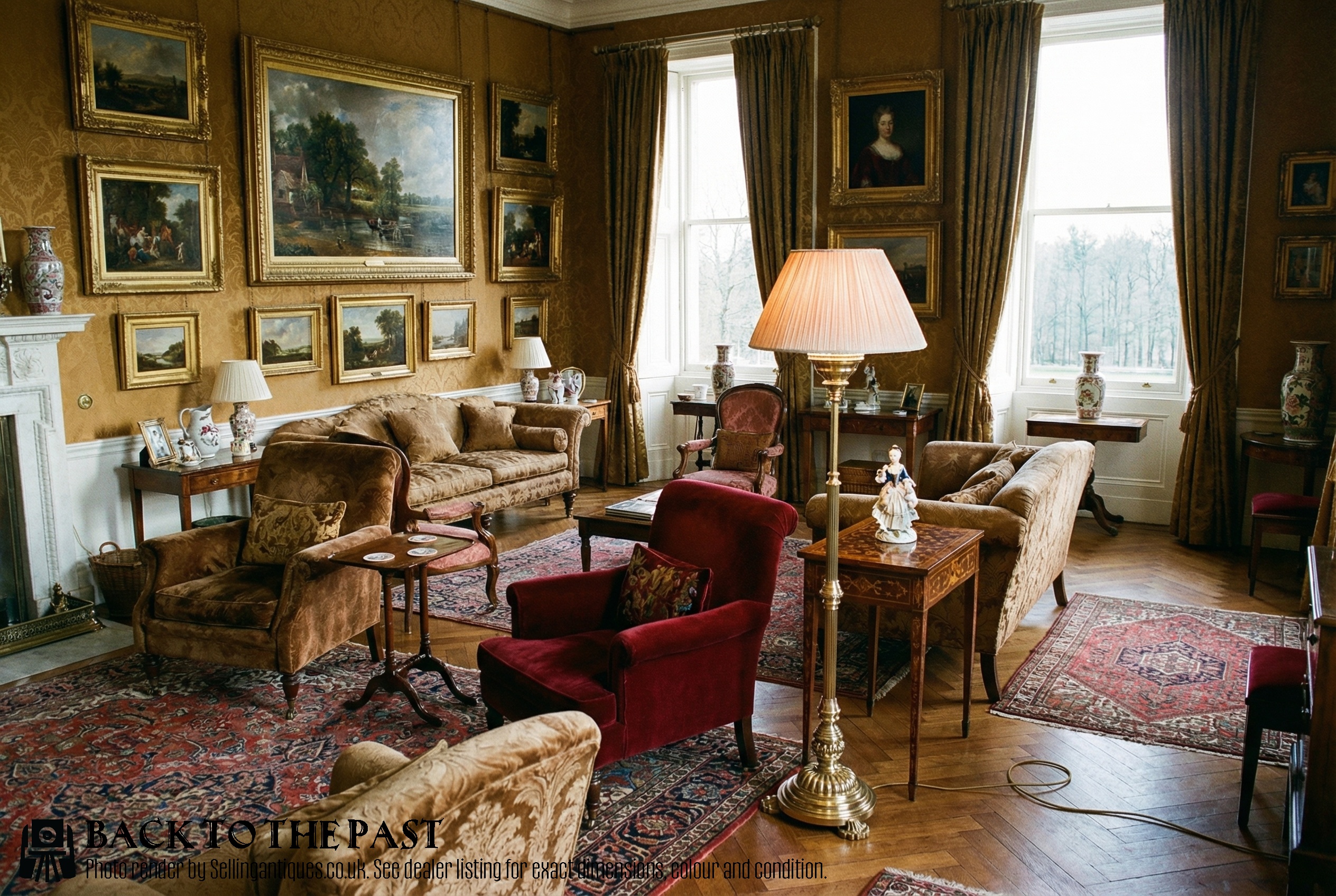
When you search for an adjustable brass floor lamp, you are looking at tall, weighted standards designed to raise and lower their illumination. These pieces serve as both practical reading lights and strong vertical accents in a room.
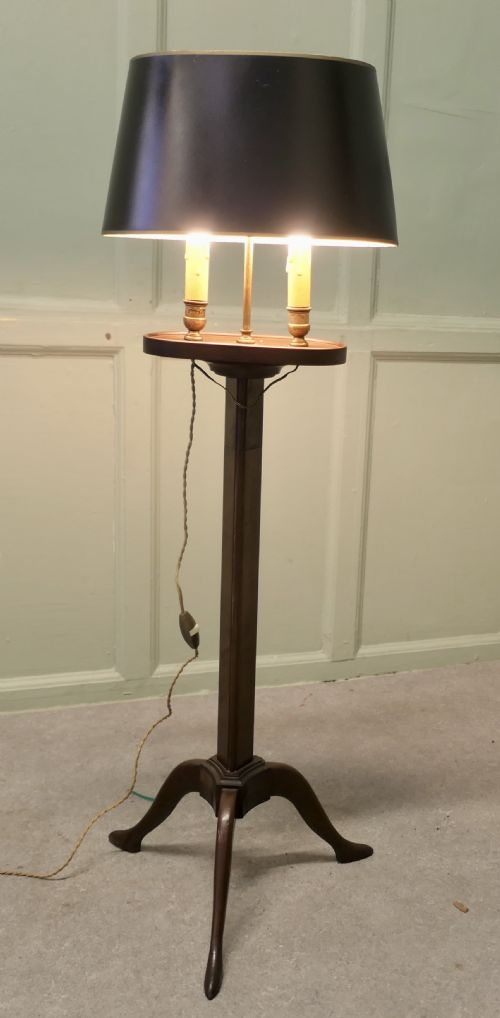
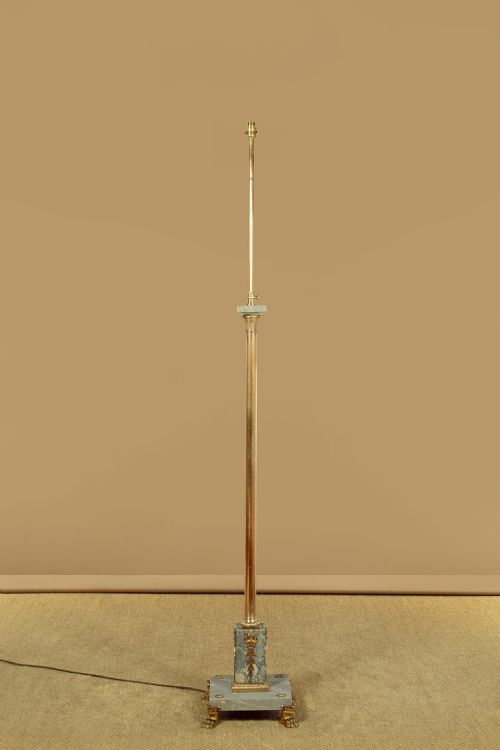
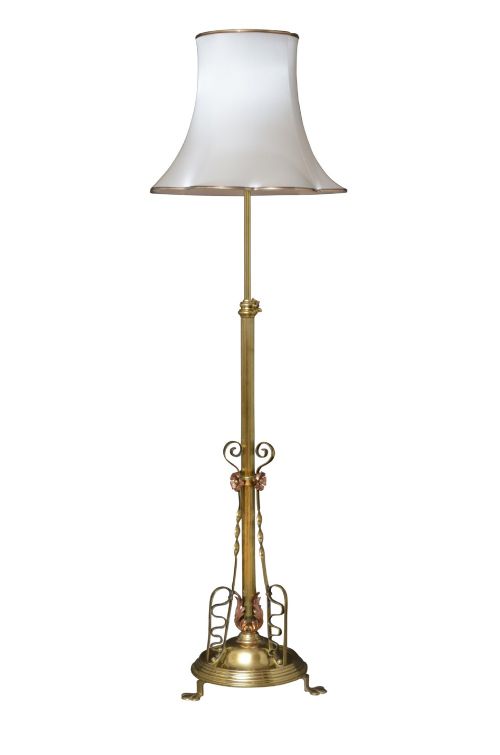
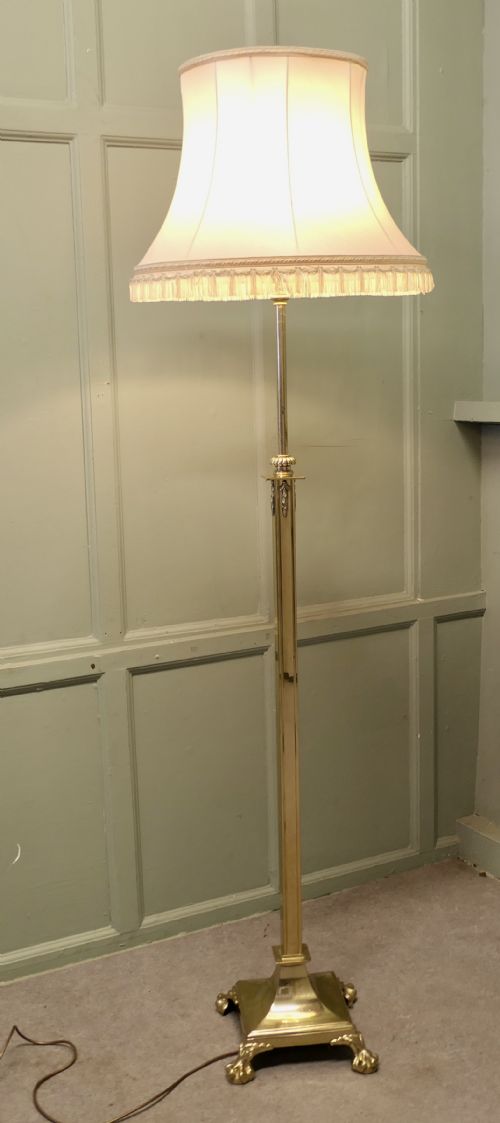
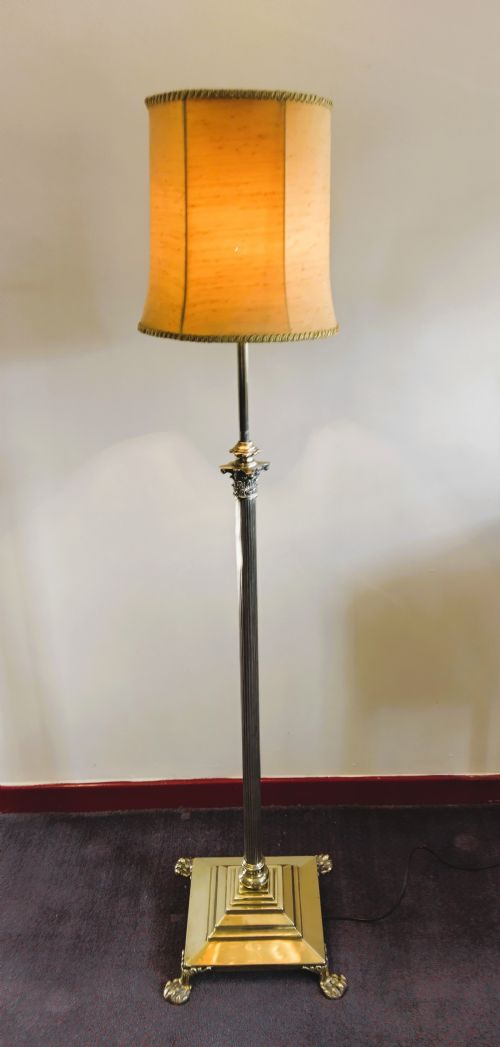
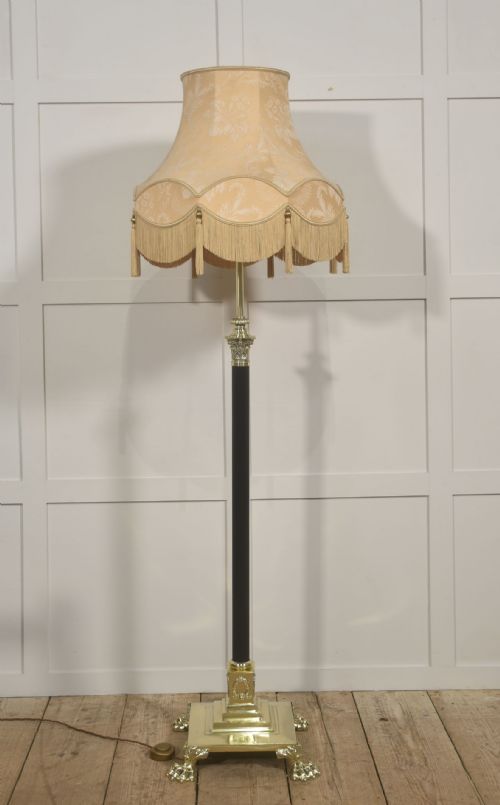
You are most likely to meet Victorian and Edwardian telescopic designs on this page, alongside later twentieth-century iterations. They appear in forms ranging from Corinthian columns to Rococo standards and French Empire styles.
Makers utilised brass as the primary medium, frequently combining it with copper, marble, onyx, and opaline glass. These floor lamps, also known in period terms as standard lamps, reflect the stylistic shifts from nineteenth-century ornamentation to Arts and Crafts simplicity.
How they were made
The construction of an adjustable brass floor lamp relies on telescopic inner shafts sliding within heavier outer columns, secured by friction keys or screw keys. Smiths cast, spun, and turned the brass components to achieve rigid vertical strength combined with smooth sliding movement.
Many examples incorporate secondary metals like copper or structural stone bases such as marble and onyx to add necessary counter-weight at the floor. Shades fashioned from fabric or opaline glass complete the construction, diffusing the light cast from the burner or bulb holder.
Retail Price Guide 2026
Typical UK retail prices for adjustable brass floor lamp, calculated from the Sellingantiques database of over a million retail prices indexed since 2003. This retail price guide relies exclusively on Sellingantiques data; no external sources or auction records are used, so the figures do not describe the wider market.
Some Victorian housemaids spent hours polishing these heavy brass shafts until they mirrored the entire drawing room.
What varies in quality
The distinction between ordinary and superior standard lamps lies in the weight of the casting and the precision of the telescopic mechanism. Heavy gauge brass and solid stone plinths provide an inherent stability that lighter tubular assemblies lack.
Artistic ambition sets the better examples apart, visible in chased Corinthian capitals, hand-beaten copper details, and integrated weighted mechanisms that hold their position securely over decades of adjustment.
A Hinks & Sons
The Adjustable Brass Floor Lamp Glossary
- Telescopic
- Descriptive of a standard lamp featuring nested sliding shafts that allow the overall height of the light to be extended or reduced.
- Standard lamp
- The period term for a floor lamp, used widely across Victorian and Edwardian catalogues.
- Corinthian column
- An architectural column form adapted for lamp standards, featuring ornate acanthus leaf capitals at the top of the shaft.
- Opaline glass
- A milky, translucent glass utilised for lamp shades to soften and diffuse the upward or downward light.
Frequently Asked Questions
How do I adjust the height safely?
Most telescopic examples rely on a thumb screw or key near the collar of the shaft. Loosen this gently while supporting the upper section, set your desired height, and retighten firmly.
Avoid forcing any mechanism that resists movement, as old brass threads and internal springs can bind if pulled at an improper angle.
Where should I place a standard lamp?
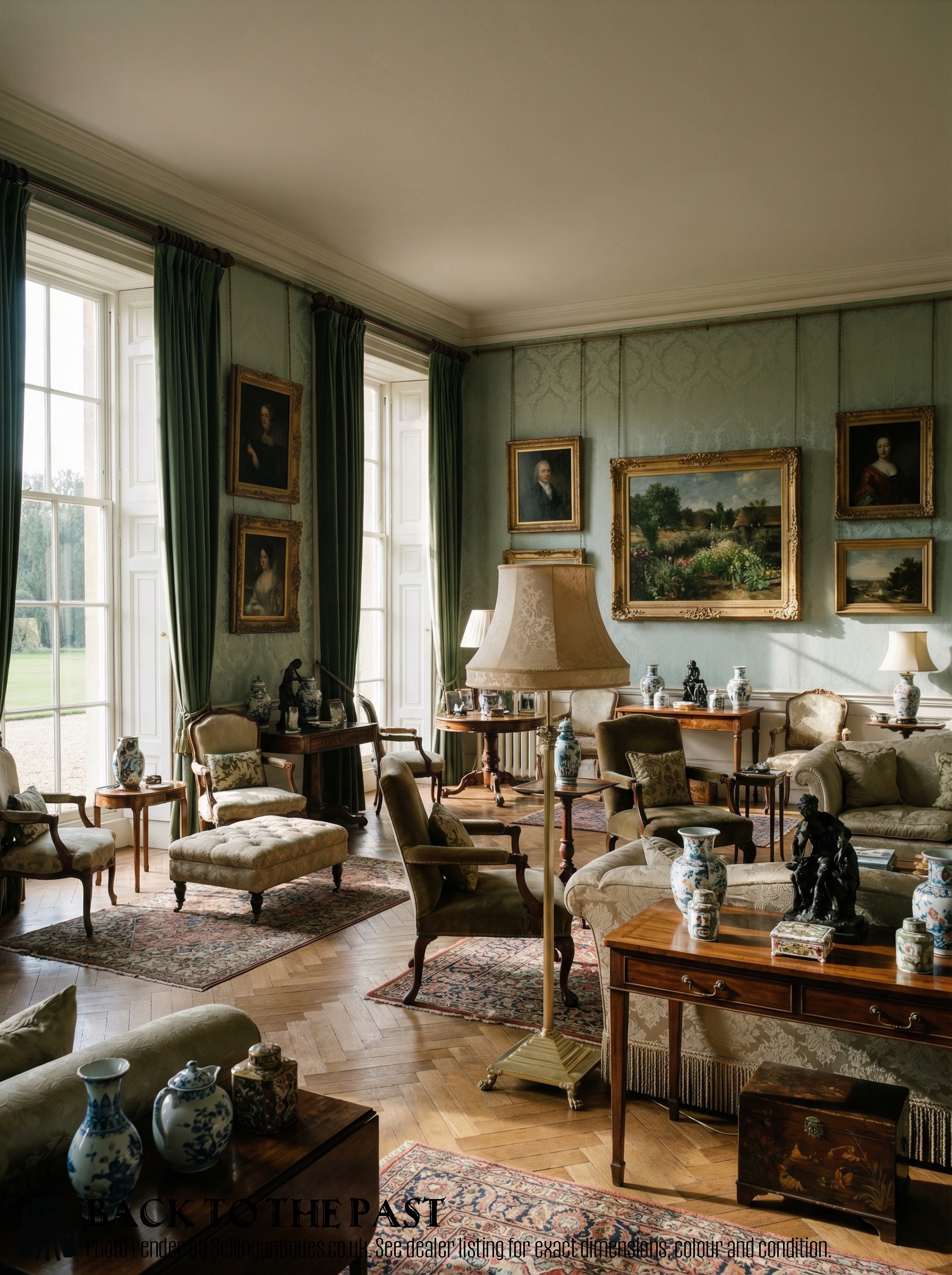
These tall pieces suit corners or beside reading armchairs where their height can cast light downward or upward into the room. Ensure the weighted base rests on an even surface to maintain stability.
Because many vintage frames are top-heavy, keep them clear of high-traffic walkways where the extended cord or upper stem might be bumped.
How do I date a brass standard lamp?
Dating relies on stylistic clues, such as the classical proportions of Victorian Corinthian columns versus the linear simplicity of Arts and Crafts pieces. Turn-of-the-century models often show distinct decorative motifs and mounting techniques.
Materials provide further evidence, as onyx and heavy cast brass point toward the nineteenth century, while simpler tubular brass points to later twentieth-century production.
Can I use modern bulbs in these fittings?
Many older lamps retain their original internal wiring or lampholders, which require professional inspection before regular use. A qualified electrician can update the internal flex while preserving the visible exterior.
Ensure you select modern LED bulbs that match the wattage limits of the vintage shade and fitting to prevent excessive heat buildup.