


Adjustable Brass Desk Lamp
An adjustable brass desk lamp brings focused task lighting and period character to a workspace, spanning late Victorian designs to Art Deco forms.
Adjustable Brass Desk Lamp
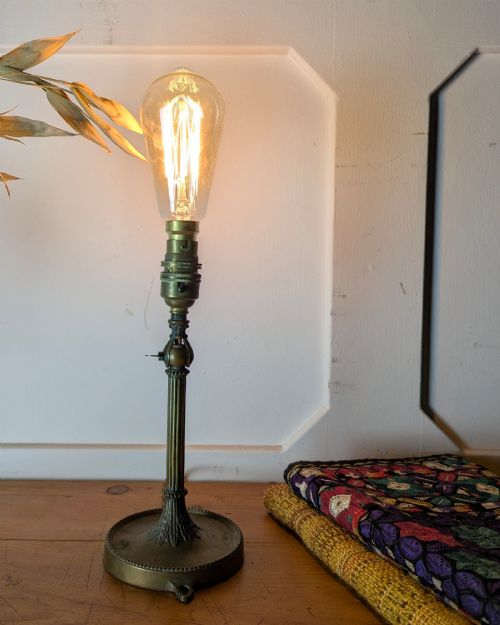
An adjustable brass desk lamp is a functional light fitting designed to direct illumination over a workspace, reading surface, or table. These pieces emerge primarily from the Edwardian period, the 1920s, and the 1930s, alongside nineteenth-century examples.
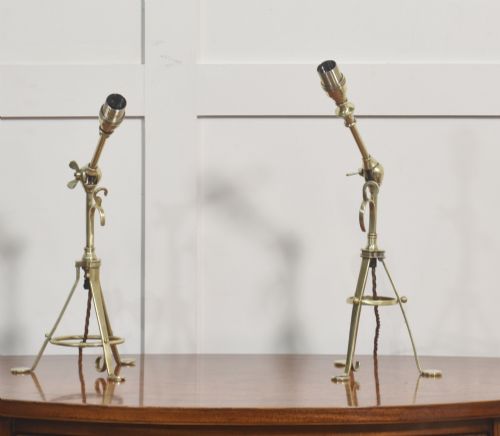
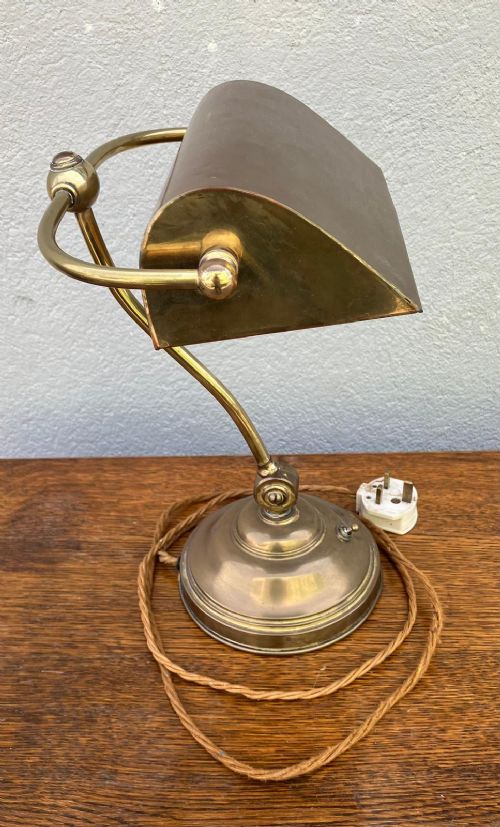
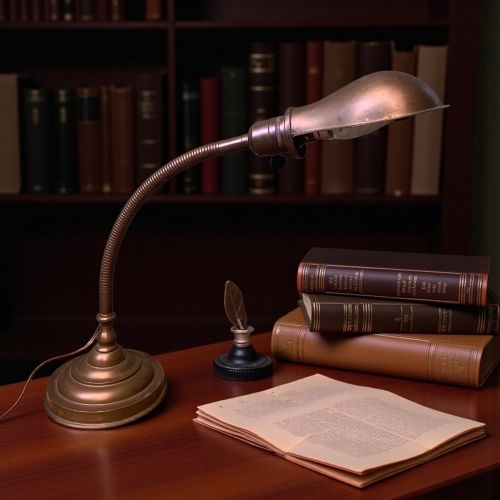
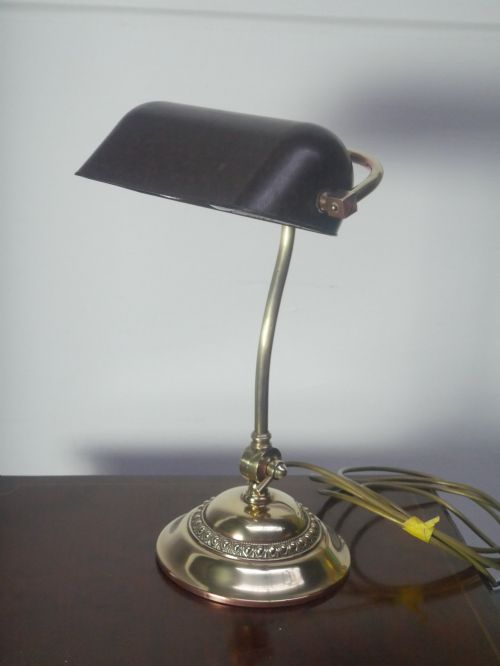
The most common forms encountered on this page include standard bankers lamps, flexible or swan-neck reading lights, and traditional bouillotte lamps with toleware shades. Many incorporate movable arms, joints, or gimble mechanisms for altering the angle of the light.
Makers and designers from the Arts and Crafts movement also contributed specialised student lights and table lamps constructed from brass and copper. These objects combine utilitarian engineering with decorative metals typical of early twentieth-century interiors.
What Varies in Quality
Quality in an adjustable brass desk lamp rests on the weight of the metal casting and the precision of the mechanical joints. Finer specimens maintain rigid articulation without sagging, using solid brass components rather than plated alternatives.
The presence of original shades - whether green toleware, cranberry glass, or pierced metal - distinguishes superior examples from those altered later. Maker attribution and well-preserved surface patination further elevate the standing of a piece.
Some travel-weary brass lamps started life rocking on a nineteenth-century train before retiring to a quiet mahogany desk.
W.A.S. Benson·Faraday and Son·Wild and Wessel·M Pillischer of London·Mel-Elek London
The Adjustable Brass Desk Lamp Glossary
- Bouillotte lamp
- A traditional multi-light desk or table lamp featuring a central shaft and an adjustable painted metal shade. It originates from eighteenth-century card games.
- Toleware
- Enamelled and painted sheet metal used to form decorative lamp shades, most frequently seen in green or black with gilt detailing.
- Gimble
- A pivoting ring mounting that allows a lamp to remain level regardless of the surface angle, often found on pieces made for ships or trains.
- Swan neck
- A curved tubular brass arm that sweeps upward and over to support the lamp holder, allowing flexible positioning of the light source.
- Bankers lamp
- A distinct desk light featuring a long horizontal cylindrical bulb housing, heavy brass base, and a green glass shade designed to reduce glare.
Adjustable Brass Desk Lamp: Frequently Asked Questions
How do I adjust the height?
Most pieces utilise pivoting swan necks, sliding friction stems, or mechanical thumb screws to alter the reach and angle of the light. Users simply loosen the joint, reposition the brass arm to the desired height, and tighten the mechanism to hold it steady.
Heavier models rely on balanced counterweights or articulated joints rather than screws. Care should be taken to support the shade while adjusting older brass fittings to avoid straining vintage metalwork.
Are these lamps safe to use today?
Many surviving pieces originate from the Edwardian era and the 1920s, meaning original wiring may require updating for modern electrical standards. Buyers frequently have historic desk lamps rewired and safety tested before regular daily use.
Preserving the original brass body and lamp holders is standard practice while replacing internal cords. Qualified electricians can integrate modern flex cables while retaining the exterior switchgear and historic patination.
What is a bouillotte lamp used for?
A bouillotte lamp serves as a traditional desk or reading light featuring an adjustable shade that moves vertically up and down the central brass shaft. This design allowed eighteenth-century card players to lower the shade as the candles burned down.
In modern interiors, these multi-branch bronze and toleware fixtures function as elegant accent lighting on sideboards, desks, and study tables.
How do I identify an Arts and Crafts lamp?
Arts and Crafts lighting emphasises honest construction, exposed fasteners, and hand-finished metals such as brass and copper. Makers like W.A.S. Benson favoured clean structural lines over ornate Victorian revival ornamentation.
These student lamps often feature weighted bases, simple screw keys, and unlacquered surfaces that develop a natural dark oxidation over decades of handling.