



Brass Bankers Lamp
These heavy, adjustable brass bankers lamp designs bring direct, focused task lighting to a desk and ground a room in early twentieth-century utility.
Brass Bankers Lamp
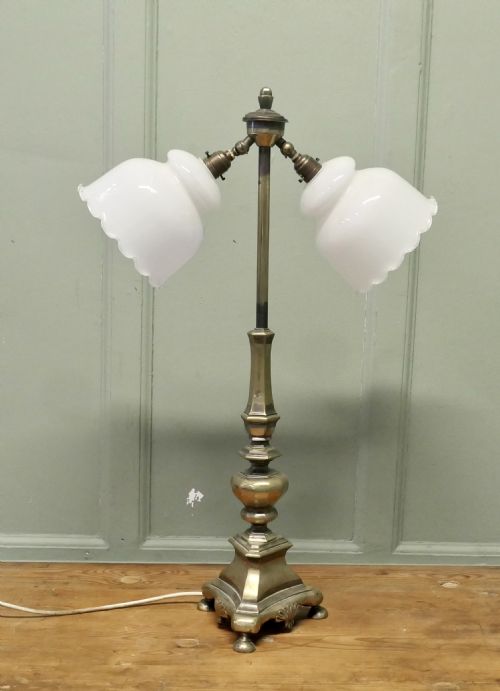
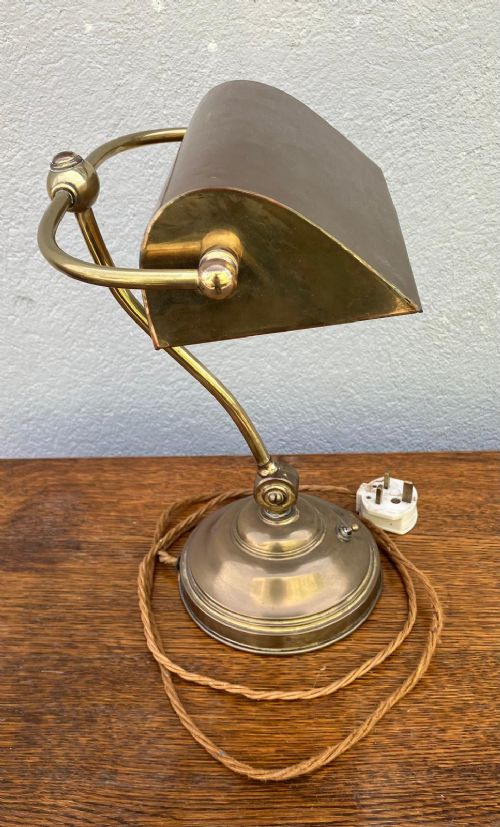
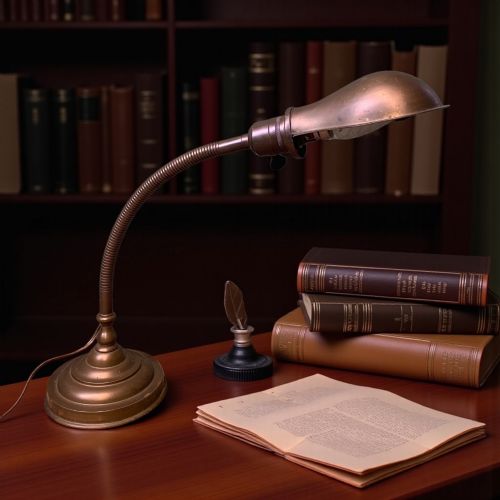
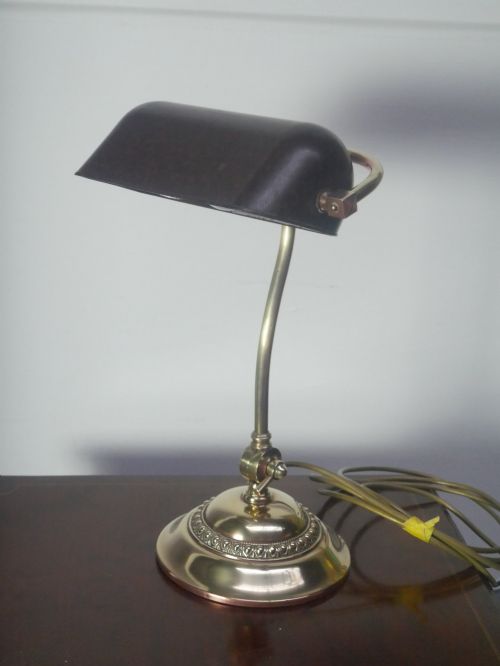
A brass bankers lamp is a functional desk light designed to illuminate workspaces with directional clarity. The brass bankers lamp takes various forms across this page, from articulated swing-arm models to swan-neck profiles and heavy bouillotte styles.
Most examples originate from the early decades of the twentieth century, bridging Edwardian formality and Art Deco industrial design. Buyers frequently encounter adjustable variations featuring metal or glass shades intended for practical task use.
How they were made
Craftsmen built these lamps using solid brass, bronze, and patinated metal frames designed to endure heavy daily desk use. Many pieces incorporate adjustable joints, flexible stems, or rise-and-fall mechanisms for directional control.
Shades utilise contrasting materials, pairing brass structures with green glass, frosted glass, opaline, or painted toleware. Surface finishes range from polished metal to aged patinas developed over decades of desk service.
Brass Bankers Lamp Retail Price Guide 2026
Typical asking prices for brass bankers lamp among the pieces listed under this phrase on Sellingantiques today, from the lower quarter to the upper quarter. They describe what is for sale here now, not the wider market.
Listings feature desk lighting spanning the nineteenth century through the 1930s, incorporating brass, bronze, glass, and toleware.
What varies in quality
Superior pieces display heavier gauge brass castings and robust articulating joints that hold their position securely without drooping. The quality of a lamp shows in the weight of its base and the crispness of its metal joints.
Original components, such as early pull switches, distinct shade materials like green glass or toleware, and authentic period wiring hardware elevate an example above standard utility replacements.
Wilhelm Wagenfeld
The Brass Bankers Lamp Glossary
- Swan neck
- A curved tubular brass arm rising from a weighted base to suspend a shade over a workspace. This flexible curve allows the light source to be angled precisely downward.
- Bouillotte lamp
- A classical multi-arm desk light featuring a central metal shade directing illumination downward. These French-influenced forms often combine brass with painted toleware.
- Opaline
- A translucent milky glass used for lamp shades to diffuse glare into a soft workspace glow. This material appears frequently on Edwardian and Art Deco desk lighting.
- Toleware
- Painted or lacquered sheet metal utilised for durable, colourful lamp shades. It provides a distinct contrast to polished brass frames on nineteenth and early twentieth-century designs.
- Articulated
- Built with adjustable joints or hinges enabling the lamp arm to move and lock into position. This mechanical feature defines many task-oriented desk lamps.
Brass Bankers Lamp: Frequently Asked Questions
How do I adjust a brass bankers lamp?
Most models use pivoting joints, flexible swan necks, or adjustable screws near the shade and stem to alter the height and angle of the light beam.
Take care to loosen any adjustment nuts slightly before repositioning older metal arms to prevent straining the original brass threading.
What periods do these desk lamps cover?
The selection spans from the nineteenth century through the Edwardian era and into the Art Deco and Bauhaus periods of the 1920s and 1930s.
Stylistic shifts move from ornate bronze and repoussé oil conversions toward streamlined industrial and geometric metal forms.
Where should I place a bankers lamp?
These pieces excel on home office desks, library tables, or reading surfaces where direct, downward task lighting is required.
The compact weighted bases allow them to sit steadily on writing surfaces without taking up excessive workspace.
How do I identify an original period piece?
Examine the weight of the metal, the presence of period manufacturing techniques like heavy brass castings, and authentic components such as original pull switches.
Stylistic cues matching Edwardian or Art Deco design movements further help anchor the production era.