


Adam Style Tables
These adam style tables bring classical symmetry, painted surfaces and carved mahogany into a room.
Adam Style Tables
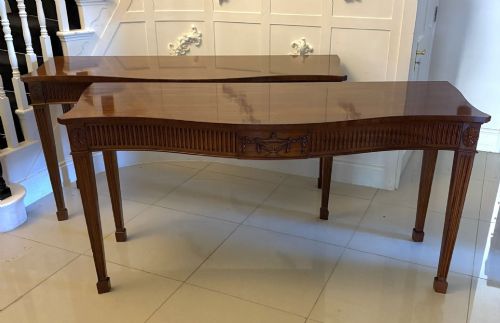
When you search for adam style tables, you find architectural forms rooted in eighteenth-century neoclassical design and later revivals. The selection includes console tables, side tables, serving tables, and occasional pieces that draw upon classical antiquity.
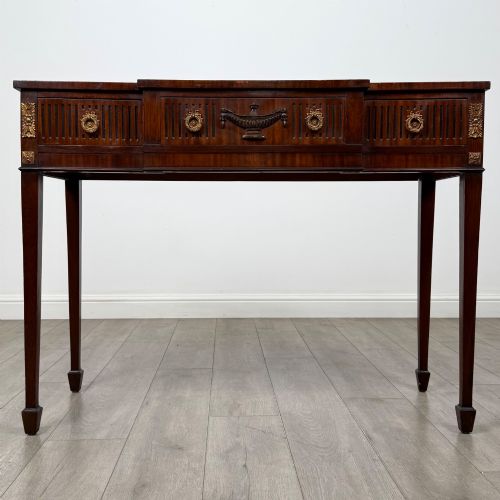
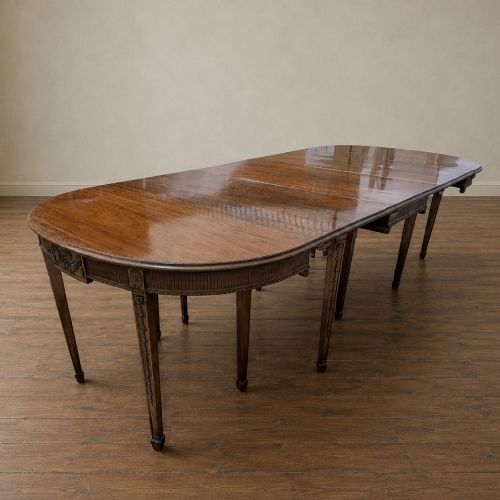
You are most likely to meet nineteenth-century and early twentieth-century interpretations on this page, alongside Georgian examples. Console tables, demi-lune hall tables, and centre tables dominate the listings, often featuring straight tapered legs and symmetrical ornamentation.
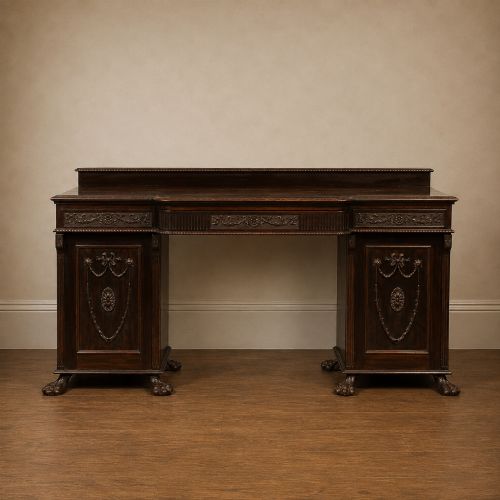
Many pieces reflect the manner of Robert Adam through urns, paterae, and fluted friezes. They function primarily as decorative surfaces for a hallway, drawing room, or dining space.
Materials and Construction
Mahogany serves as the primary timber across the periods, complemented by satinwood, satin birch, and pine. Cabinetmakers utilised painted wood and giltwood surfaces to create the refined polychrome effects characteristic of neoclassical interiors.
Carved details define the construction, from subtle neoclassical fluting to bold paw feet and serpentine edges. Marble tops appear on several gilt console tables, adding weight and a cool tactile contrast to the timber and gilt frames.
Several diminutive console cabinets offer miniature elegance for those who admire grand classical architecture on a modest scale.
Assessing Quality and Execution
The distinction between ordinary and exceptional pieces lies in the crispness of the carved ornament and the choice of timber figures. Sharp relief work on paterae and friezes indicates a skilled hand, whereas softened or muddy carving suggests mass production.
Proportion and structural harmony separate superior examples from standard revivals. A well-balanced console or centre table maintains architectural integrity without appearing heavy or crowded with motifs.
Goldsmiths & Silversmiths Co
The Adam Style Tables Glossary
- Neoclassical
- A style originating in the eighteenth century that revives classical Roman and Greek motifs such as swags, urns, and columns. This aesthetic underpins the design of every piece on this page.
- Demi-Lune
- A half-moon shape used frequently for console and side tables designed to sit flush against a wall. It allows furniture to occupy minimal depth in narrow hallways.
- Console Table
- A table supported by wall brackets or console legs, typically placed against a wall beneath a mirror. These pieces often feature decorative aprons and marble or timber tops.
- Patera
- A circular ornamental disc carved in low relief to resemble a classical libation dish. You see them repeated along the friezes and leg blocks of neoclassical furniture.
- Pier Table
- A table designed to stand against the wall between two windows, often beneath a pier glass mirror. They share the slim proportions typical of hall and console furniture.
Adam Style Tables: Frequently Asked Questions
Where should I place a console table?
Console tables suit narrow hallways, entrance spaces, and reception rooms where floor space is limited. Their shallow depth allows them to sit against a wall without obstructing movement.
Pairing a console with a mirror or a pair of candlesticks creates a balanced focal point in a traditional interior.
How do I distinguish Georgian from later revival pieces?
Georgian pieces date from the eighteenth century and display authentic period timber patination and hand-cut joinery. Revival pieces from the nineteenth and twentieth centuries often replicate these forms but show different tool marks and construction methods.
Examining the underside and drawer linings helps determine the exact period of manufacture.
What is a demi-lune table used for?
A demi-lune table provides a flat surface against a wall while occupying a fraction of the footprint of a full round table. They serve well for displaying decorative objects or lighting in smaller rooms.
Pairs of demi-lune tables can be pushed together to form a freestanding circular dining or centre table.
How do I care for a painted or giltwood surface?
Painted and giltwood surfaces require gentle dusting with a dry, soft cloth to protect the delicate finish. Avoid liquid cleaners, polishes, and direct sunlight that can degrade paint layers and gold leaf over time.
Keeping the table in a stable environment prevents timber movement from cracking the painted or gilded gesso.