



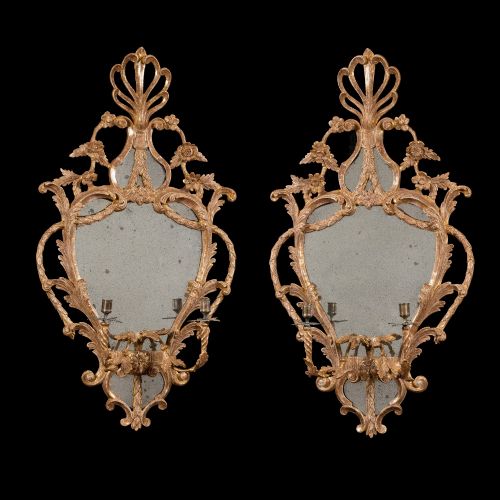
Acanthus Leaf Gold Mirror
An acanthus leaf gold mirror brings classical botanical carving and reflective depth into a room, drawing the eye with sweeping scrolls.
Acanthus Leaf Gold Mirror
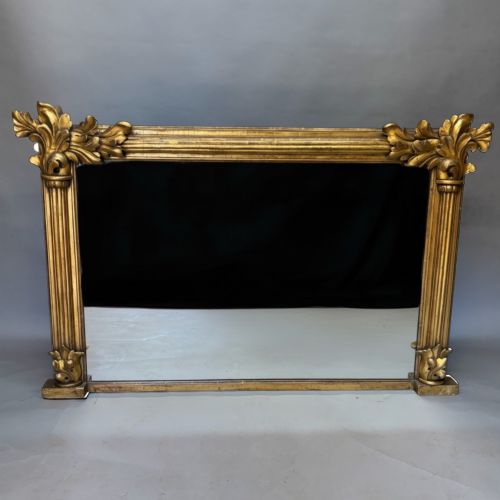
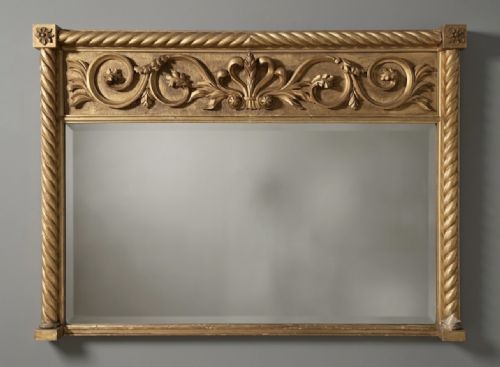
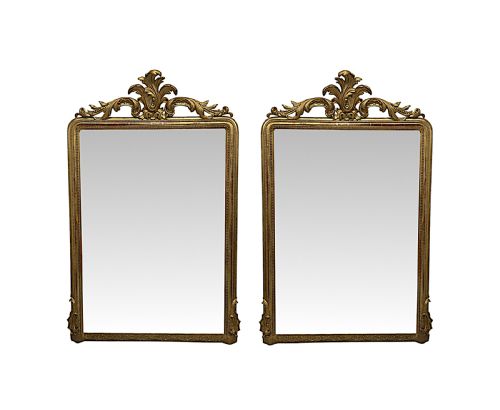
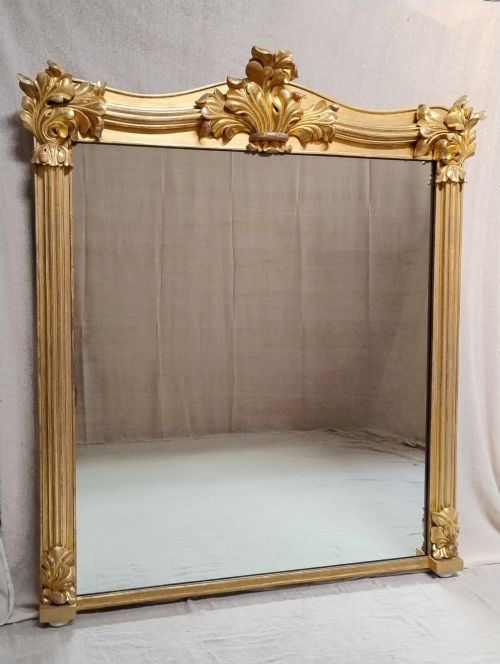
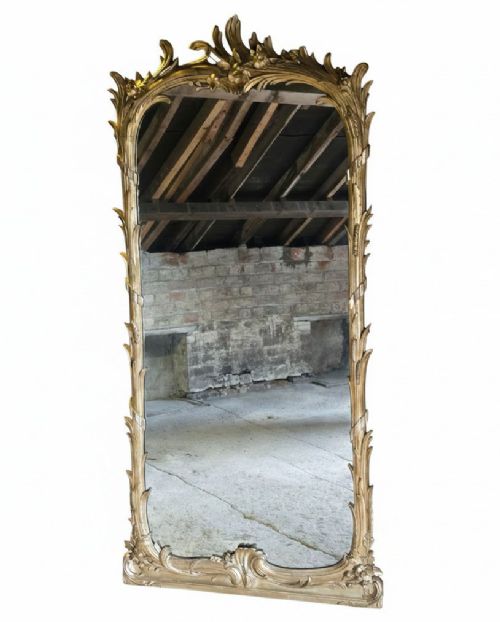
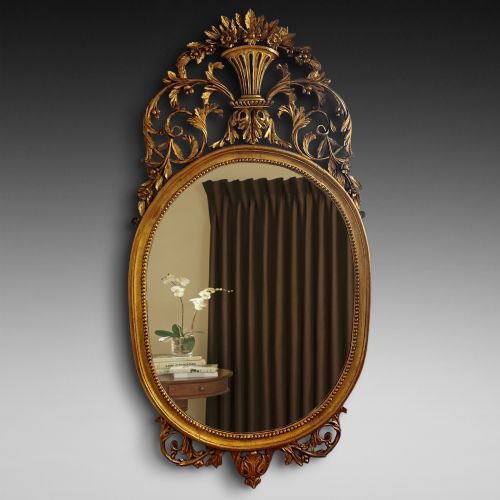
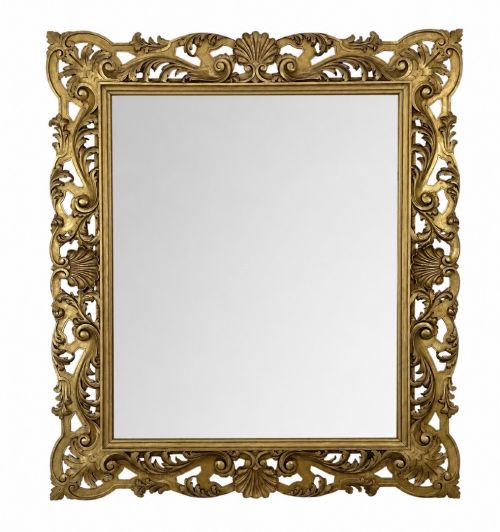
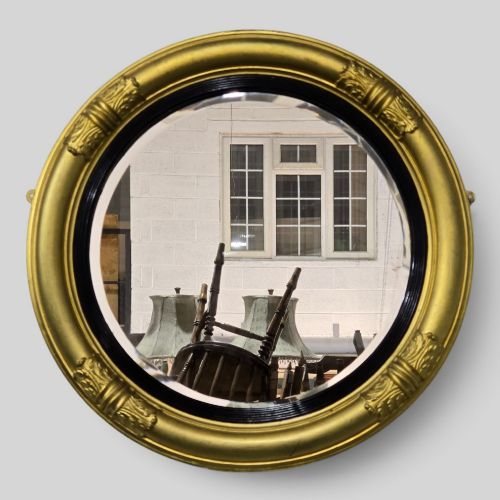
An acanthus leaf gold mirror is typically found in styles ranging from Georgian and Regency to Victorian and Florentine revivals, spanning the eighteenth, nineteenth, and early twentieth centuries. These pieces appear as large overmantel mirrors, tall wall mirrors, and smaller oval or cushion frames designed to hang in principal reception rooms.
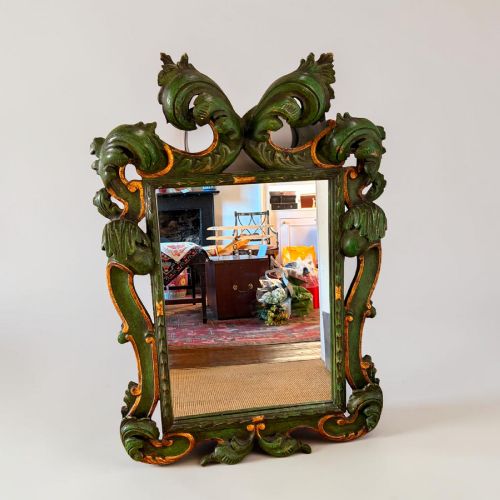
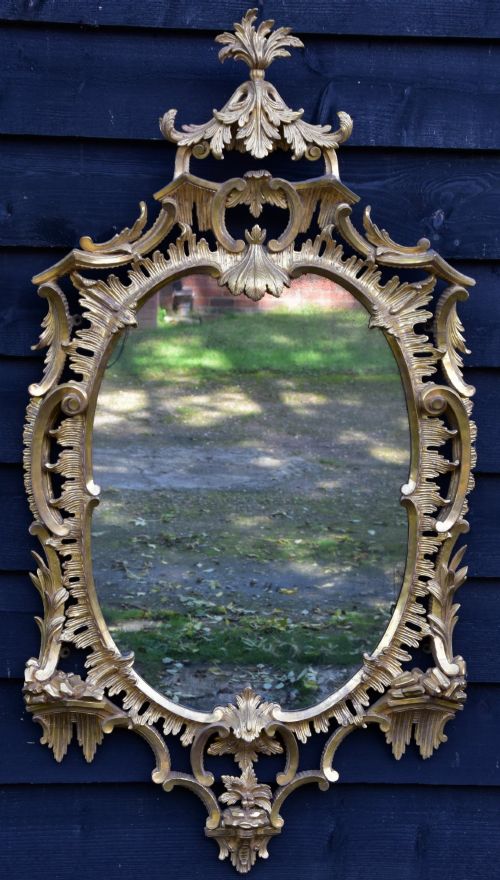
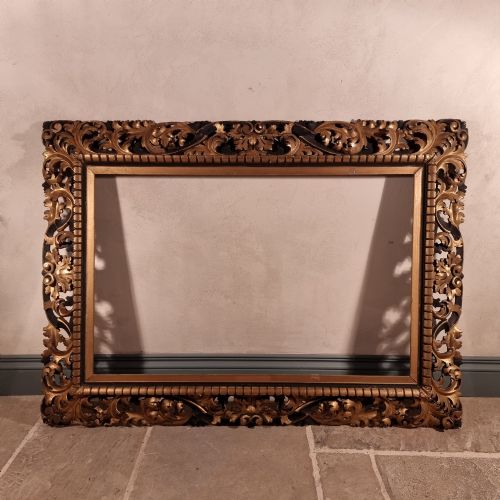
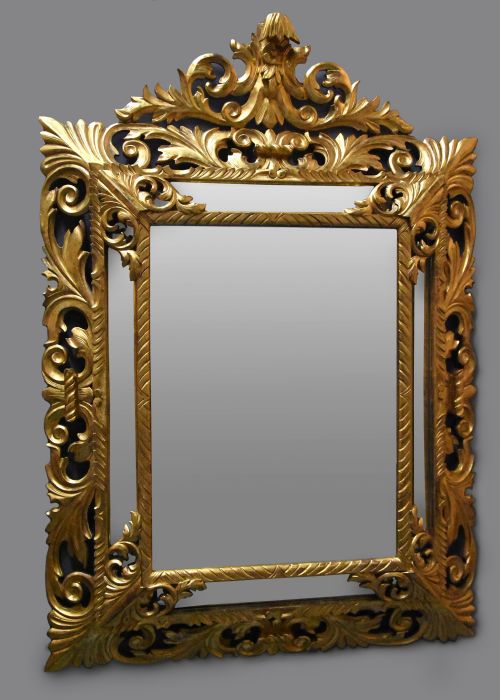
The form relies heavily on the Rococo and Baroque revivals, where naturalistic foliage wraps around the wooden frame in deep relief. On this page, Italian Florentine work and English or French carved designs dominate the selection, offering substantial decorative presence through heavily ornamented borders.
How they were made
Makers shaped these frames from carved wood, often applying layers of gesso to build up the intricate acanthus leaf scrolls before gilding. Gold leaf or composition was then laid over the prepared surface to achieve the metallic finish characteristic of the period.
Mirror glass of the era was set into the rebated frame behind, sometimes divided into sections as seen in triptych overmantels or framed as a single reflective plate.
Listings feature periods from the 17th century through the 1920s, with a strong concentration of 19th-century Victorian and Italian Florentine pieces.
What varies in quality
The depth and sharpness of the hand-carving separate standard decorative pieces from exceptional examples, as skilled carvers undercut the acanthus foliage to create true three-dimensional projection. Crisp detail in the gesso work prior to gilding indicates superior craftsmanship.
The richness and application of the gold leaf or surface finish also dictate the tier of the piece, with smoother, more cohesive gilding holding greater visual weight than heavier, flattened repairs.
The Acanthus Leaf Gold Mirror Glossary
- Giltwood
- Wood that has been coated with gold leaf or a gold-coloured metallic finish. This surface treatment defines the bright, reflective borders of the pieces found here.
- Gesso
- A plaster-like mixture applied to wood frames to create a smooth base for carving intricate details. It allows crisp botanical motifs like acanthus leaves to be moulded onto the structure.
- Overmantel mirror
- A large horizontal mirror designed specifically to hang above a fireplace mantel. These often incorporate architectural or heavily scrolled frames to anchor the hearth.
- Pier mirror
- A tall, narrow mirror traditionally hung on the pier of wall space between two windows. They reflect additional light into darker interior corners.
- Cushion mirror
- A frame profile where the moulding swells outwards like a pillow or cushion, frequently decorated with corner ornaments or continuous leaf carving.
Acanthus Leaf Gold Mirror: Frequently Asked Questions
How do I hang a heavy acanthus leaf gold mirror?
Due to the substantial weight of carved wood and gesso frames, these mirrors require secure wall fixings anchored directly into structural studs or masonry. Professional hanging hardware distributed across multiple points ensures the piece stays safe.
Position the mirror at a height that reflects natural light from windows or balances the proportions of surrounding furniture, such as above a mantelpiece or console table.
What is the difference between Georgian and Victorian styles?
Georgian mirrors, including George III examples, generally exhibit restrained classical proportions and finely executed hand-carving in wood. They lean towards elegance and symmetry within Rococo or Neoclassical frameworks.
Victorian interpretations often scale up the decoration with heavier relief work, bolder acanthus scrolls, and extensive use of composition mouldings to satisfy nineteenth-century tastes for ornate interiors.
Where do Florentine mirrors originate?
Florentine mirrors originate from workshops in Florence, Italy, renowned for producing highly decorative carved wood and gesso frames. These pieces often feature elaborate openwork foliage and intricate leaf patterns.
Many examples date from the nineteenth century revival periods, reflecting the enduring appeal of traditional Italian craftsmanship across European markets.