
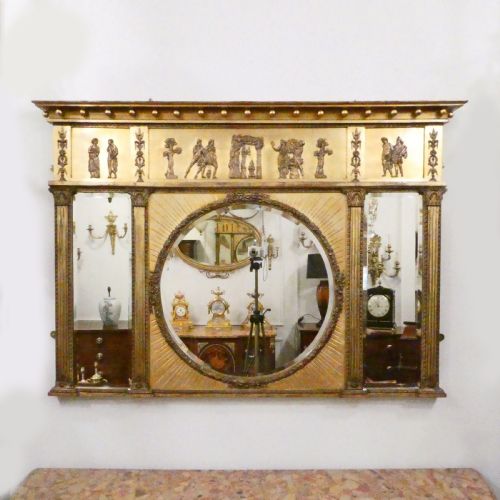


Gold Leaf Landscape Mirror
A gold leaf landscape mirror brings immediate width and warmth to a room, catching light across sweeping proportions.
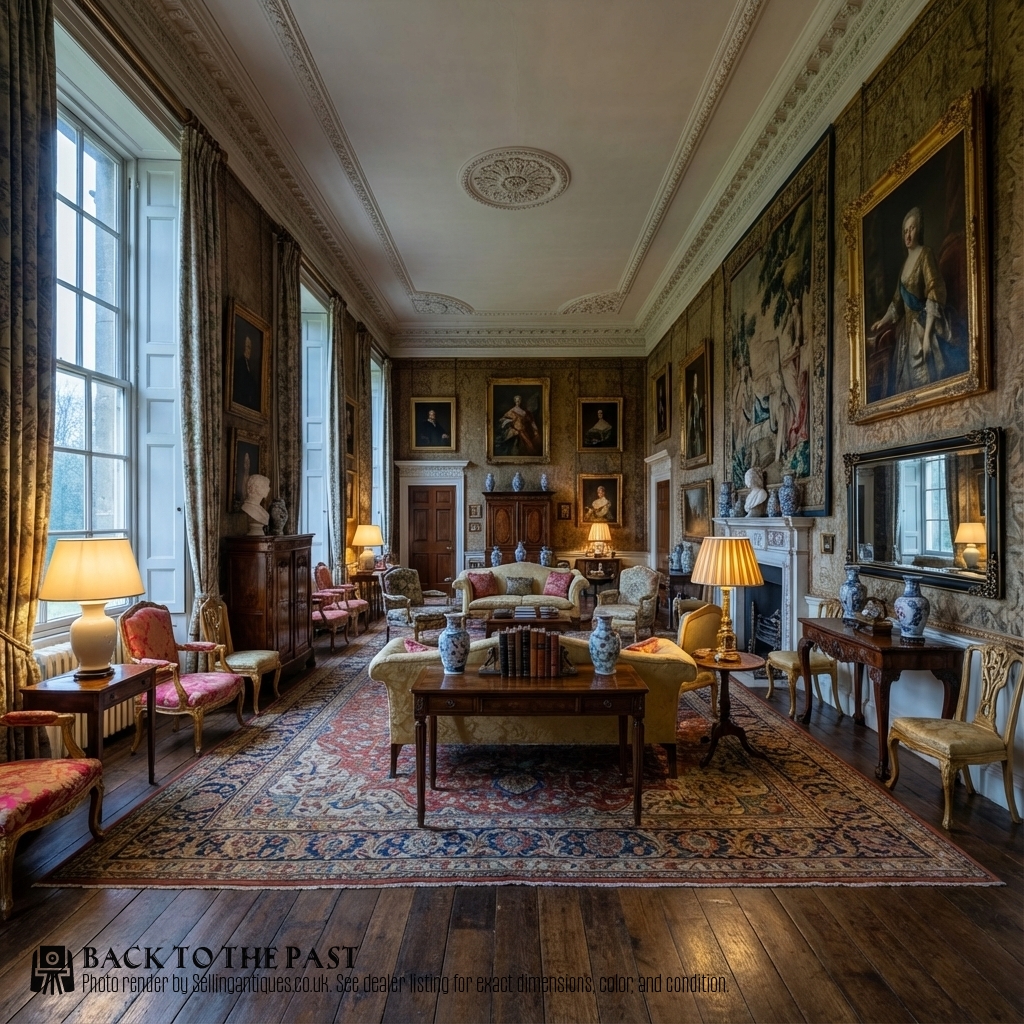
Gold Leaf Landscape Mirror
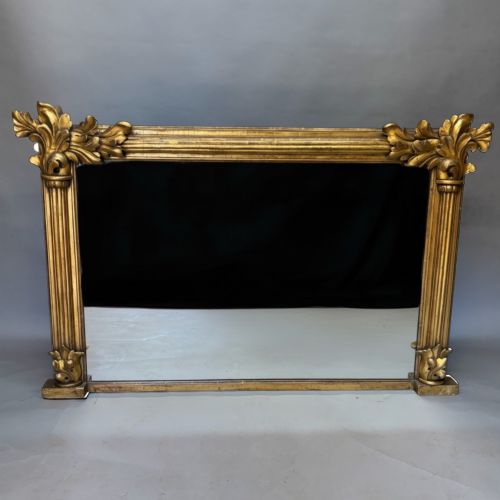
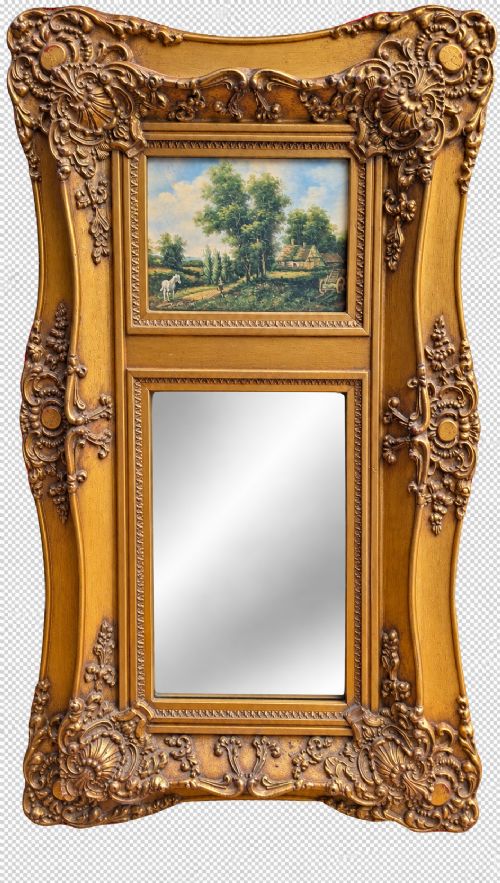
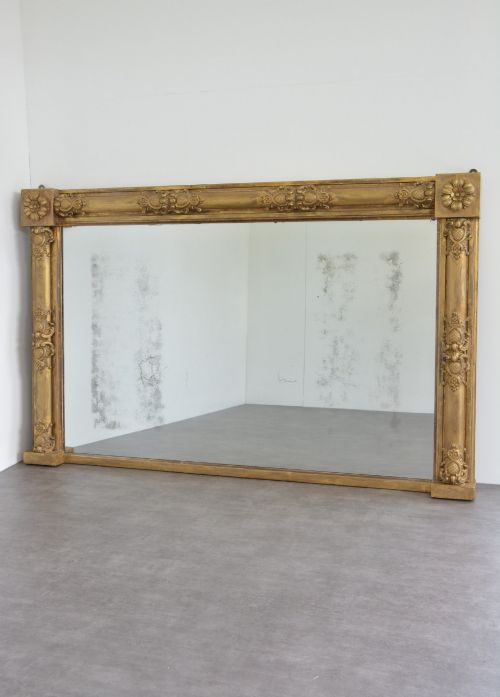
A gold leaf landscape mirror takes horizontal form as either a wall hanging or an overmantel piece, designed to sit above a mantelpiece or anchor a principal wall. The examples found here span the eighteenth, nineteenth, and early twentieth centuries, drawing heavily on Regency, Victorian, and Rococo design vocabularies.
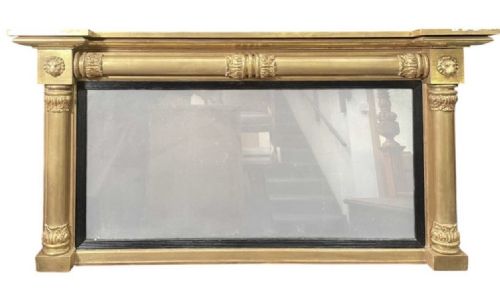
The most common formats on this page are substantial overmantel mirrors featuring giltwood or gesso frames, often incorporating multiple plate glasses, architectural columns, or classical motifs such as laurel wreaths and acanthus leaves.
Materials and construction
Frames are constructed primarily from pine or other structural woods, overlaid with a layer of gesso to provide a smooth surface for gilding. Artisans applied thin sheets of gold leaf directly to the prepared ground, sometimes combining this with ebonised wood details or composition ornaments.
Glass plates are set within the timber framework, occasionally displaying light foxing from age, and larger examples utilise triptych configurations divided by applied pilasters or columns.
Materials recorded across the inventory include traditional giltwood, gesso, pine, ebonised wood, and composition ornament over glass.
Distinguishing quality and execution
Superior examples demonstrate crisp hand-carving in the wood and gesso, where decorative elements like acanthus leaves, birds, or figurative friezes retain sharp definition and depth. Lesser pieces rely on moulded composition ornament that can appear softer in profile and lacks the vitality of carved detail.
The integrity of the original gilding and the preservation of the antique glass plates further define the standing of a piece, distinguishing workshop output designed for grand interiors from standard commercial production.
The Gold Leaf Landscape Mirror Glossary
- Giltwood
- Wood carved and coated with gold leaf. This finish gives the frame a luminous surface that catches candlelight and daylight alike.
- Gesso
- A mixture of plaster of Paris and glue used as a base for gilding. It fills the grain of the wood and accepts crisp decorative moulding.
- Overmantel mirror
- A large horizontal looking glass designed specifically to hang above a fireplace mantel. These pieces visually expand the hearth and reflect light across the room.
- Triptych
- A mirror plate divided into three distinct vertical sections. This format was popular in the Regency period to break up wide expanses of glass.
- Foxing
- Small dark spots and discolouration within the glass plate caused by the degradation of the silvering backing over time. It is a natural sign of age appreciated by collectors.
Gold Leaf Landscape Mirror: Frequently Asked Questions
Where should I hang a landscape mirror?
These horizontal mirrors are traditionally positioned directly above a fireplace mantelpiece, where their width balances the hearth below. They also work effectively along a principal living room wall to reflect opposing windows and draw natural light deeper into the space.
Ensure the wall structure is secure enough to support the substantial weight of a timber and gesso frame, particularly for larger nineteenth-century overmantel examples.
How do I identify a Regency period mirror?
Regency mirrors often feature classical architectural motifs such as columns, pilasters, laurel wreaths, and ball-accented cornices. The frames frequently utilise gilded composition or carved wood with a distinct emphasis on symmetry and proportion.
Many of these pieces are constructed as triptychs with three separate glass plates, framed to sit low and wide above a fireplace.
What does foxed glass mean?
Foxed glass refers to the mottled, speckled ageing that occurs on old mirror plates as the reflective backing deteriorates. Rather than a fault, many collectors value this characteristic for the authentic sense of history it brings to an antique interior.
Original glass with light foxing indicates that the mirror retains its historic components rather than a modern replacement.