




Academic Portrait Sculpture
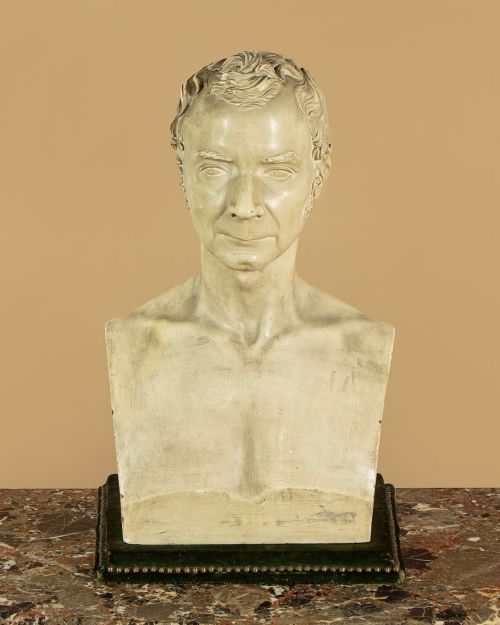
Academic portrait sculpture brings historical figures, poets and emperors into your interior through cast bronze, carved marble and moulded plaster.
Academic Portrait Sculpture
Academic portrait sculpture encompasses busts and studies of notable historical figures, classical philosophers, literary masters and statesmen. When you explore this selection, you encounter works originating primarily from the nineteenth century, including Victorian and Edwardian examples as well as Neoclassical and Classical Revival pieces.
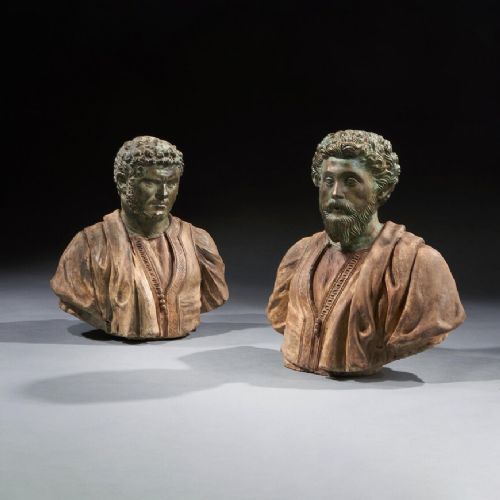
The subjects range from classical emperors such as Marcus Aurelius and Caracalla to cultural icons like Dante Alighieri, Homer, John Milton and Van Dyck. Alongside these named historical and literary subjects, you also find anonymous gentlemen and classical philosophers captured in strict academic realism.
Many of these pieces reflect the Grand Tour tradition, where travellers brought home likenesses of antiquity and Renaissance heroes. You meet these works executed in various forms, from single portrait busts on marble bases to matched pairs.
Materials and methods
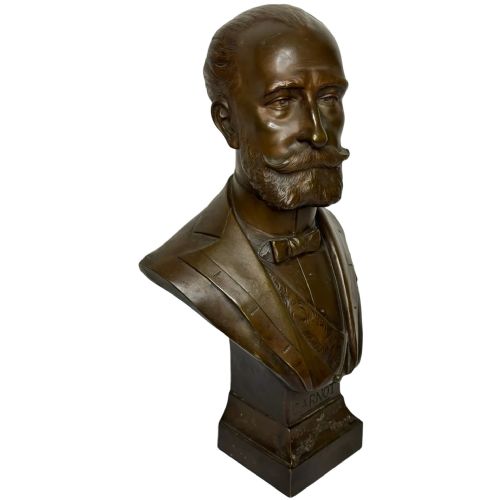
Bronze is a primary medium for these works, often finished with a dark or verdigris patina and frequently mounted upon red or Sienna marble bases. Foundries cast these portrait studies with meticulous attention to facial detail and classical drapery.
Plaster and terracotta serve as important sculptural materials across nineteenth-century examples, offering a direct record of the modeller's hand. Marble is also utilised, particularly for foundational bases that elevate the metal portraits.
Ormolu mounts occasionally complement the stone bases, adding gilt bronze detail to the presentation of the sculptural bust.
Philosophers and Roman emperors appear most severe when cast in heavy bronze, yet somehow look remarkably cheerful upon their Sienna marble columns.
Judging quality
Quality rests upon the crispness of the casting and the sensitivity of the modelling, distinguishing a mechanical reproduction from a spirited portrait study. Master modellers capture psychological depth and lifelike texture in hair, skin and fabric.
The choice and execution of materials heavily influence the standing of a piece, from the density and figuring of the marble base to the richness of the bronze patina. Signed works bearing the signatures of established sculptors carry distinct provenance and artistic authority.
The integration between the bust and its support structure demonstrates the care taken by the maker, ensuring the sculpture sits securely and proportionally upon its marble plinth.
Jean Jules Salmson·Alajos Strobl·Adolphe Jean Lavergne·Ernest Eugène Hiolle·E. Laurent·Eutrope Bouret·J C De Blezer
The Academic Portrait Sculpture Glossary
- Patina
- The surface coloration and chemical sheen developed on bronze sculpture over time or applied deliberately by the foundry. A deep, stable patina enhances the contours of the portrait.
- Ormolu
- Gilt bronze mounted as decorative trim or bases on sculptural works. This technique involves applying finely ground gold mercury amalgam to bronze.
- Terracotta
- Fired clay used directly for sculptural modelling before any potential metal casting. It preserves the immediate touch of the artist.
- Neoclassical
- A style drawing inspiration from the classical art and culture of ancient Greece and Rome. It prioritises proportion, restraint and heroic subject matter.
- Grand Tour
- The traditional trip of Europe undertaken by upper-class Europeans of the eighteenth and nineteenth centuries. Travellers collected classical bronzes and small busts as souvenirs of their travels.
Academic Portrait Sculpture: Frequently Asked Questions
What is academic portrait sculpture?
It is nineteenth-century sculptural art depicting real historical figures, classical philosophers and literary icons with realistic precision. These works follow the strict academic traditions taught in European art academies.
You typically encounter them as bronze or plaster busts mounted on marble plinths, reflecting a nineteenth-century fascination with history and antiquity.
How do I care for bronze busts?
Bronze requires minimal maintenance beyond gentle dusting with a soft, dry cloth to prevent the accumulation of grit. Avoid using chemical polishes or water, which can strip or damage the original patina.
Keep the sculpture away from direct sunlight and damp environments to protect both the metal surface and any stone base.
What are Grand Tour bronzes?
Grand Tour bronzes are small-scale sculptures and busts purchased by travellers touring the cultural centres of Europe during the nineteenth century. They served as portable testaments to classical education and artistic appreciation.
Subjects frequently include ancient philosophers, Roman emperors and famous literary figures cast in miniature or bust form.
Why are some busts mounted on marble?
Marble bases provide structural stability for heavy bronze and plaster sculptures while adding visual contrast to the dark metal. Red marble and Sienna marble are particularly common in nineteenth-century French and Italian pieces.
The inclusion of a fitted stone plinth elevates the status of the portrait and completes the classical aesthetic.