


9ct Gold Diamond Necklace
A 9ct gold diamond necklace brings together precious stones and enduring metal in forms ranging from pearl clasps to gemstone drops.
9ct Gold Diamond Necklace
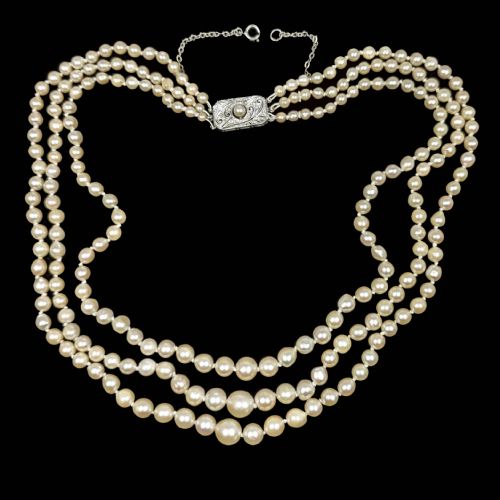
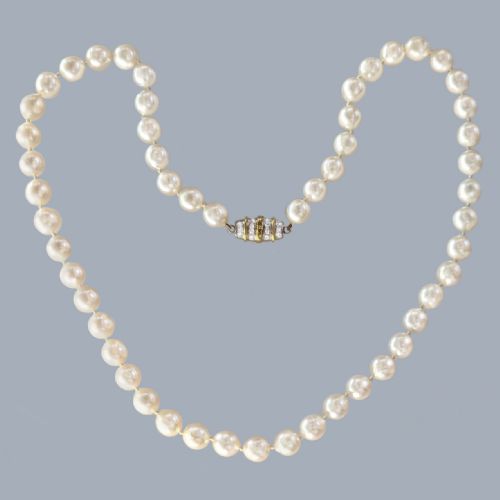
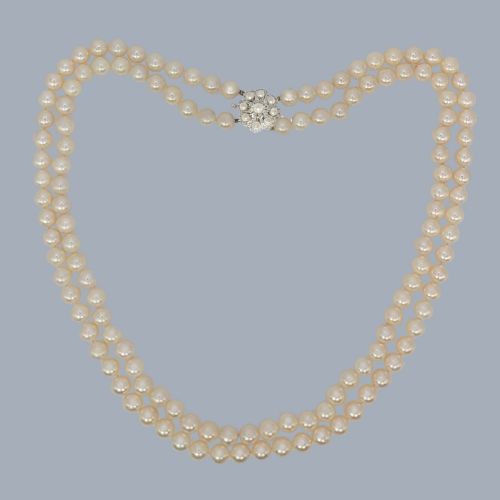
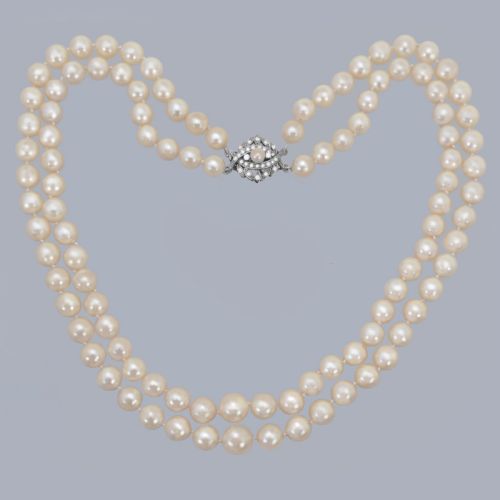
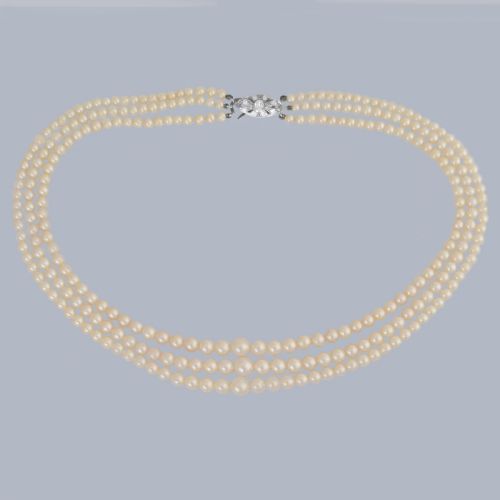
A 9ct gold diamond necklace encompasses two distinct categories: pearl strands secured by diamond-set clasps and pendant necklaces featuring central gemstones accompanied by diamonds. The pearl necklaces frequently appear in single, double, or triple strands featuring cultured pearls fastened with yellow or white gold diamond clasps.
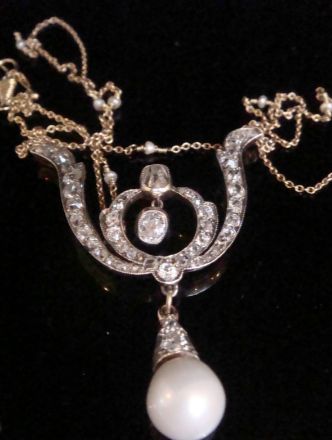
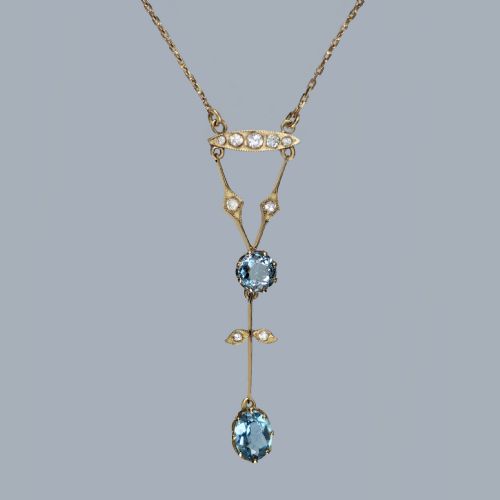
Pendant iterations display solitary diamonds, diamond clusters, or configurations pairing diamonds with coloured stones such as rubies, sapphires, emeralds, aquamarines, topazes, and amethysts. These pieces span periods from the Victorian and Edwardian eras through the mid-20th century into the 1950s and 1960s.
Makers utilise 9ct yellow gold, 9ct white gold, and occasionally 9ct rose gold alongside platinum settings to house the stones. The scale varies from delicate solitaire drops and starburst motifs to substantial cluster pendants and multi-strand pearl arrangements.
Materials and Construction
Metals are cast and forged in 9ct gold compositions, encompassing yellow, white, and rose variations, often paired with platinum for secure claw or bezel settings. Goldsmiths incorporate diamonds alongside pearls and diverse coloured gemstones into traditional cluster, halo, drop, and foliate designs.
Pearl strands involve individual knotting between cultured pearls terminating in hinged or box clasps where diamonds form floral, geometric, or foliate patterns. Pendant mounts employ prong settings, cluster arrangements, and integrated loops to suspend the central stones from fine gold chains.
Menagerie creations appear among the sparkle, featuring gold diamond and ruby jaguars alongside elephants.
Assessing Quality and Execution
Quality rests upon the proportion and matching of the stones, the crispness of the gold casting, and the structural integrity of the settings. In pearl necklaces, the uniformity of size, lustre, and the security of the diamond-set clasp determine the standard of the piece.
Pendant necklaces rely on the symmetry of the cluster work, the saturation of coloured stones paired with the diamonds, and the neatness of the metalwork around the claws. Pieces bearing clear hallmarks and maker details display superior historical provenance.
The 9ct Gold Diamond Necklace Glossary
- Cluster
- A setting arrangement where a central gemstone is surrounded by a ring of smaller diamonds or other stones. This layout maximises visual presence and light reflection.
- Clasp
- A mechanical fastener securing a necklace, which in these pieces frequently incorporates diamonds and precious metals to serve as an ornamental feature at the back or side of the neck.
- Cultured pearl
- An organic gem formed by introducing an irritant into an oyster or mollusc, yielding pearls of uniform size and lustre suitable for multi-strand necklaces.
- Solitaire
- A jewellery setting featuring a single diamond or gemstone mounted independently on a chain or pendant drop.
- Pendant
- A decorative ornament suspended from a chain, taking forms such as starbursts, crosses, drops, or gemstone clusters.
9ct Gold Diamond Necklace: Frequently Asked Questions
How do I wear a pearl necklace with a diamond clasp?
Pearl necklaces featuring diamond clasps offer versatility because the clasp can be positioned at the back of the neck for traditional wear or rotated to the front as a feature pendant.
Pairing depends on the neckline and the length of the strands, whether single, double, or triple.
What is the difference between white gold and yellow gold settings?
Yellow gold provides a warm traditional tone favoured in Victorian, Edwardian, and mid-century designs, while white gold offers a cooler silvery appearance that complements the sparkle of diamonds.
Both maintain the durable 9ct gold standard utilised across these pieces.
How are pendant necklaces structured?
Pendant necklaces suspend a central gemstone or diamond cluster from a fine metal chain, utilising fixed Bails or integrated loops.
Designs range from minimal solitaire stones to elaborate floral and geometric clusters.
How do I identify the period of a necklace?
Dating relies on stylistic clues such as Edwardian filigree work, Victorian starburst motifs, or the clean lines of 1950s and 1960s cluster pendants.
Official hallmarks on the metal provide definitive markers for assay office locations and specific years of manufacture.