


Yellow Gold Cluster Necklace
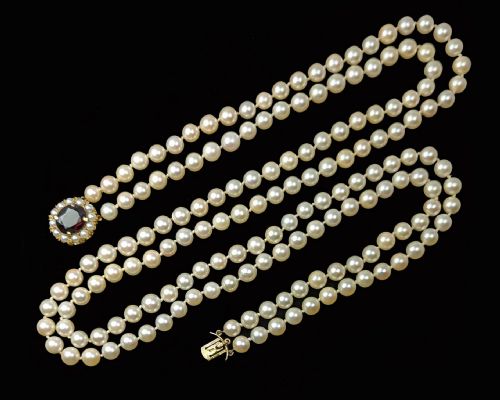
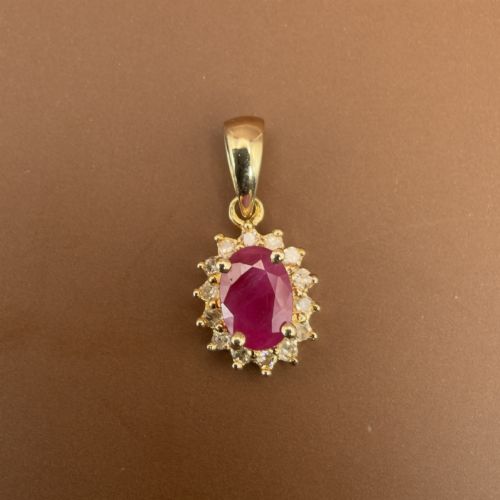
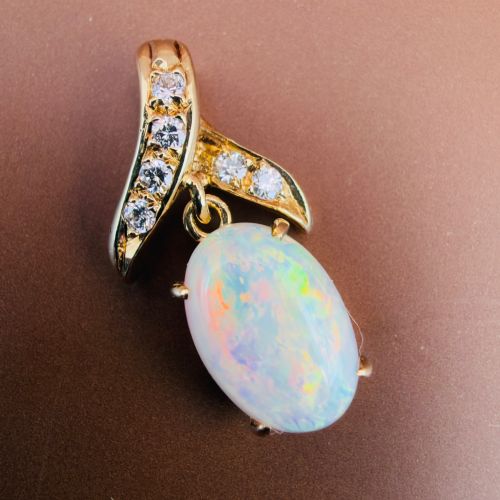
A yellow gold cluster necklace brings together central gemstones and surrounding stones in a pendant format, offering rich colour and historic character.
Yellow Gold Cluster Necklace
When searching for a yellow gold cluster necklace, buyers encounter pieces where a central gem is encircled by smaller stones, suspended from a chain or integrated into a pendant form. The selection spans several distinct eras, with nineteenth-century Victorian and Edwardian examples appearing alongside mid-twentieth-century designs from the 1940s, 1950s and 1960s.
The most common versions on this page pair warm gold settings with diamonds, rubies, sapphires, garnets or pearls. These pieces function as statement neckwear, often combining traditional cluster arrangements with starburst, floral or drop motifs.
How they were made
The construction relies predominantly on yellow gold of varying purities, including 9ct, 14ct, 15ct, 18ct and occasional 12ct standards, shaped into bezels, claws and intricate wirework. Goldsmiths set precious and semi-precious stones such as emeralds, opals, peridots, zircons and citrines alongside diamonds to form geometric or organic patterns.
Techniques range from hand-forged Victorian brooch-pendants adapted for chains to mid-century cast and assembled clusters. Pearls are frequently incorporated as seed pearls or cultured strands, often secured with specialised clasps or integrated directly into the pendant body.
Listings feature periods spanning from the Victorian and Edwardian eras through the 1920s, 1940s, 1950s and 1960s.
What varies in quality
Quality differences lie in the selection and matching of the stones, where uniform colour saturation and well-matched diamond or gemstone cuts elevate a piece above standard production. The weight and substance of the yellow gold mount also dictate quality, with heavier, solid construction providing greater durability than lighter settings.
The fineness of the metalwork, from delicate Edwardian filigree to robust mid-century claw settings, determines the overall refinement of the pendant. Original integrity, such as intact settings and unaltered clasps, separates well-preserved examples from those with replacement components.
Hirsch and Oppenheimer
The Yellow Gold Cluster Necklace Glossary
- Cluster
- A jewellery arrangement where a central stone is surrounded by a ring of smaller accent stones. This layout maximises visual impact and light reflection.
- Seed pearl
- Very small, naturally occurring or cultured pearls often used in Edwardian and Victorian cluster designs. They are typically drilled and threaded or pegged onto the metal backing.
- Cabochon
- A gemstone polished to a smooth, convex dome rather than faceted. This cut is frequently utilised for opals, garnets and star stones to display their internal characteristics.
- Collet
- The metal collar or rim that holds a gemstone in place within a setting. Traditional hand-formed collets are characteristic of older antique pieces.
Yellow Gold Cluster Necklace: Frequently Asked Questions
How do I wear a cluster necklace?
These pendants work well as standalone pieces against plain necklines to highlight the central gemstone arrangement. They also pair easily with matching earrings or bracelets from the same period.
Because many vintage examples include delicate chains or converted brooch fittings, pairing them with a sturdy modern chain of a matching gold hue ensures secure daily wear.
How do I date a gold cluster necklace?
Dating relies on stylistic clues, such as the delicate millegrain wirework and organic motifs typical of Edwardian pieces, or the bolder geometric lines of mid-century designs. Hallmarks stamped on the gold components provide specific assay office and year markers where present.
Examining the back of the pendant often reveals construction methods, such as closed-back settings in older Victorian pieces versus open-back settings in later twentieth-century examples.
Are these necklaces fragile?
While solid yellow gold provides a durable base, older pieces require thoughtful handling due to their age and delicate stone settings. Seed pearls and softer stones like opals are particularly sensitive to moisture and hard impacts.
Storing each necklace flat in a lined box prevents the chain from tangling and protects the cluster mount from pressure against other items.
What is a converted brooch pendant?
Many historic pendants started life as brooches, featuring hinged pins and safety catches on the reverse alongside a loop for a chain. Jewellers often added or adapted these loops so the pieces could be worn around the neck.
This dual functionality was common in the Victorian and Edwardian eras, allowing owners to pin the ornament to clothing or suspend it from a ribbon or gold chain.