


Diamond Halo Pendant Necklace
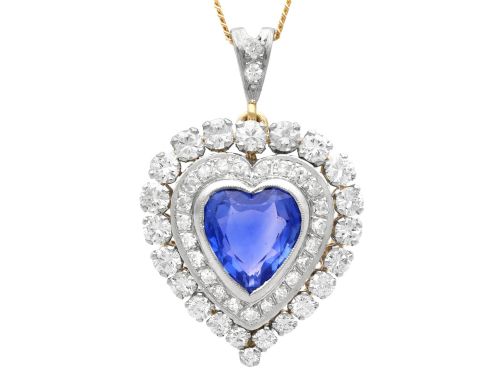
A diamond halo pendant necklace places a brilliant cluster of surrounding stones around a central gem, offering exceptional fire and presence.
Diamond Halo Pendant Necklace
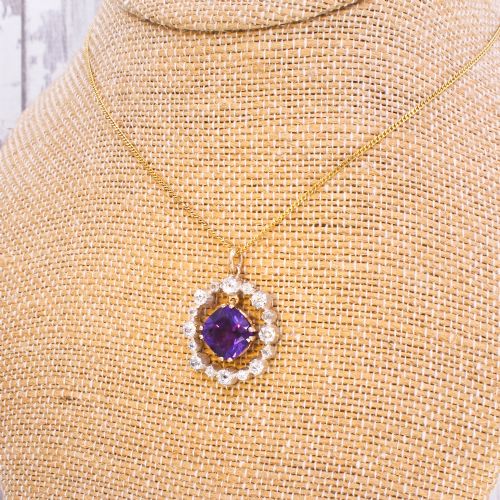
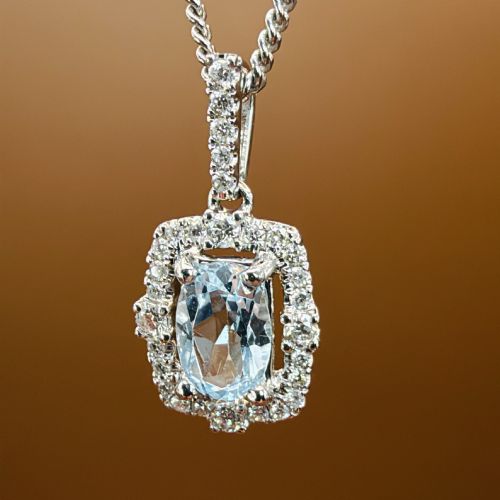
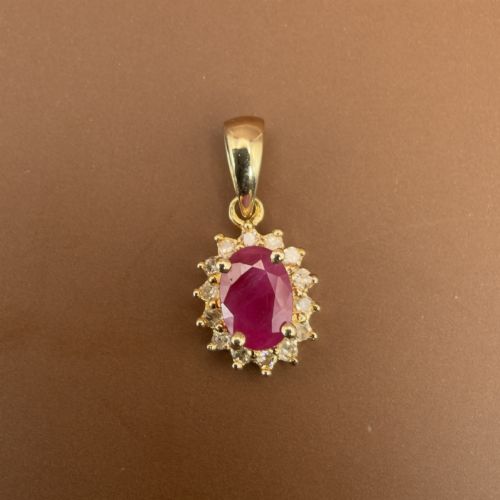
A diamond halo pendant necklace centres on a primary gemstone or diamond framed by a circle of smaller stones, drawing the eye directly to the centre of the piece.
The selections available here span from Victorian and Edwardian examples to Art Deco and mid-century designs, encompassing various decades of fine jewellery production.
Central stones range widely across the inventory, featuring diamonds alongside coloured gems such as aquamarine, amethyst, ruby, sapphire, emerald, opal, and turquoise.
These items primarily take the form of pendants and pendant necklaces, designed to suspend gracefully from a chain around the neck.
Materials and construction methods
Craftsmen utilised precious metals including platinum, 18ct white gold, 15ct yellow gold, 14ct gold, and 9ct gold to set the stones securely.
Gemstone cutting techniques vary across periods, incorporating old cut diamonds, rose cut diamonds, oval cuts, and calibre cut sapphires.
Metals like silver and gold were frequently combined in earlier periods, such as Victorian pieces, to enhance the brilliance of the mounted stones.
Several pieces replace traditional gemstone centres with intricately carved horse heads made from black onyx and tourmaline.
Distinguishing quality in the range
The calibre of the central gemstone and the matching clarity of the surrounding diamond halo dictate the overall distinction of the pendant.
Precision in metalwork, particularly the delicacy of the setting and the integration of platinum or gold components, separates standard pieces from finer examples.
Provenance and period integrity, such as authentic Art Deco geometry or Edwardian grace, influence the character of each necklace.
Chaumet
The Diamond Halo Pendant Necklace Glossary
- Halo
- A circular arrangement of smaller diamonds or gems encircling a larger central stone. This setting style maximises the perceived size and brilliance of the main gem.
- Old Cut
- A historic diamond cutting style popular in the Victorian and Edwardian eras featuring a small table and high crown. It produces a softer, candlelit sparkle compared to modern cuts.
- Rose Cut
- An antique gemstone cut with a flat base and a domed crown faceted into triangles. This style dates back centuries and imparts a distinct translucent shimmer.
- Cluster
- A grouping of multiple gemstones set closely together to form a single visual unit. In these pieces, the cluster typically forms the focal pendant drop.
- Calibre Cut
- Gemstones specifically shaped and cut to fit tightly against one another in geometric patterns. This technique is frequently seen in Art Deco jewellery.
Diamond Halo Pendant Necklace: Frequently Asked Questions
How do I date an antique pendant?
Dating relies on the cut of the stones, the metal composition, and the stylistic markers of the setting. Victorian pieces often use lower karat golds or silver-topped gold, while Art Deco items favour platinum and geometric symmetry.
Comparing the manufacturing techniques to known historical periods helps narrow down the decade of creation.
What metals are used in these necklaces?
The pieces utilise a range of precious metals depending on the era of manufacture. Platinum and 18ct white gold are common in mid-century and Art Deco designs.
Earlier Victorian and Edwardian examples frequently incorporate yellow gold, 15ct gold, 9ct gold, or silver combined with gold settings.
How should I care for antique gemstone necklaces?
Preserving these necklaces involves gentle cleaning with warm soapy water and a soft brush, avoiding harsh chemical dips. Professional inspection of the setting claws ensures the stones remain secure.
Storing each piece individually in a lined box prevents scratching from other items.