


19th Century Waterfall Bookshelf
A 19th century waterfall bookshelf offers graduated tiers of open shelving that combine practical display with distinctive period elegance.
19th Century Waterfall Bookshelf
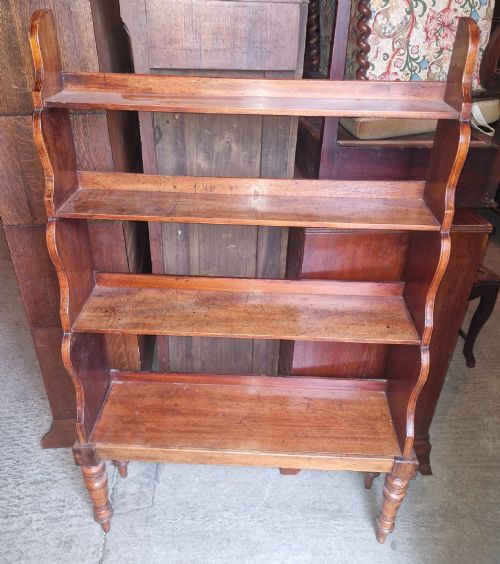
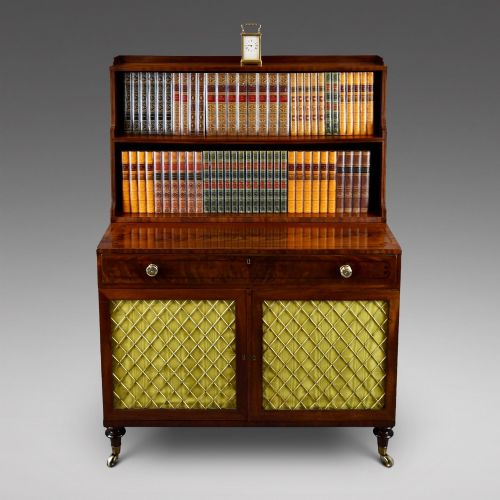
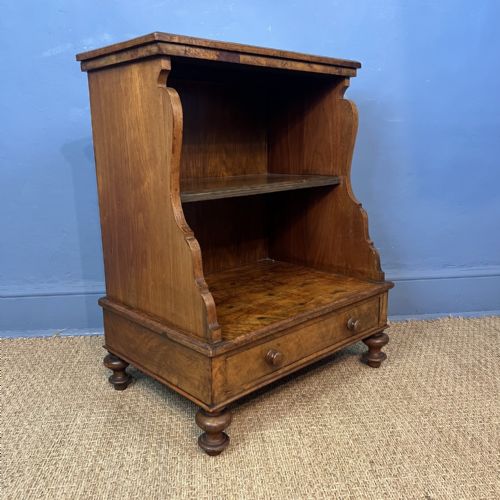
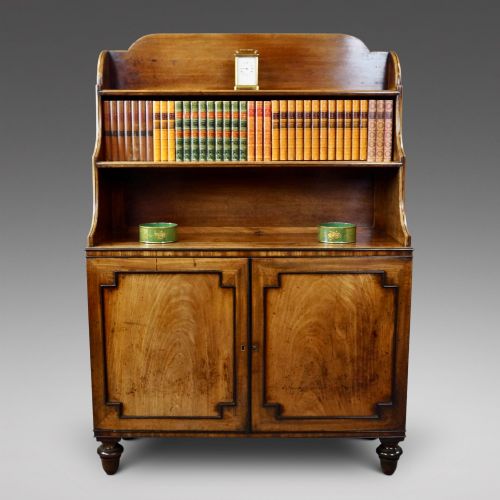
A 19th century waterfall bookshelf presents a stepped tier of open shelves, diminishing in depth from bottom to top, designed for displaying books and small objects. These pieces appear in forms ranging from tall freestanding library bookcases to low dwarf cabinets and wall shelves, reflecting the varied domestic needs of the period.
The pieces on this page span the Regency, William IV, and Victorian eras, demonstrating the enduring appeal of the stepped shelving format across the nineteenth century. Most examples are executed in rich timbers such as mahogany and rosewood, aligning with the predominant styles seen in our current selection.
Makers of this period adapted the tiered bookcase design into specialised hybrid forms, including dwarf bookcases fitted with compartments or lower cupboards. Whether freestanding or designed for wall placement, these pieces serve as both functional storage and striking architectural furniture.
How they were made
Cabinet makers constructed these tiered bookcases using dense hardwoods like solid mahogany and rosewood, frequently enhanced with contrasting cross-banding and delicate boxwood stringing along the shelf edges and uprights. Finer examples integrate decorative techniques such as brass inlay, while other pieces feature original painted or grained finishes.
The structural integrity relies on graduated vertical supports and graduated shelves that step back progressively from the base to the topmost tier, sometimes crowned by an open gallery. Joinery techniques of the nineteenth century ensured these ascending tiers remained stable despite bearing the weight of heavy volumes.
Listings feature woods including mahogany, rosewood, and burr walnut, spanning Regency, William IV, and Victorian stylistic periods.
What varies in quality
The distinction between standard pieces and the finest examples lies in the selection of timber veneers and the intricacy of decorative detailing, such as fine brass inlay or contrasting stringing. Superior items exhibit a harmonious grain pattern across the graduated tiers and precise proportion in the stepped architecture.
Construction methods and secondary details also dictate the tier of quality, with top-tier library bookcases displaying superior joinery in the open gallery structures and solid timber framing. Original surfaces, whether polished mahogany or period graining, preserve the integrity and visual depth intended by the original cabinet maker.
The 19th Century Waterfall Bookshelf Glossary
- Waterfall bookcase
- A piece of furniture featuring multiple open shelves that step back progressively from bottom to top, creating a cascading profile. This form gained popularity during the Regency and Victorian periods for displaying books and ornaments.
- Cross-banding
- A decorative border of veneer laid with the grain running perpendicular to the surrounding surface. Cabinet makers used this technique to frame the edges of shelves and tabletops.
- Stringing
- A narrow inlay of contrasting wood, such as boxwood, embedded into the surface of a piece. It provides a sharp linear accent against darker timbers like mahogany.
- Dwarf bookcase
- A low open bookcase, typically standing at table height or slightly higher, designed to sit beneath window ledges or against principal room walls.
- Gallery
- A decorative railing or openwork border running along the top edge of a shelf or cabinet. It prevents items from sliding off the upper tier.
19th Century Waterfall Bookshelf: Frequently Asked Questions
Where were these bookcases placed?
These bookcases were typically positioned in libraries, studies, and drawing rooms where quick access to books was required. Low dwarf versions were often placed beneath windows to avoid blocking natural light.
Freestanding and wall-hung variants allowed homeowners to utilise empty wall space efficiently, serving both practical storage and decorative display functions.
How do I date a 19th century bookcase?
Dating relies on identifying the stylistic markers, wood choices, and construction techniques characteristic of specific eras within the nineteenth century. Regency and William IV pieces often feature rosewood, brass inlay, and crisp classical proportions.
Later Victorian examples tend towards heavier mahogany frames and distinct gallery details. Comparing timber grain and secondary woods provides further clues to the decade of manufacture.
Can these hold heavy books?
These pieces were built by nineteenth-century cabinet makers using dense hardwoods like solid mahogany and rosewood to support substantial reading material. The graduated depth provides a stable base with deeper lower shelves capable of bearing heavier volumes.
Modern placement should still consider the overall structural condition and the weight distribution across the ascending tiers.
How do I care for rosewood and mahogany?
Maintaining these timbers involves keeping them away from direct sunlight and fluctuating heat sources that can dry out the wood and antique finishes. Gentle dusting with a soft, dry cloth preserves the polished surface without stripping natural patination.
Occasional application of appropriate wax feeding helps maintain the depth and lustre of the original nineteenth-century polish.