




Regency Period Shelving
Regency period shelving brings together refined timber book furniture, multi-tiered display étagères and practical hanging wall shelves designed for classical interiors.
Regency Period Shelving
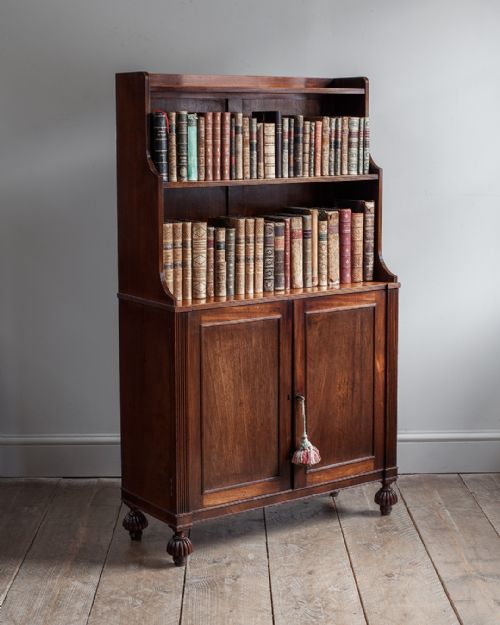
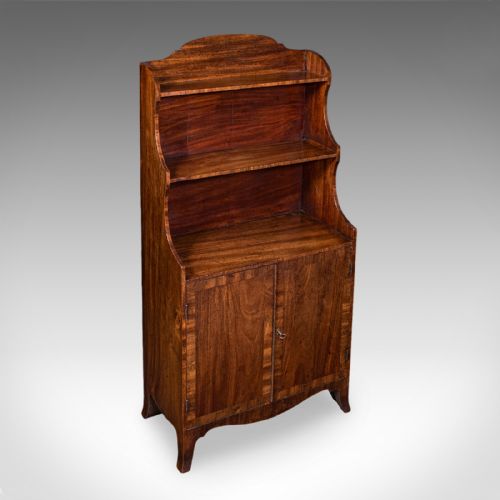
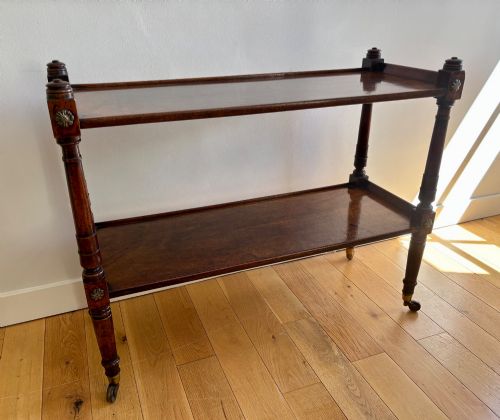
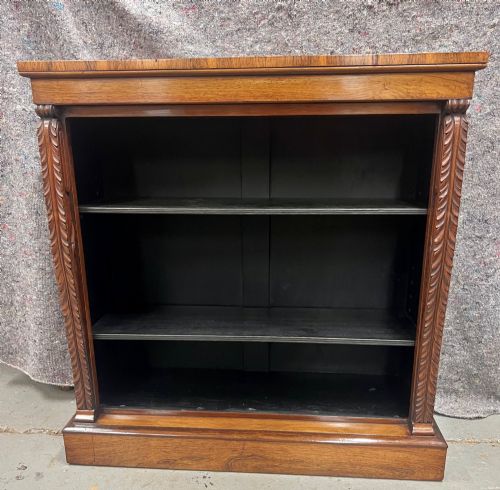
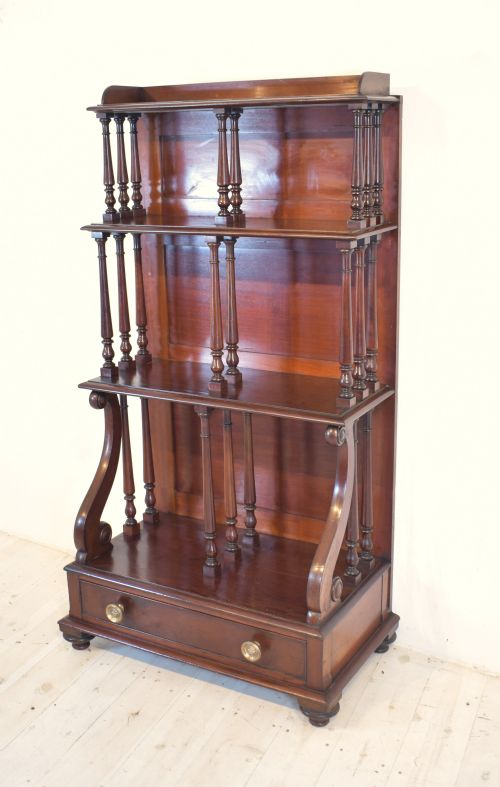
Regency period shelving encompasses open bookcases, tiered whatnots, and wall-mounted shelves designed to organise and display books or decorative objects. Buyers seeking regency period shelving frequently encounter mahogany and rosewood waterfall bookcases alongside multi-tiered étagères. These pieces originated during the early nineteenth century to serve both utility and display within polite drawing rooms and libraries.
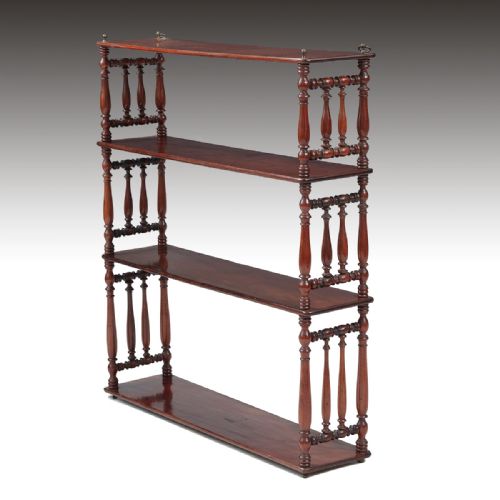
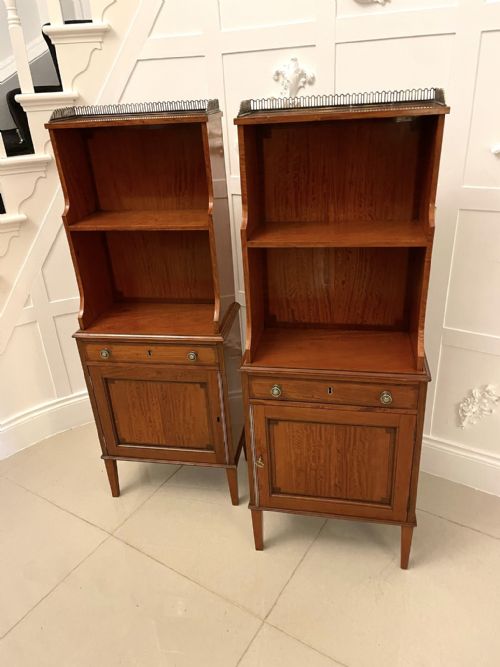
The selection ranges from tall breakfront floor bookcases to compact hanging shelves and low side cabinets with shelving backs. Many examples incorporate brass inlay, delicate column supports, or glazed cupboards beneath the open tiers. Pieces span stylistic influences from the Georgian era through to the William IV period.
Open bookcases and whatnots form the core of this category, providing accessible storage that suits modern domestic spaces. The forms reflect the classical architectural proportions favoured by cabinet makers of the early eighteen hundreds.
Distinctions in quality
Quality reveals itself in the selection of timber figures, such as highly figured flame mahogany veneer or richly grained rosewood. The crispness of brass inlay and the elegance of turned columns or gallery rails separate standard utility furniture from pieces produced by premier workshops.
Proportion and structural integrity dictate the standing of a piece within the range. Refined proportions, balanced tiers, and intact original finishes distinguish the upper tier of surviving examples.
The documented pieces incorporate decorative elements such as brass inlay, leather dummy books, and parcel gilt highlights.
Gillows
The Regency Period Shelving Glossary
- Waterfall bookcase
- A graduated set of open shelves where each tier steps back from the one below, creating a cascade effect popular in the early nineteenth century.
- Etagere
- A movable tiered stand or shelving unit designed for displaying ornaments, china, or small books.
- Whatnot
- A freestanding piece of furniture featuring multiple open shelves supported by pillars or columns, used for holding various small objects.
- Chiffonier
- A low cabinet, typically featuring enclosed storage below and a shelved superstructure or mirror above.
- Breakfront
- A cabinet or bookcase whose central section projects forward from the flanking outer sections.
- Parcel gilt
- Woodwork or metalwork partially decorated with applied gold leaf or gilt paint to highlight specific architectural details.
Regency Period Shelving: Frequently Asked Questions
How do I distinguish a whatnot from an etagere?
Whatnots and étagères both provide multiple open tiers for display, though terminology often overlaps depending on the maker and period.
Generally, an étagère leans towards decorative display of porcelain and ornaments, whereas a whatnot accommodates books and general household objects.
Where were these shelves placed in a Regency home?
These shelving units typically stood against drawing-room walls, beside fireplaces, or within domestic libraries to hold contemporary literature and ornaments.
Hanging shelves and wall brackets provided space-saving storage directly above side tables or serving cabinets.
How can I tell a Regency bookcase from a later copy?
Regency bookcases exhibit period timber selections such as solid mahogany, rosewood, and flame mahogany veneer, combined with traditional hand-cut joinery.
Examining the backboards, secondary timbers, and the natural ageing of the finish helps confirm manufacture during the early nineteenth century.