
19th Century Water Pitcher
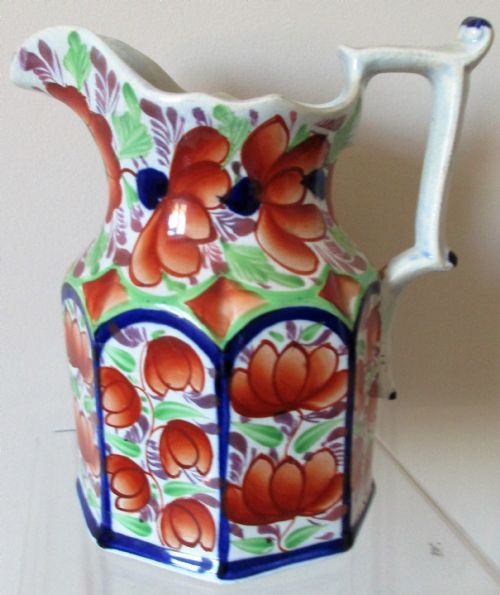
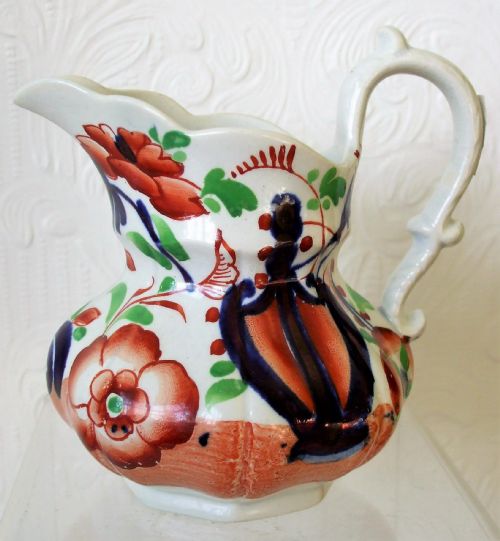
These 19th century water pitcher selections span earthenware, stoneware, porcelain and glass, offering functional serving vessels shaped by Victorian, Georgian and Regency hands.
19th Century Water Pitcher
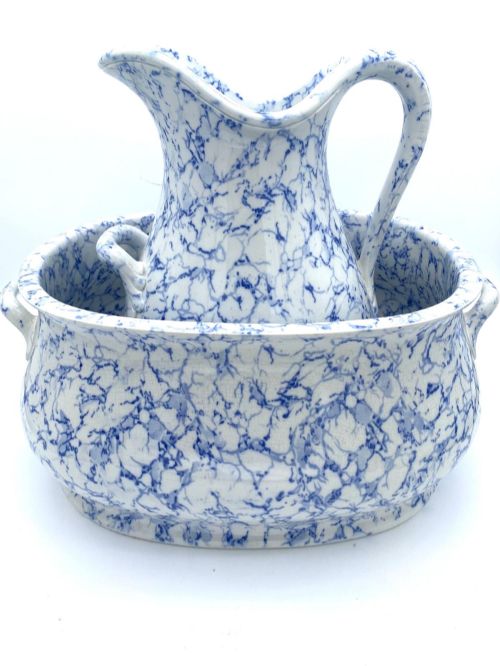
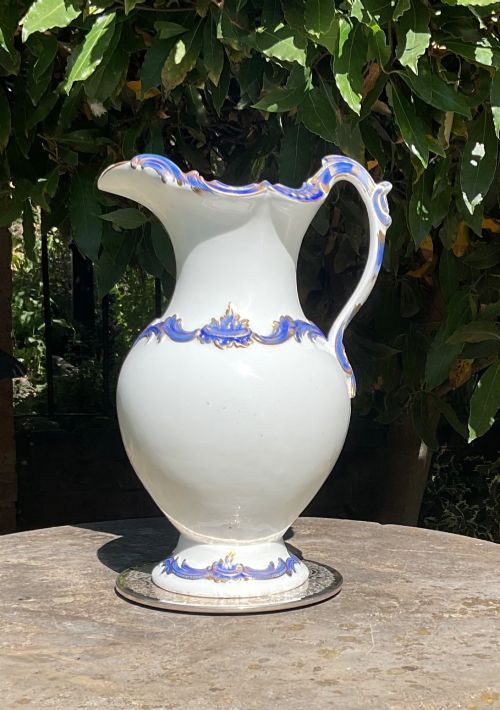
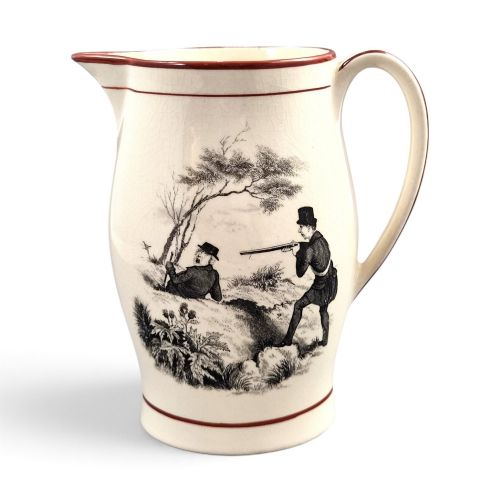
A 19th century water pitcher serves as a primary vessel for holding and pouring liquids at table, encompassing forms recorded as jugs, ewers and hot water cans. You will encounter earthenware, stoneware, porcelain, glass and metal examples originating from English, French, Scottish, Italian and Middle Eastern makers.
The prevailing styles on this page range from early Georgian and Regency specimens through Victorian majolica, relief-moulded stoneware and late 19th-century blown glass. These domestic containers reflect the shifting aesthetic tastes and manufacturing techniques of the 1800s.
Domestic routines of the period relied on these utilitarian and decorative vessels for daily water service, washing and formal dining. The surviving examples bridge the gap between everyday utility and display.
How They Were Made
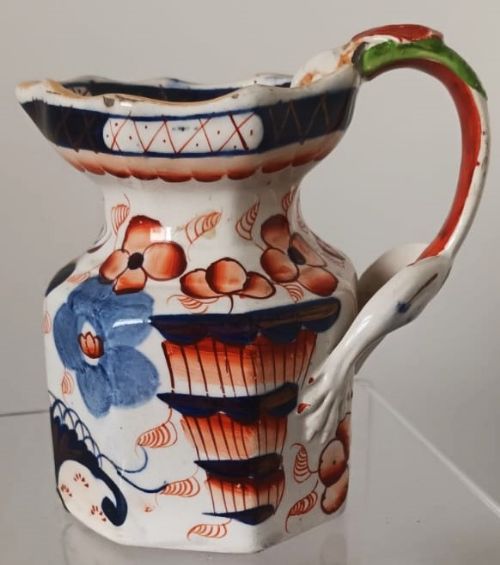
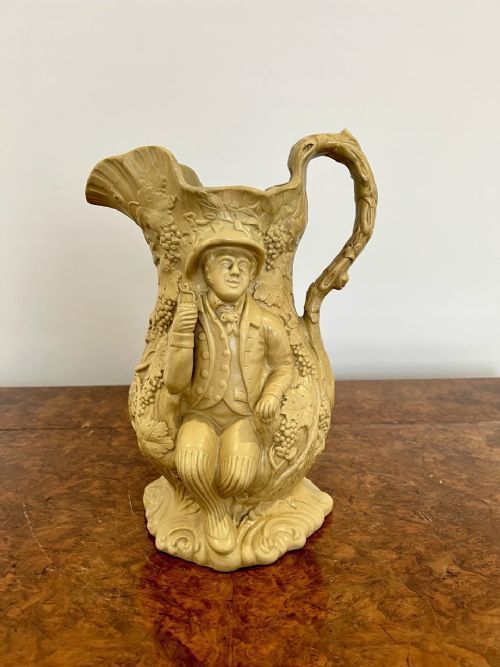
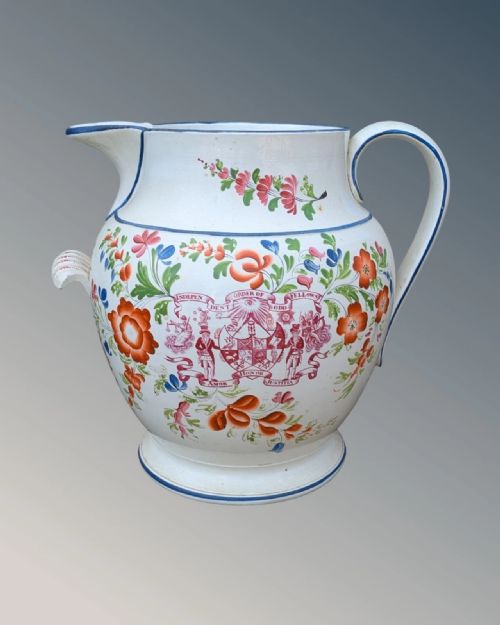
Potters shaped earthenware, creamware, pearlware and ironstone bodies on the wheel or pressed them into moulds, applying hand-painted designs, transfer prints, lustre glazes and relief decoration before kiln firing. Stoneware pieces like those by Charles Meigh utilise durable clays fired at high temperatures to achieve crisp, three-dimensional Bacchanalian motifs.
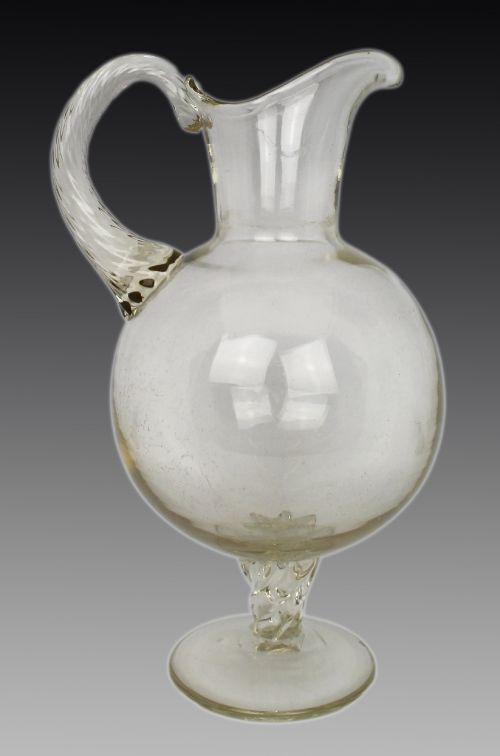
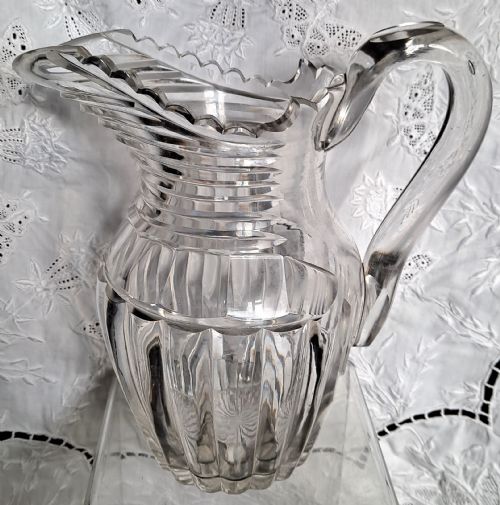
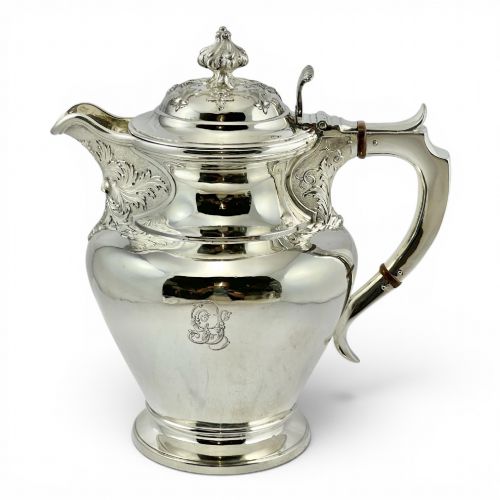
Glassmakers produced overshot, cut, etched and latticinio vessels through free-blowing, mould-blowing and wheel engraving, often adding gilded rims or applied handles. Metal pitchers and ewers involve sheet copper or silver beaten, soldered and chased by hand to form complex spouts and handles.
Listings feature 19th-century examples spanning earthenware, stoneware, porcelain, glass and copper.
What Varies in Quality
The clarity of transfer-printing, the crispness of relief moulding and the precision of hand-painted polychrome or lustre decoration distinguish finer ceramic vessels from standard production pieces. Makers such as Minton, Meissen and Davenport maintained rigorous standards in paste preparation and glaze application.
Glass quality rests on the purity of the metal, the balance of the blown form, and the fineness of wheel engraving or gilding details. Metalwork quality appears in the weight of the silver or copper, the seamlessness of construction, and the artistry of the chasing.
Minton·Charles Meigh·Ridgway and Sons·Davenport·Meissen·Jones and Walley
The 19th Century Water Pitcher Glossary
- Majolica
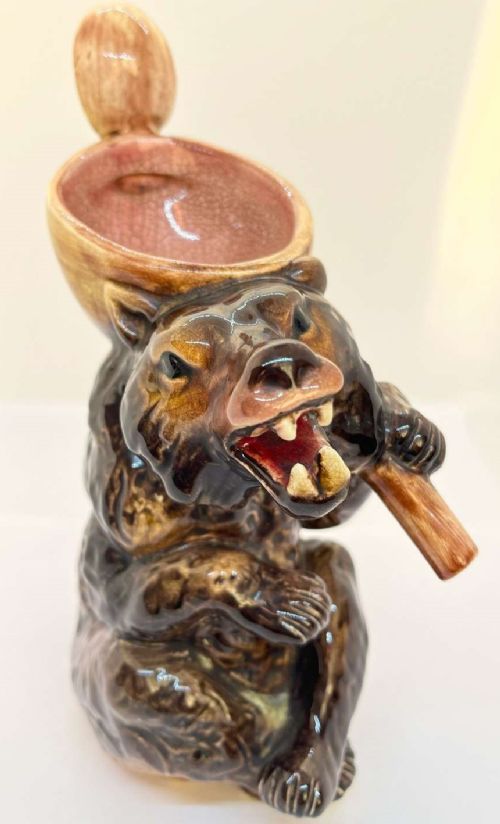
- A colourful lead-glazed earthenware popular during the Victorian era, often modelled with naturalistic plant or animal motifs like the Holdcroft bear jug.
- Lustreware
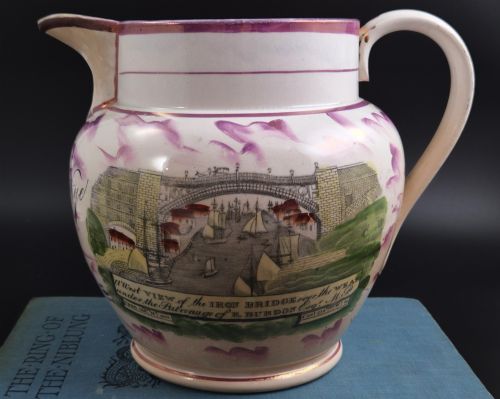
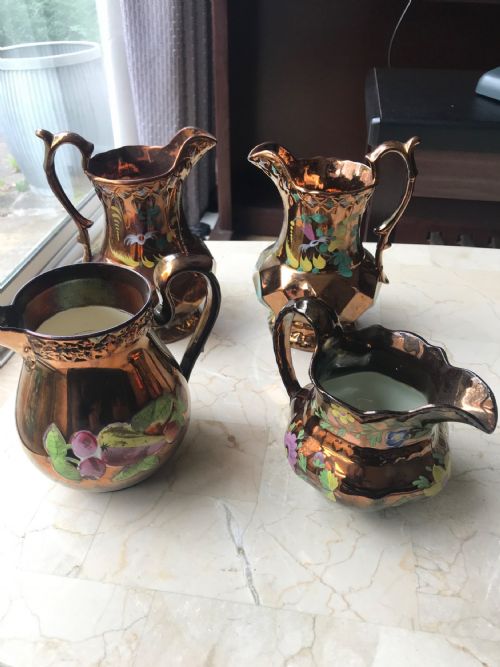
- Pottery finished with a metallic glaze that imparts an iridescent sheen, seen in Sunderland pink splash and copper lustre pieces.
- Parian ware
- A fine white bisque porcelain resembling marble, developed in the 19th century for classical figures and decorative jugs.
- Overshot glass
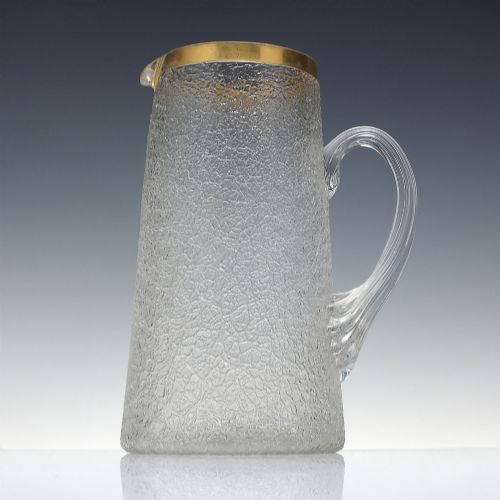
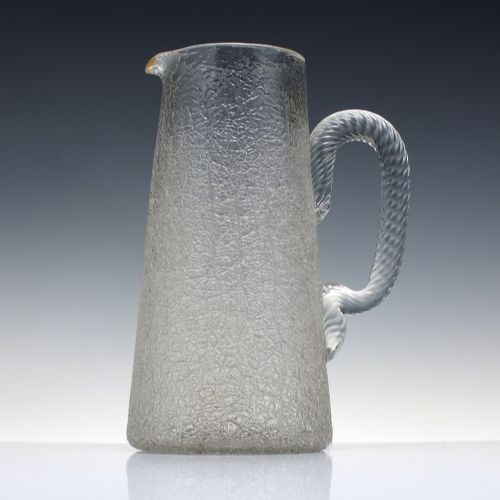
- Glassware rolled over with fine threads of molten glass before completion, creating a textured, icy surface.
- Ewer
- A large jug with a wide spout and flared base, traditionally used for ceremonial or formal hand-washing.
19th Century Water Pitcher: Frequently Asked Questions
How were water pitchers used daily?
Families used these vessels to transport water from kitchens or basins to dining tables and bedrooms before indoor plumbing became universal. They served as central pouring pieces for meals and washing.
Larger versions accommodated washing routines, while smaller pitchers held water or wine at the dinner table. Their presence combined practical utility with decorative display in the home.
What materials are most common?
Earthenware, stoneware and glass dominate the surviving domestic vessels from this period. Potters utilised creamware, ironstone and porcelain for durable table service.
Glassmakers created heavy lead crystal and blown vessels with cut or engraved patterns. Metal variants in copper and silver also appear for specialised serving needs.
How do I date a ceramic pitcher?
Makers' marks stamped or impressed on the base provide the most reliable chronological markers. Stylistic clues such as relief moulding, transfer-printed patterns and glaze types further narrow the production era.
Changes in ceramic bodies, from early creamware to later ironstone and Parian ware, align with specific decades of the 19th century. Comparing handle styles and decorative motifs with documented examples confirms the period.
Can I use antique glass pitchers?
These historical vessels are generally suited for cold liquids and gentle hand washing rather than dishwasher use. Thermal shock from hot liquids can crack 19th-century blown or cut glass.
Careful handling preserves fragile applied handles and gilded rims. Display and light serving best protect the integrity of the material.