





19th Century Wall Hook
These 19th century wall hook pieces offer practical hanging solutions with distinctive period character, spanning ornate French ormolu and carved Black Forest wood.
19th Century Wall Hook
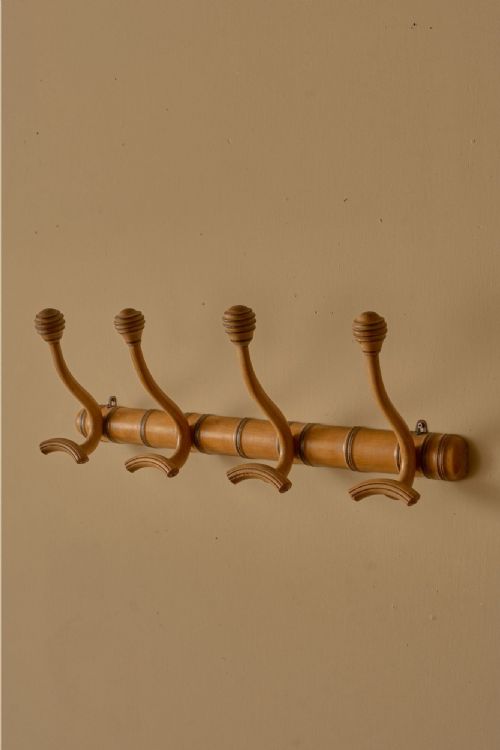
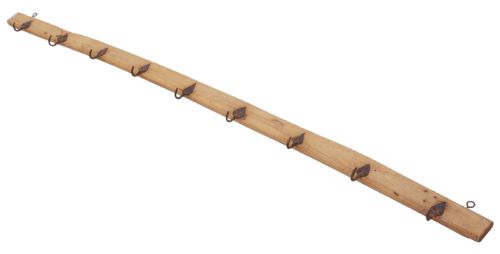
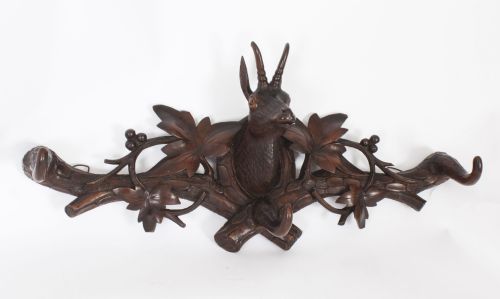
A 19th century wall hook serves both utilitarian and decorative purposes in domestic spaces, often taking the form of single hooks, coat racks, portmanteaus, or curtain tie backs. These items range from simple kitchen game hook racks and turned wood designs to elaborate animal carvings associated with the Black Forest style.
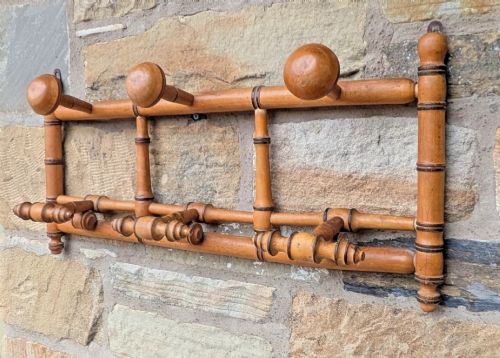
The pieces on this page originate from various regional traditions including French country, French Rococo Revival, and Swiss or South German workshops. Common formats include wall-hanging hat and coat stands, hall racks, and specialised items like whip hooks or simulated bamboo hangers.
Materials span a diverse selection of woods and metals, pairing structural timbers such as oak, mahogany, linden wood, and turned wood with decorative brass, ormolu, glass, and horn. This variety reflects the diverse domestic needs of the period, from heavy hallway storage to delicate window furnishings.
Materials and construction
Makers utilised traditional woodworking techniques, carving detailed animal heads, human figures, and foliage from linden wood, oak, and mahogany. Turned wood components and bent wood, as seen in Thonet examples, demonstrate the period's versatility in shaping timber for domestic hardware.
Metal elements incorporate cast brass and gilt ormolu, frequently shaped into ornate scrollwork and foliage for curtain tie backs and heavy portmanteaus. Natural materials such as horn and deer antler are also integrated into structural wall-hanging stands.
19th Century Wall Hook Retail Price Guide 2026
Typical asking prices for 19th century wall hook among the pieces listed under this phrase on Sellingantiques today, from the lower quarter to the upper quarter. They describe what is for sale here now, not the wider market.
Assessing quality
Quality in these pieces is evident in the depth and precision of hand carving, particularly in Black Forest animal heads and figurative subjects where anatomical proportion and expression distinguish superior examples. Metalwork varies according to the crispness of casting and the richness of the ormolu finish.
Structural integrity also separates standard utility items from finer decorative pieces, visible in the careful joining of timbers and the secure mounting of metal hooks to wooden backplates.
The 19th Century Wall Hook Glossary
- Ormolu
- Gilt bronze mounted or applied to decorative objects and hardware. This technique gives metal fittings a bright, durable gold-coloured finish.
- Black Forest
- A nineteenth-century carving style originating in Switzerland and Germany. Pieces typically feature naturalistic animals, foliage, and rustic forest motifs.
- Portmanteau
- A wall-mounted rack or stand designed for coats, hats, and travelling gear. These fixtures combine multiple hooks with a shelf or hanging rail.
- Faux bamboo
- A decorative treatment where wood or metal is carved and painted to imitate natural bamboo stalks. This style gained popularity during the nineteenth century under Asian design influences.
19th Century Wall Hook: Frequently Asked Questions
How do I mount a heavy wall rack?
These items require sturdy fixings into wall studs or solid masonry due to the weight of dense timbers like oak and mahogany combined with cast metal hooks.
Ensure the mounting points align with the original screw holes or brackets provided on the backplate to distribute the load evenly.
Were curtain tie backs used as wall hooks?
Ornate brass and ormolu curtain tie backs serve primarily to hold fabric drapery aside from windows. Their projecting arms and decorative mounts allow them to function similarly to small wall hooks in lighter applications.
Install them securely into wall anchors if using them to hang lightweight items like accessories or garments.
What is Black Forest carving?
Black Forest pieces originate from the wooded regions of central Europe, characterised by realistic depictions of animals such as deer, chamois, eagles, and gnomes. Carvers used linden wood and other local timbers to create functional items like hall stands and coat racks.
This style emphasises deep relief work and naturalistic textures that mimic forest environments.
How do I clean carved wooden hooks?
Dust carved wooden surfaces gently using a soft-bristled brush to reach into the recesses of animal carvings and foliage without damaging the patina. Avoid excessive moisture or harsh chemical cleaners, applying a light coat of appropriate furniture wax occasionally to protect the timber.
Metal components like brass and ormolu should be wiped with a dry cloth to preserve their original finish.