


19th Century Venetian Painting
These 19th century venetian painting works capture the luminous canals, palazzos, and lagoons of Italy, offering buyers a romantic window into historic cityscape traditions.
19th Century Venetian Painting
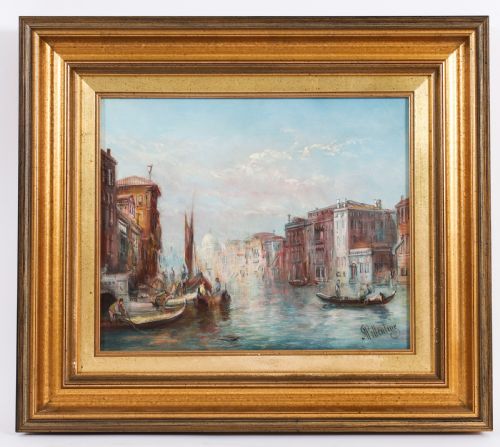
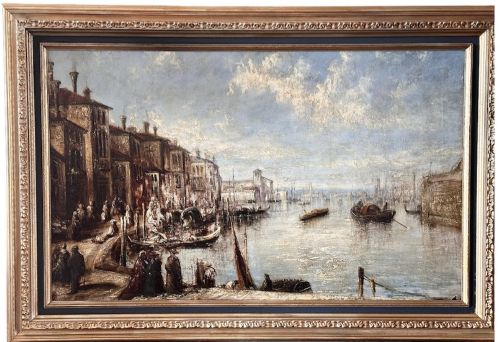
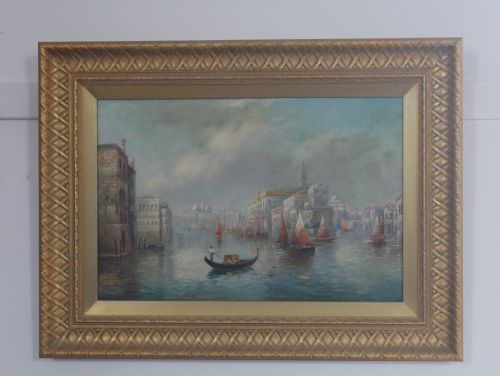
When searching for 19th century venetian painting, buyers encounter works depicting iconic locations such as the Grand Canal, the Doge's Palace, and Santa Maria della Salute. The selection on this page relies heavily on oil paintings and watercolours on canvas or paper, rendered in styles spanning Victorian fine art and 19th century romanticism.
The subjects range from sweeping architectural townscapes to intimate canal scenes featuring gondoliers and historic palazzos. Artists frequently recorded the distinctive light and atmospheric haze of the lagoon, producing views that vary from broad panoramic vistas to detailed architectural studies.
How They Were Made
Artists executed these works primarily using oil on canvas, oil on board, or watercolour on paper, mounted within carved wood and gilded frames. The application of pigment relied on traditional brushwork to build up luminous layers representing water reflections and stone facades.
Support materials include prepared canvas stretched over wood frames, heavy paper sheets for watercolours, and occasionally board. Giltwood and carved wood frames frequently accompany the paintings, reflecting the craftsmanship of the period.
19th Century Venetian Painting Retail Price Guide 2026
Typical asking prices for 19th century venetian painting among the pieces listed under this phrase on Sellingantiques today, from the lower quarter to the upper quarter. They describe what is for sale here now, not the wider market.
Listings feature works created across the nineteenth century, utilising oil on canvas, watercolour on paper, and carved giltwood frames.
What Varies in Quality
The distinction between standard works and superior examples rests upon the handling of light, atmospheric depth, and architectural precision. Masterful works capture the translucent quality of water and the intricate details of Venetian stonework with confident, fluid brushstrokes.
Compositional balance and the preservation of the original paint surface or watercolour pigment also dictate distinction. Works showing greater fidelity to the specific atmospheric conditions of the lagoon command stronger visual presence than formulaic studio repetitions.
Alfred Pollentine·Francis Moltino·Jane Vivian·Antonietta Brandeis·Clara Montalba·William Raymond Dommersen
The 19th Century Venetian Painting Glossary
- Canvas
- A heavy woven fabric used as a surface for oil painting. It is typically stretched tightly over a wooden frame before pigment is applied.
- Watercolour
- A painting method in which the paints are made of pigments suspended in a water-based solution. Paper serves as the primary support medium for this technique.
- Giltwood
- Wood that has been covered with a thin layer of gold leaf or gold paint. This material is commonly found on the decorative frames enclosing these paintings.
- Lagoon
- The shallow body of water separated from the Adriatic Sea by a series of barrier islands, surrounding the city of Venice. It forms the central setting for many of these townscape views.
19th Century Venetian Painting: Frequently Asked Questions
What subjects do these paintings show?
These works primarily depict famous Venetian landmarks, including the Grand Canal, the Doge's Palace, and the lagoon. Artists focused on capturing the unique architecture and waterways of the city.
Views often extend to historic churches like Santa Maria della Salute and daily scenes featuring gondolas and local inhabitants.
How do I care for an antique painting?
Keep the artwork away from direct sunlight and sources of extreme heat or humidity to protect the canvas and paper. Stable environmental conditions prevent the degradation of both pigments and support materials.
Dust the frame gently with a soft, dry cloth and avoid touching the painted surface directly. Professional conservation should be sought for any structural repairs.
How are watercolours and oils different?
Oil paintings use pigment suspended in drying oils applied to stretched canvas or board, offering a rich and buildable surface. Watercolours utilise water-soluble pigments on paper, creating translucent washes of colour.
Oils generally require a protective frame with or without glass, whereas watercolours must be framed behind glass to shield the paper from moisture and atmospheric damage.
Where were these artists active?
Many painters travelled from Britain and across Europe to work on location in Venice, capturing its distinct light and architecture. Others maintained studios in Italy or produced finished compositions from preliminary sketches upon returning home.
This movement created a diverse body of work by both British and continental artists depicting the same urban landscape.