



19th Century Tunbridge Ware
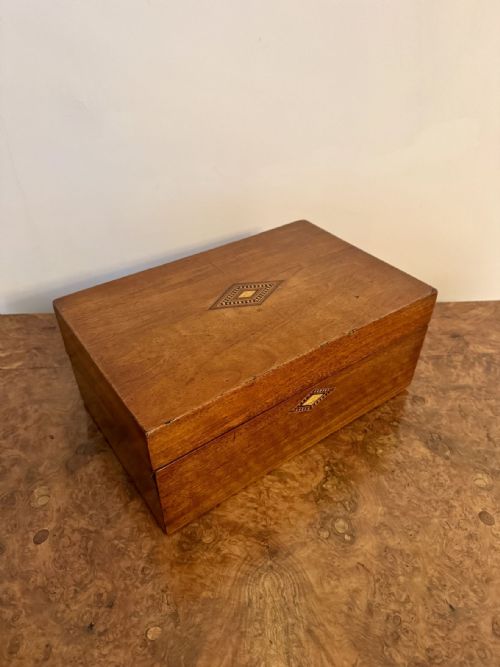
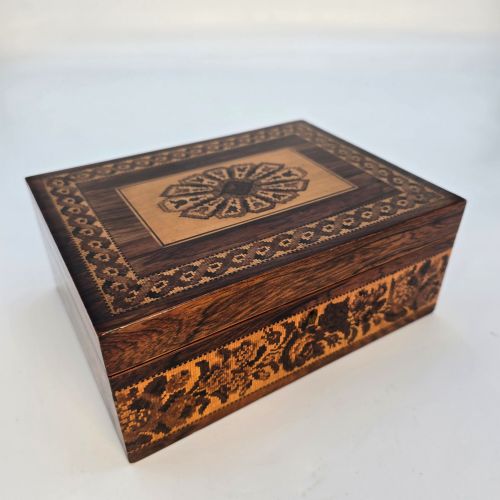
These pieces of 19th century tunbridge ware bring intricate wood mosaic into everyday objects, prized for their tiny geometric tiles.
19th Century Tunbridge Ware
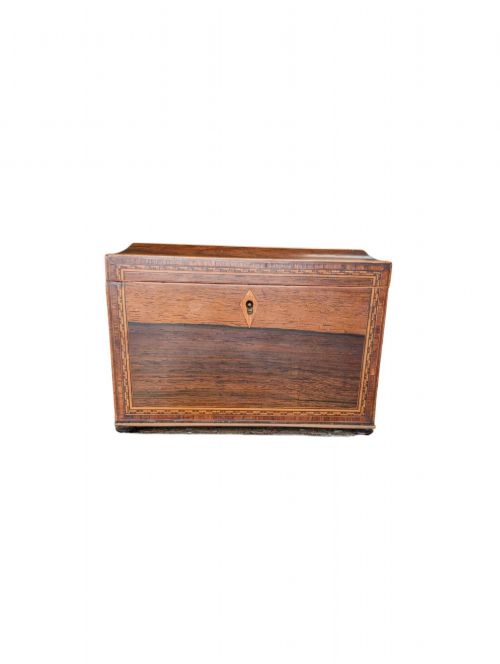
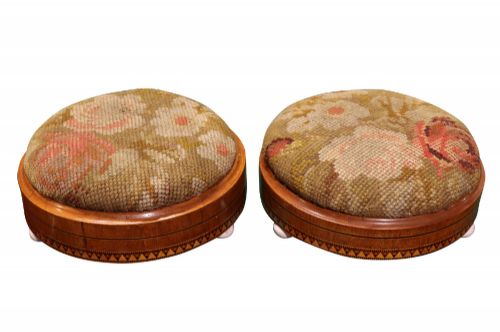
When searching for 19th century tunbridge ware, collectors look at small wooden boxes, tea caddies, sewing cases, and desk accessories decorated with detailed mosaic imagery. These items originate predominantly from the Victorian and Regency periods, showcasing intricate patterns built from thousands of microscopic wood blocks.
The version most commonly met on this page is the Victorian tea caddy or trinket box, often constructed in walnut or rosewood with geometric bands. Such objects served practical domestic purposes while displaying remarkable ornamental skill on their lids and panels.
Beyond containers, the selection includes smaller items like cribbage boards, book racks, and folding travel pieces. Each item relies on precise carpentry to assemble colourful scenes, floral motifs, or perspective cubes.
How 19th century tunbridge ware was made
Craftsmen manufactured 19th century tunbridge ware by bundling thousands of dyed and natural wood strips together, gluing them into geometric blocks, and slicing cross-sections to create identical mosaic tiles. Woods such as boxwood, walnut, and rosewood provided a natural palette of contrasting tones without artificial stains.
These tiny mosaic panels were then applied as veneer to solid wood foundations like sycamore or mahogany, often framed by banded borders. Surface finishing involved careful scraping and polishing to highlight the varied grain and natural colours of the timbers.
The listings show a prevalence of Victorian and Regency items, focusing heavily on walnut, rosewood, and mixed wood inlay across desk accessories and boxes.
What varies in quality
The standard of 19th century tunbridge ware depends largely on the minuteness of the mosaic work and the complexity of the pictorial subject. Pieces featuring intricate perspective cubes, castles, or floral panels demand greater technical precision than those with simple geometric borders.
Integrity of the timber base and the completeness of the mosaic tesserae define the preservation state. Subtle variations in the natural wood colours and the crispness of the microscopic slices separate standard utility boxes from workshop masterpieces.
Edmund Nye·Henry Hollamby
The 19th Century Tunbridge Ware Glossary
- Mosaic inlay
- The technique of arranging tiny wood blocks to form pictorial or geometric designs on a wooden surface.
- Tesserae
- The individual microscopic wooden blocks sliced from bundled rods to build up the mosaic picture.
- Tea caddy
- A box traditionally partitioned to hold loose tea leaves, frequently fitted with a small mixing bowl or dual compartments.
- Writing slope
- A portable slant-topped desk hinged to open flat, revealing storage for stationery and inkwells.
- Parquetry
- Geometric wood inlay forming repeating patterns such as cubes or triangles across a wooden panel.
19th Century Tunbridge Ware: Frequently Asked Questions
What are these boxes made of?
These items utilise a variety of native and foreign timbers, including walnut, rosewood, sycamore, and boxwood. The structural carcass is typically mahogany or walnut, veneered with decorative mosaic bands.
The microscopic tiles themselves consist of numerous natural wood species chosen for their distinct colours, allowing craftsmen to build detailed pictures without paint.
How were tea caddies used?
Tea caddies served to store expensive tea leaves securely under lock and key in the formal reception rooms of 19th century homes. The internal compartments kept different blends separated before they were measured out by the host.
Many examples feature fitted interiors with lidded canisters and glass mixing bowls, reflecting the ritual and status attached to tea preparation during the period.
How do I care for my box?
Preserving these wooden items requires keeping them away from direct sunlight and sudden changes in humidity to protect the delicate veneer and tiny mosaic tiles. Gentle dusting with a dry cloth is sufficient for routine maintenance.
Avoid using liquid polishes or modern cleaning agents, which can seep into the microscopic joints of the marquetry and loosen the historical animal glue.
How can I date a piece?
Dating relies on observing the primary wood choice, the style of the hardware, and the complexity of the mosaic motifs. Regency items often favour simpler banding, while high Victorian pieces frequently display elaborate pictorial panels of castles or butterflies.
Signed pieces by known manufacturers such as Edmund Nye or Henry Hollamby offer clearer chronological markers within the 19th century timeline.