


Circular Wooden Box
These circular wooden box items bring warmth and tactile history to a desk, holding small keepsakes with quiet Georgian and Victorian charm.
Circular Wooden Box
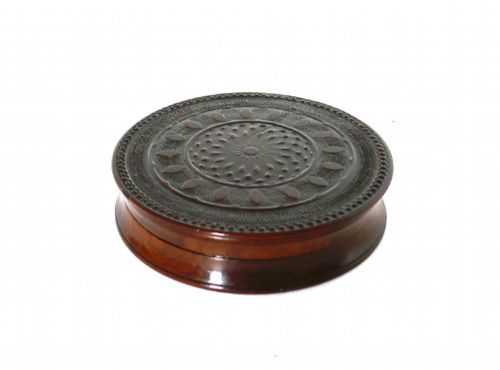
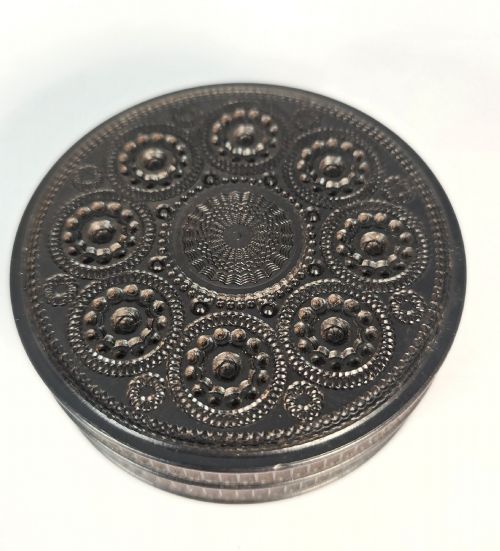
A circular wooden box satisfies the collector with its compact form and pocket-sized utility, frequently found in finishes ranging from plain turned timber to intricate folk art decoration. When searching for a circular wooden box, the buyer encounters items primarily dating from the nineteenth century and the Georgian period, often designed originally for snuff or small trinkets.
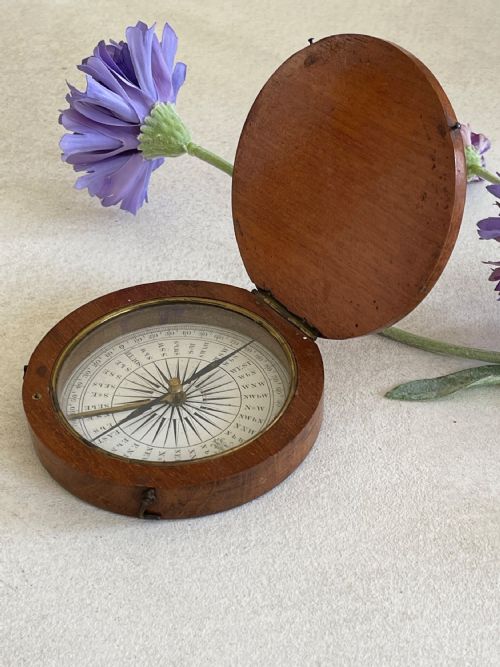
The assortment includes domestic pieces such as turned mahogany and laburnum containers alongside more travelled examples like Kashmiri painted vessels and French pressed maple pieces. Many of these survive as snuff boxes, while others served as pocket compass cases or small storage boxes for the dressing table.
Regional variations span British treen work, Scandinavian country pieces, and French Empire designs, showing how diverse the response was to this simple round format. A buyer is most likely to meet nineteenth century examples featuring engine turning or hand painted surfaces alongside simpler turned cedar, oak, or mahogany bodies.
How they were made
The construction of these vessels relies heavily on lathe-turning, creating smooth round bodies from dense hardwoods like ebony, laburnum, mahogany, and oak. Burr wood and maple are also utilised, selected for their distinct grain patterns and stability when shaped into small lidded containers.
Surface ornamentation ranges from precise engine turned geometric patterns to delicate hand painting, Tunbridge white ware decoration, and inlaid details. Metal components such as brass appear on compass cases, while paper and paint finish the decorated Kashmiri and pressed maple items.
Materials across these listings include native and exotic timbers such as mahogany, laburnum, ebony, and oak, alongside brass and paper.
What varies in quality
Quality in these vessels rests on the crispness of the turnery and the precision of any surface decoration, such as engine turning or inlaid work. Finer pieces demonstrate a superior balance in the proportions of the lid to the base, ensuring a snug friction fit that has survived centuries of handling.
The choice of material elevates certain examples, with dense timbers like laburnum and ebony permitting sharper detail in turned mouldings than softer woods. Artisanal skill dictates the success of hand painted or carved elements, distinguishing standard utility items from decorative folk art expressions.
The Circular Wooden Box Glossary
- Treen
- Small wooden domestic objects made by turning or carving. This term covers everything from nineteenth century boxes to small kitchen implements.
- Engine turned
- A geometric pattern cut into wood or metal using a specialised lathe. This technique creates precise, repeating textures across the surface of a box.
- Tunbridge ware
- Small wooden objects decorated with intricate mosaic patterns made from tiny segments of different coloured woods. It originates from the spa town of Tunbridge Wells.
- Snuff box
- A small lidded container designed to hold powdered tobacco. These were pocket-sized and made from various materials including wood, horn, and papier-mâché.
- French Empire
- A decorative style spanning the late eighteenth and early nineteenth centuries. It is characterised by classical motifs and polished wood surfaces.
Circular Wooden Box: Frequently Asked Questions
What were circular wooden boxes used for?
These vessels primarily served personal functions, most notably holding dry snuff for consumption during the Georgian and Victorian eras. Other examples functioned as pocket compass cases, trinket holders, or small storage containers for the home.
Their portable nature meant people carried them daily in pockets or waistcoats, leading to frequent handling and the development of a soft patina on the wood over time.
How do I date a wooden box?
Dating relies on observing the timber species, manufacturing marks, and decorative styles characteristic of specific periods like the Georgian era or the nineteenth century. Turned decoration methods and construction techniques, such as the use of engine turning or specific jointing, also provide clear chronological clues.
Comparing the wear patterns and the type of finish, whether paint, wax, or varnish, helps distinguish older handcrafted pieces from later reproductions or twentieth century items.
Are these boxes fragile?
Most of these items are robustly constructed from dense hardwoods designed to withstand daily pocket use or handling. However, painted surfaces, delicate inlays, and Tunbridge ware require careful placement away from direct sunlight and extreme humidity.
Lids fitted with tight friction turns should be handled gently to avoid straining the aged timber or disturbing historical repairs.
How should I care for antique wood?
Maintaining these pieces involves keeping them in stable room conditions away from sudden temperature shifts that cause timber to warp or split. Occasional light dusting with a dry, soft cloth is sufficient for most polished or painted surfaces.
Avoid applying modern furniture sprays or excessive moisture, as historical polishes and delicate painted details can be permanently damaged by harsh chemical cleaners.