

19th Century Trestle Desk
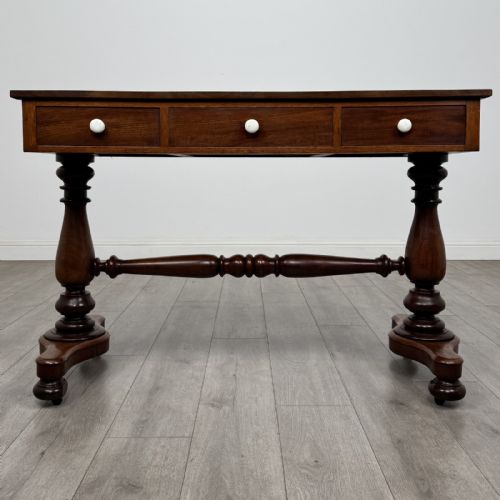
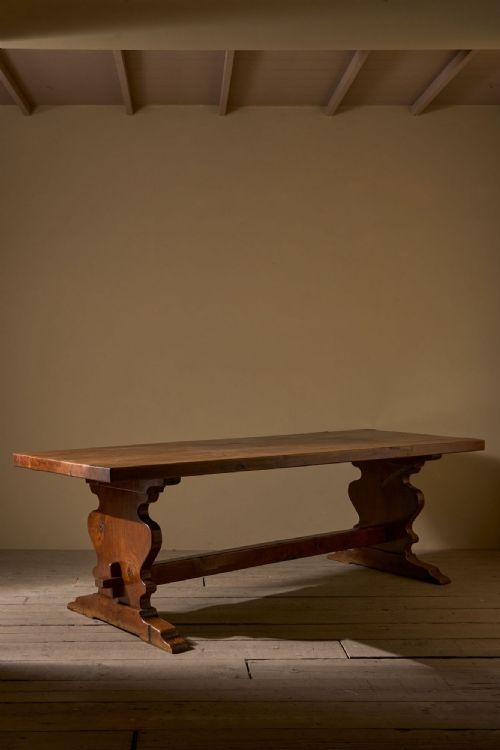
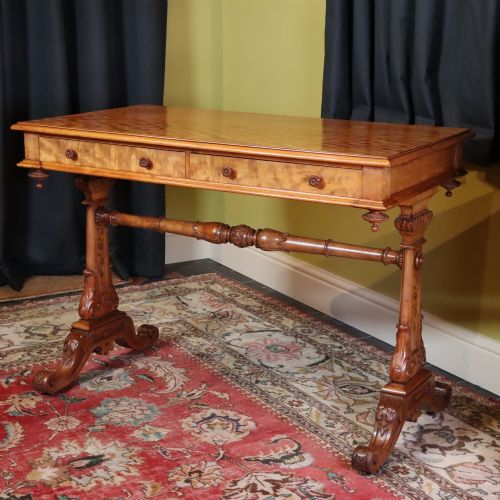
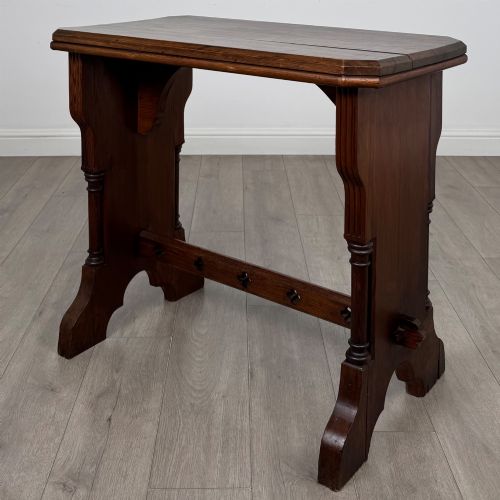
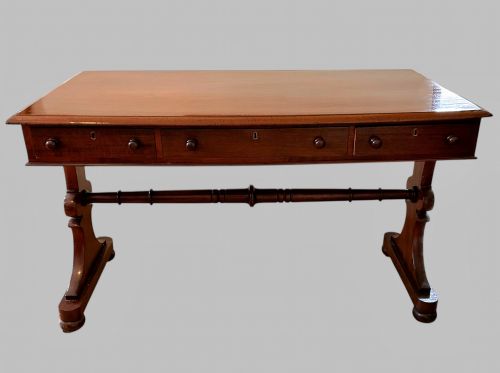
These 19th century trestle desk pieces bring functional workspace and period character into a room through sturdy framing and traditional timber.
19th Century Trestle Desk
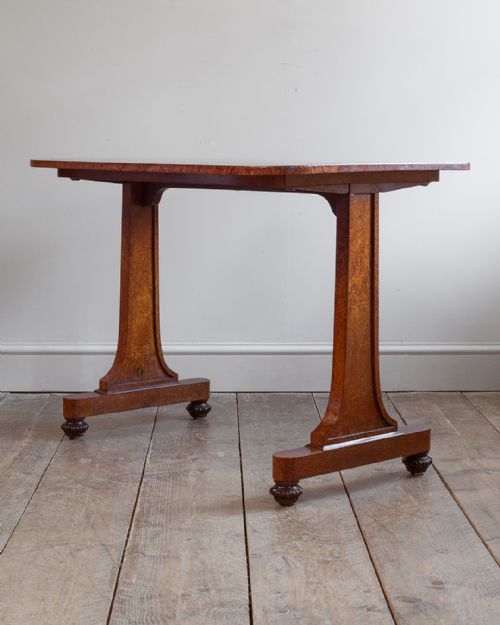
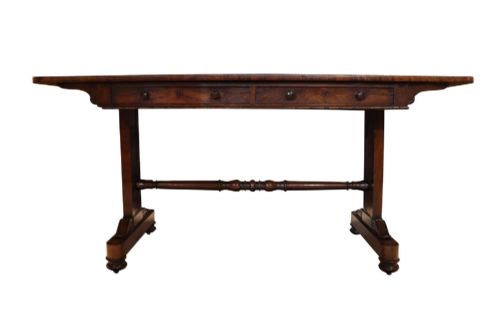
A 19th century trestle desk brings together period writing surfaces and supportive side supports, appearing in forms such as writing tables, library tables, and sofa tables. Buyers searching this phrase encounter pieces dating across the Regency, Victorian, and William IV eras.
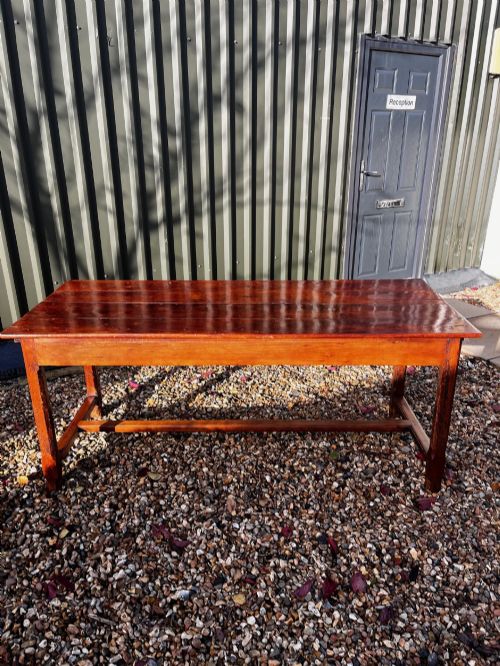
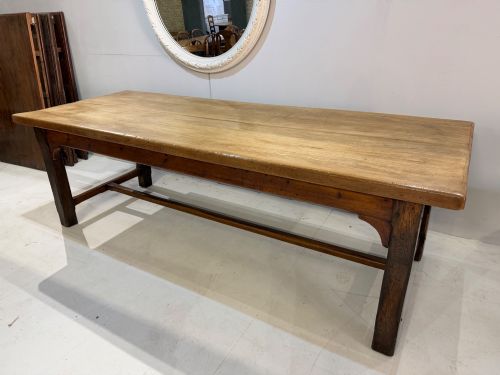
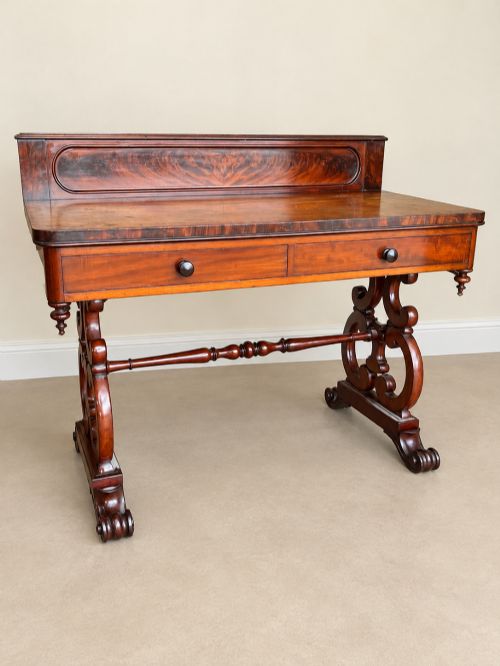
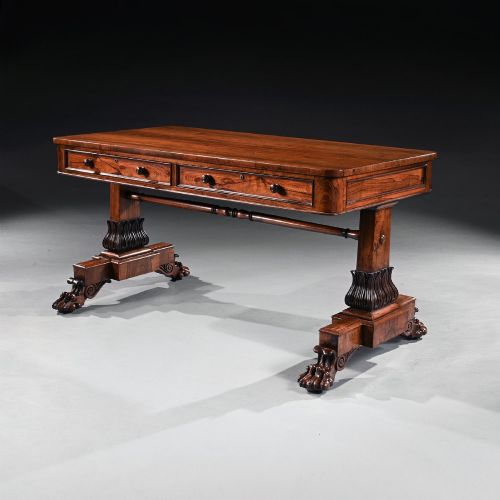
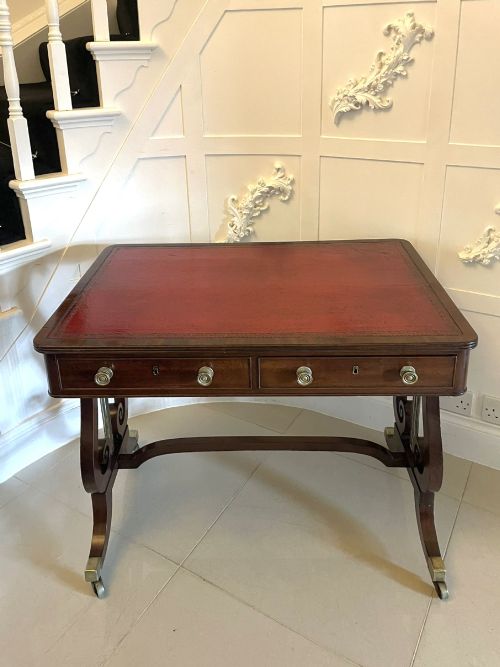
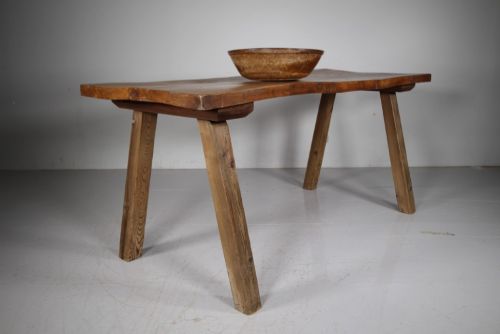
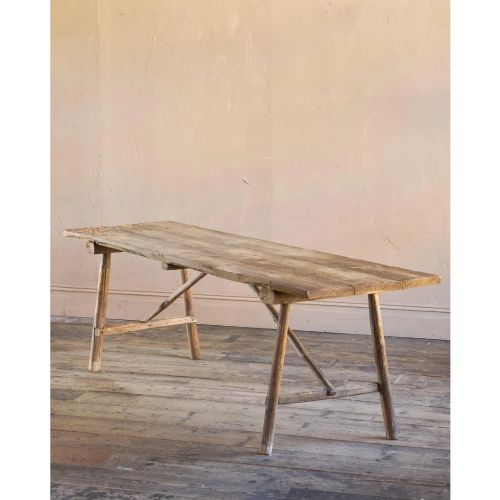
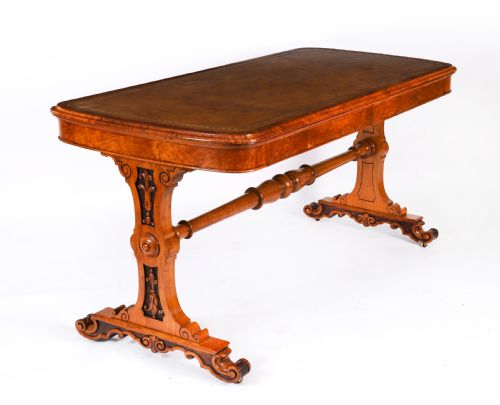
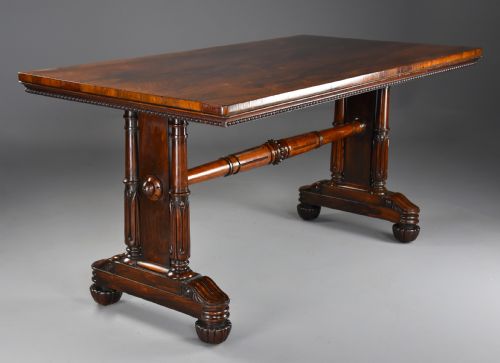
The selection ranges from refined mahogany and rosewood examples with brass mounts to primitive elm, oak, and pine tavern or refectory tables. Many feature inset leather writing surfaces and multiple drawers tailored for correspondence and study.
Materials and construction
Cabinet makers utilised dense hardwoods such as mahogany, rosewood, burr walnut, and pollard oak, often highlighting flame mahogany veneers and marquetry inlay. Softer timbers like pine, elm, and oak appear in provincial refectory and tavern formats.
Secondary detailing includes brass mounts, cast iron framing, and inset leather tops. Structural support relies on traditional joinery alongside X-frame and trestle bases, occasionally retaining original painted finishes.
19th Century Trestle Desk Retail Price Guide 2026
Typical asking prices for 19th century trestle desk among the pieces listed under this phrase on Sellingantiques today, from the lower quarter to the upper quarter. They describe what is for sale here now, not the wider market.
The listings span the Regency, Victorian, and William IV periods, constructed in mahogany, rosewood, oak, and pine.
Judging quality in period writing furniture
Quality rests in the selection of timber figures, such as highly grained pollard oak or flame mahogany, and the precision of marquetry work. Finer examples display meticulous cabinet work associated with workshops like Gillows.
The balance of proportions and the integrity of secondary timbers define the upper tier of the range. Original surfaces, such as aged red paint on pine bases or patinated leather inserts, separate domestic writing tables from utilitarian tavern variants.
Gillows·Gillingtons of Dublin
The 19th Century Trestle Desk Glossary
- Trestle table
- A table supported by end pillars or frames rather than four corner legs. This form provides stable support for both dining and writing surfaces.
- Library table
- A substantial freestanding table designed for reading and writing, finished on all sides to sit centrally in a room.
- Pollard oak
- Oak timber taken from trees that have been pollarded, producing a dense cluster of branches that create a highly decorative, mottled grain pattern.
- Sofa table
- A small rectangular table traditionally placed in front of a sofa, equipped with drop leaves and small drawers.
- Marquetry
- Decorative veneer work arranged in geometric or pictorial patterns using various tinted woods.
- Refectory table
- A long dining or working table originating from monastery refectories, constructed with sturdy stretcher-linked legs or trestles.
19th Century Trestle Desk: Frequently Asked Questions
What defines a 19th century trestle desk?
These pieces combine period writing surfaces with supportive end frames or trestle bases, drawing from Regency, Victorian, and William IV design traditions.
They encompass formal library tables, compact writing desks, and sturdier pine or oak framing suitable for daily study.
How do I identify a Regency period piece?
Regency items often feature rich mahogany or rosewood timbers, frequently enhanced by brass mounts and refined proportions.
Cabinet work from this era leans toward classical restraint and freestanding versatility.
Where were these tables used originally?
These desks served in grand libraries, private studies, and domestic drawing rooms as central writing surfaces.
Some sturdier pine and oak examples functioned in provincial taverns or kitchens.
How should I care for leather desk tops?
Leather surfaces require gentle cleaning with a slightly damp cloth, avoiding harsh chemical solvents.
Applying a specialist leather cream periodically maintains the supple texture of the hide.
What is the difference between a library table and a writing table?
Library tables are typically larger and finished on all sides to stand independently in the middle of a room.
Writing tables may be smaller and often incorporate specific drawer layouts for stationery.