


19th Century Transferware Jug
A 19th century transferware jug brings lively monochrome or polychrome storytelling straight to the table, uniting practical domestic service with the bold imagery of its era.
19th Century Transferware Jug
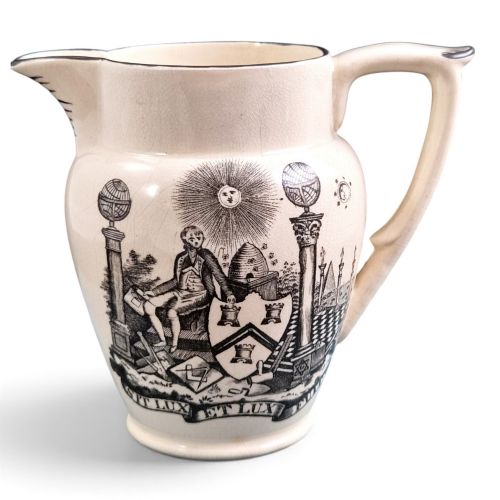
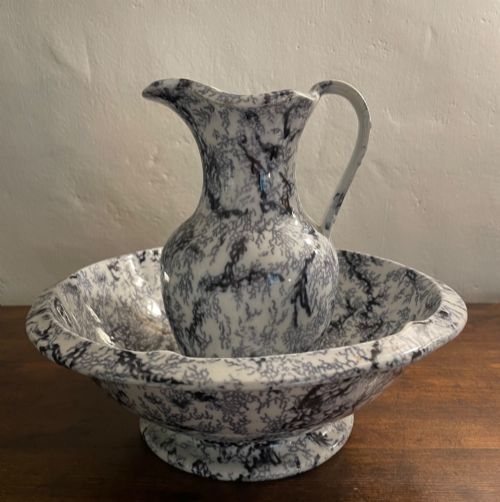
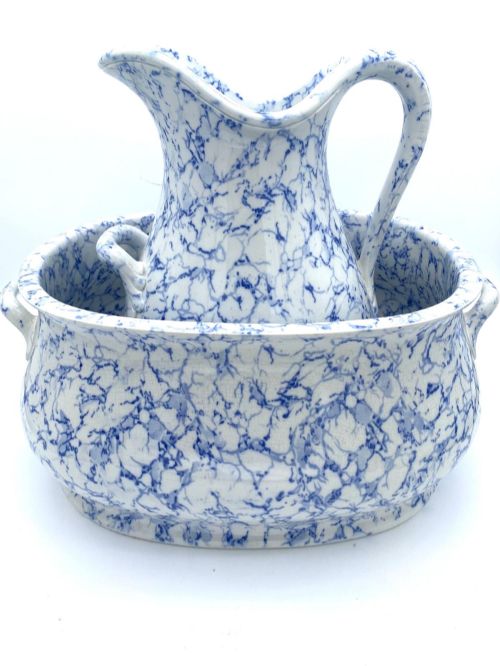
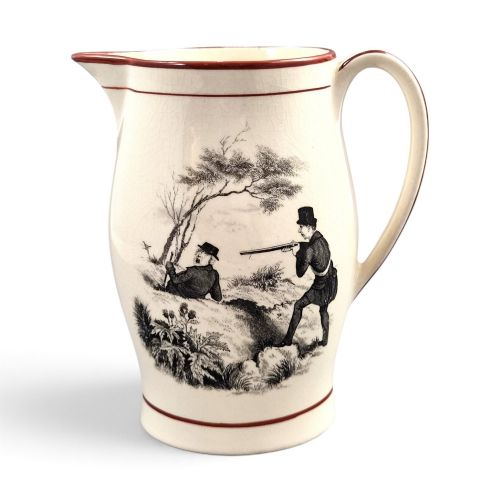
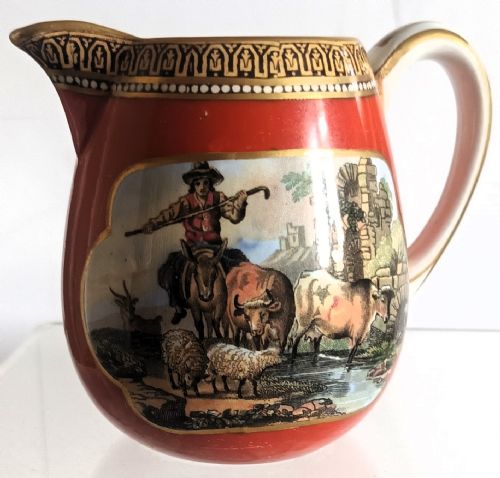
A 19th century transferware jug is a sturdy earthenware vessel designed for utility and display, carrying printed scenes ranging from maritime landmarks to political emblems. These pieces span the Georgian and Victorian eras, with examples appearing across various capacities from small cream jugs to large one-gallon pitchers and complete wash sets.
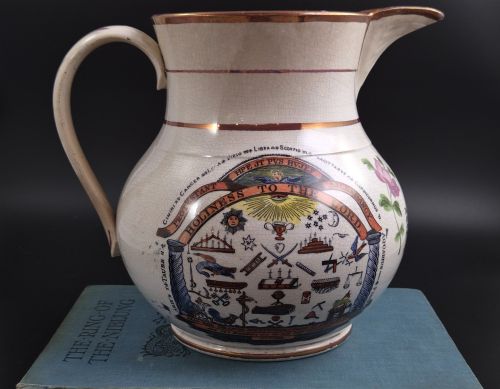
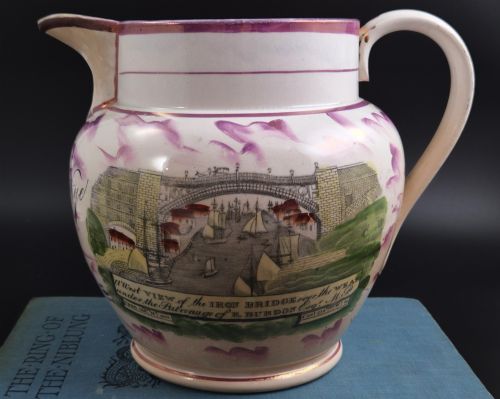
The most common versions met on this page belong to the Staffordshire tradition, alongside distinctive Sunderland lustre pieces featuring pink splash or metallic glaze effects. Buyers encounter commemorative items bearing specific names, dates, and poetic verses alongside scenic patterns like the Italian Marble design.
Makers utilised earthenware bodies such as creamware, pearlware, and standard ceramic, applying printed transfers that were sometimes hand-enhanced with polychrome enamel or metallic lustre. The forms vary from straightforward domestic pitchers to grand presentation pieces intended to record marriages, ships, or historical buildings.
How they were made
Potters shaped the earthenware, creamware, or pearlware bodies by hand or mould before applying an initial firing to create a stable biscuit base. Craftsmen then transferred engraved copper-plate designs onto tissue paper and pressed them onto the ceramic surface.
The printed pieces received a transparent glaze and a second kiln firing to seal the decoration permanently into the surface. Additional touches like polychrome enamel highlights or metallic lustre glazes required further low-temperature firings to fix the colours and metallic sheens.
Listings feature earthenware, creamware, and pearlware bodies spanning the Georgian and Victorian periods.
What varies in quality
The clarity of the transfer print dictates the visual success of the piece, separating crisp, detailed architectural lines from smudged or blurred impressions. Precision in the application of hand-painted enamel colours and metallic lustre adds depth and technical merit to superior examples.
The ambition of the form and the historical significance of the subject matter elevate certain vessels above standard kitchenware. Large capacities, named commemorations, and complex narrative scenes command greater attention from collectors than simple utilitarian jugs.
Minton·Mountford
The 19th Century Transferware Jug Glossary
- Transferware
- Ceramic pottery decorated by pressing a design engraved on a copper plate onto tissue paper, which was then transferred onto the clay body before glazing. This mechanical process allowed for intricate, repeatable patterns across large production runs.
- Creamware
- A refined, pale yellow earthenware developed in Staffordshire during the eighteenth century and widely used into the nineteenth. Its warm tone served as an effective ground for black and coloured transfer prints.
- Pearlware
- An improved earthenware body containing a small amount of cobalt in the glaze to produce a slightly bluish, pearl-like tint that mimicked Chinese porcelain. It bridges the transition from creamware to whiter nineteenth-century ceramics.
- Lustre ware
- Pottery finished with a metallic glaze that reflects light with a coppery, golden, or pink sheen. Sunderland pieces frequently combined pink splash lustre with transfer-printed ships and industrial bridges.
- Flow blue
- A Staffordshire transfer printing technique where lime or chloride vapour was introduced into the kiln to deliberately blur the cobalt blue design into the surrounding white glaze. This created a soft, hazy aesthetic popular on mid-century jugs and basins.
- Staffordshire
- The principal region of English ceramic production, encompassing numerous potteries responsible for the vast majority of transfer-printed earthenware jugs. Pieces from this area display immense variety in regional subjects, shapes, and commemorative themes.
19th Century Transferware Jug: Frequently Asked Questions
What were 19th century transferware jugs used for?
These vessels served practical daily functions in the home, carrying water, milk, or beer for family meals and household chores.
Larger examples and basin sets functioned in bedrooms for washing, while commemorative pieces often celebrated marriages, political loyalties, or famous ships.
How do I date a transferware jug?
Dating relies on examining the ceramic body, glaze type, and stylistic clues within the printed subject matter.
Creamware and pearlware generally point toward the earlier Georgian decades, while flow blue and heavier earthenware bodies align with Victorian production.
What is Sunderland pink lustre?
Sunderland pink lustre is a distinctive metallic glaze effect created by bubbling or splashing metallic solutions onto the pottery surface.
Potters in the Sunderland region used this technique to frame transfer-printed scenes of local landmarks like the Iron Bridge over the Wear.
How do I care for antique transferware?
Antique jugs require gentle hand washing in warm water with mild soap to protect the historic glaze and delicate metallic lustre highlights.
Avoid dishwashers, harsh scrubbing pads, and prolonged soaking, which can penetrate old earthenware bodies through microscopic crazing lines.