
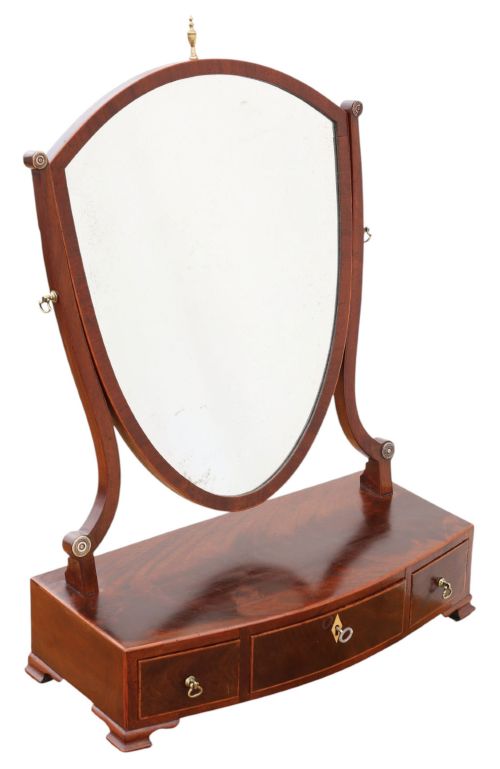
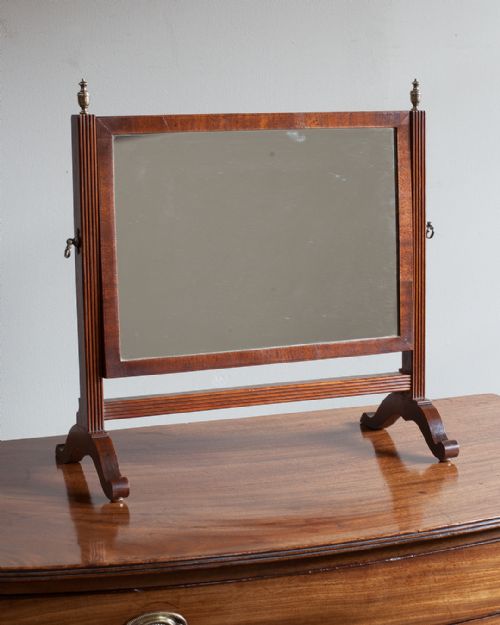
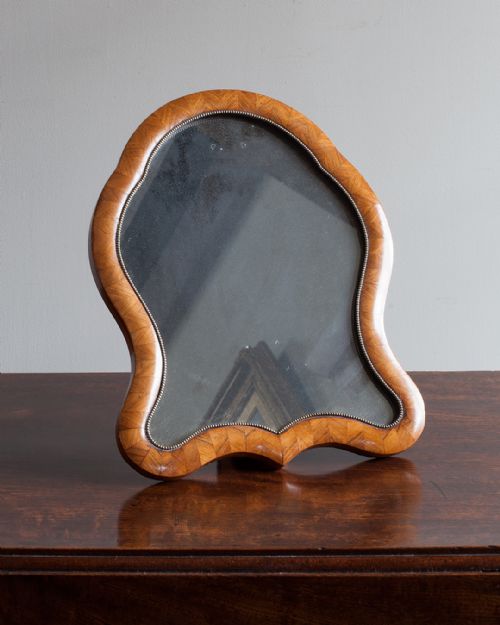
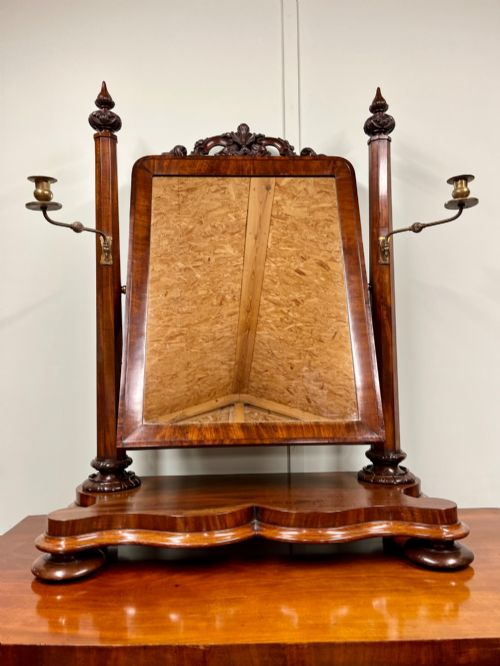
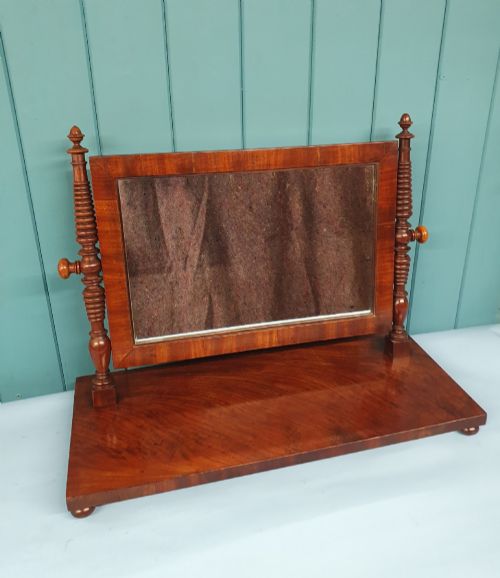

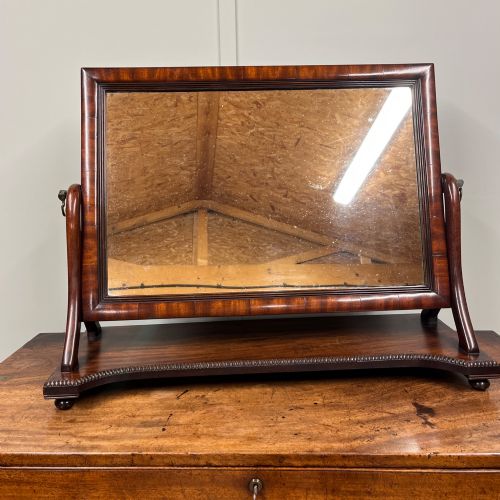
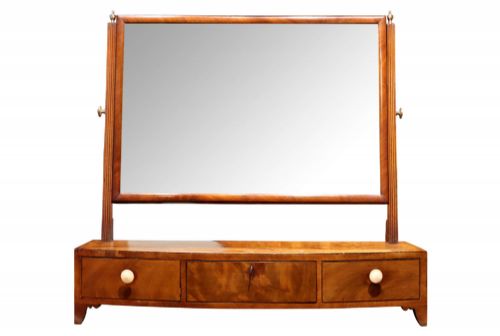
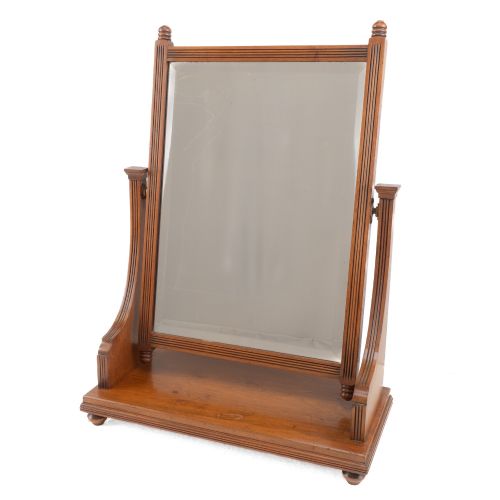





19th Century Swing Toilet Mirror
These pieces for a 19th century swing toilet mirror offer tabletop functionality and polished timber frames for the bedroom.
19th Century Swing Toilet Mirror
A 19th century swing toilet mirror sits upon a chest, table, or dressing surface, designed to tilt on vertical pivots within a supporting frame. These items span Georgian, Regency, and Victorian periods, reflecting shifting tastes in interior furnishings.
Mahogany remains the dominant wood found across these objects, often accompanied by walnut, kingwood, rosewood, and satinwood. The glass plate typically pivots between upright arms attached either to a plinth base or to a small box fitted with drawers.
Variations range from plain rectangular plates to shield-shaped designs and pieces featuring marquetry, boxwood inlay, or bureau compartments. Most examples serve as tabletop vanity mirrors, though larger grand formats and pedestal versions also appear.
Craftsmanship and Proportion
The standard of a 19th century swing toilet mirror depends on the selection of figured timber veneers and the crispness of any inlay or carved detail. Superior examples display balanced proportions between the pivoting mirror frame and the supportive base box.
Hardware such as original brass adjustment screws and delicate ivory or bone escutcheons contribute to the integrity of a piece. Finer items integrate smoothly operating drawer compartments with dovetail joints that remain tight and clean.
The site listings span diverse woods including mahogany, walnut, kingwood, rosewood, satinwood, padouk, and birch.
Jean Gille
The 19th Century Swing Toilet Mirror Glossary
- Swing mirror
- A glass plate mounted on pivots allowing it to tilt back and forth within a stationary frame. This mechanism sits either on a simple stand or atop a trinket base.
- Toilet mirror
- A historical term for a dressing table mirror used during grooming routines. These pieces typically rest on top of a larger piece of furniture.
- Shield mirror
- A dressing glass shaped like a heraldic shield, popular during the Georgian period. The curved upper edges taper down toward the lower pivots.
- Marquetry
- Decorative inlay work using various coloured woods to create pictorial or geometric patterns on the surface. Dutch examples often display floral motifs.
- Bureau fitment
- A small desk compartment integrated into the base of the mirror stand. It provides enclosed space for letters and small accessories.
19th Century Swing Toilet Mirror: Frequently Asked Questions
Where were these mirrors placed?
These mirrors sat upon dressing tables, chests of drawers, or washstands in bedrooms and dressing rooms. Their compact tabletop footprints allowed them to be moved easily around the room to catch optimal daylight.
They provided a convenient, adjustable surface for personal grooming before full-length cheval glasses became common in domestic interiors.
How do I date a swing mirror?
Dating relies on observing the timber choice, hardware style, and base construction. Georgian and Regency examples favour mahogany with delicate proportions, while Victorian versions often appear heavier with larger drawer units and bolder carving.
Secondary woods, veneer thickness, and the shape of the mirror plate also help narrow the decade of production.
Are the mirror plates original?
Many surviving pieces retain older glass, though mercury silvering degradation often necessitated replacement over the decades. Old mirror plates typically exhibit light spotting, slight foxing, or subtle waviness across the surface.
Replacement glass is common and does not diminish the utility of the wooden frame, provided the proportions match the original design.
What is a bureau fitment base?
A bureau fitment base incorporates a small sloping fall-front writing surface or miniature pigeonholes beneath the mirror. This dual-purpose design maximised utility in smaller nineteenth-century bedchambers.
Such pieces allowed the user to store stationery and valuables alongside daily cosmetic items within the same compact footprint.