
19th Century Small Chest
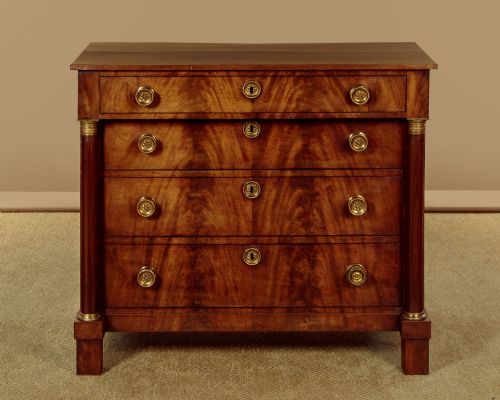
When you search for a 19th century small chest, you discover compact furniture created to serve domestic storage needs with considerable charm.
19th Century Small Chest
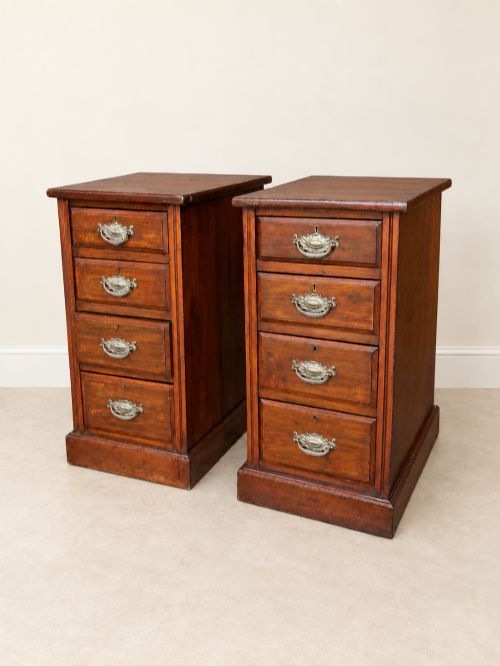
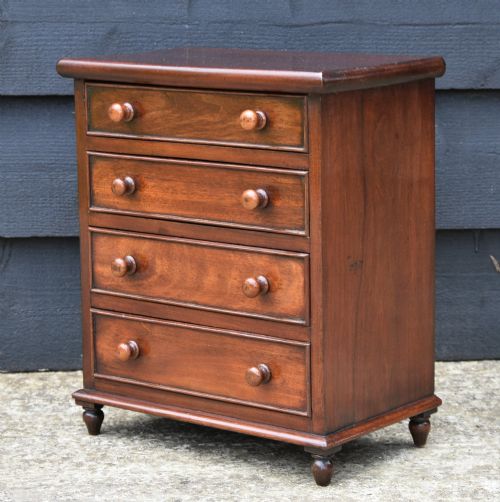
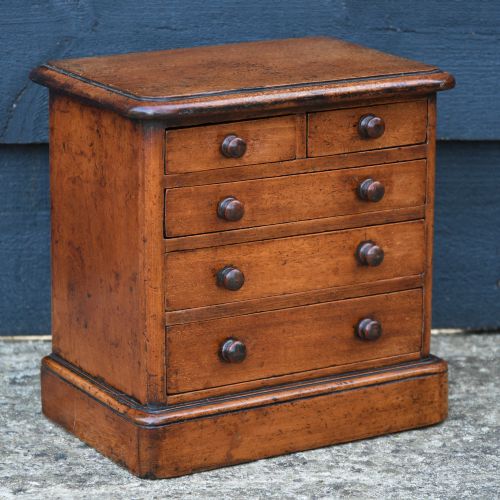
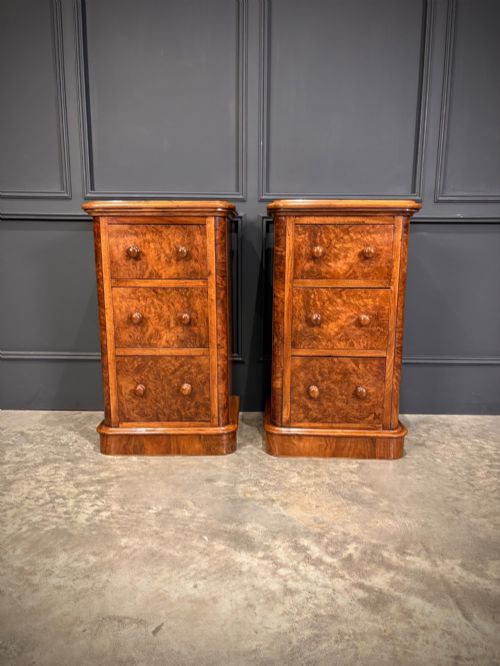
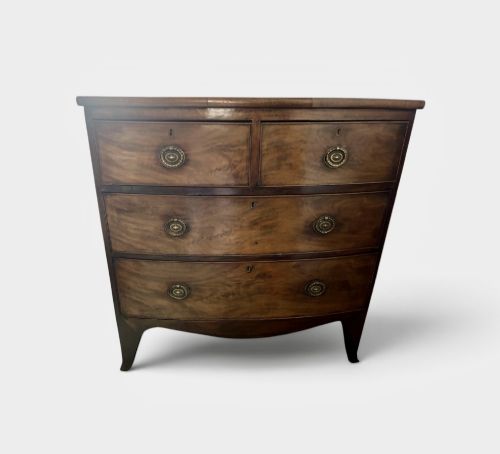
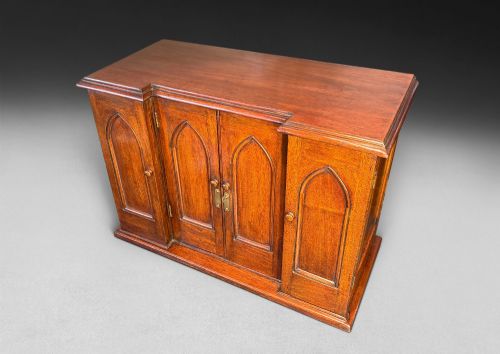
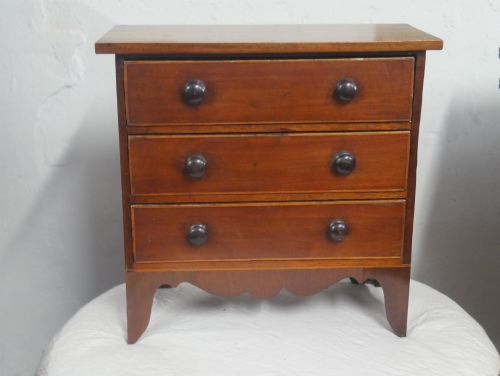
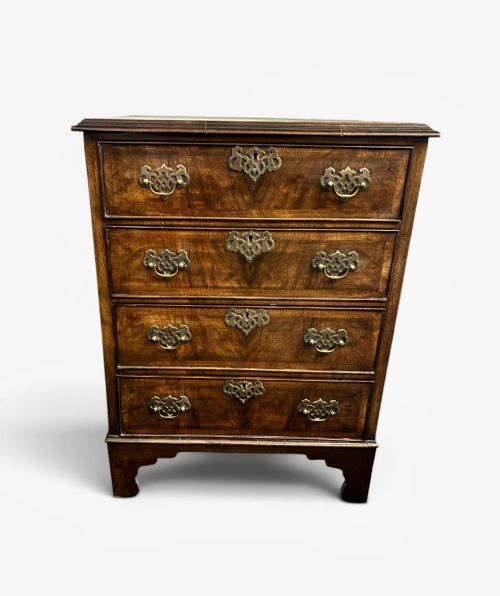
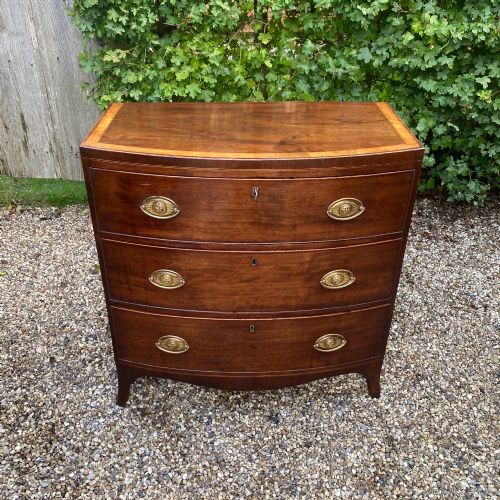
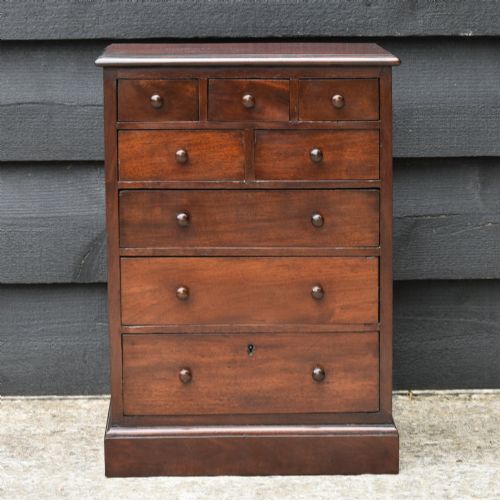
A 19th century small chest encompasses a varied group of compact storage furniture, including miniature chests, bedside tables, apothecary cabinets, and diminutive drawer units. These pieces emerge from periods such as the Regency and Victorian eras, reflecting diverse regional styles from English country to Gothic Revival and Scottish designs.
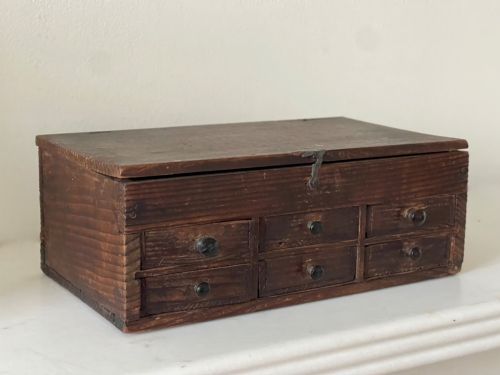
Buyers frequently encounter mahogany, walnut, oak, and pine constructions configured as bow fronts, campaign chests, or tabletop collectors' cabinets. Many examples survive as apprentice pieces, bedside units, or specialty storage, built to fulfill specific household functions within limited domestic footprints.
How they were made
Cabinetmakers utilised solid timbers alongside finely figured veneers, applying mahogany, burr walnut, satinwood, and fruitwood over secondary woods like pine or oak. Drawer construction typically involved hand-cut dovetail joints, reflecting traditional joinery standards of the period.
Surface finishes ranged from polished French polish and natural wax to painted or lacquered treatments, occasionally incorporating brass campaign hardware, working locks, and subtle inlay work.
Available forms range from tabletop collectors cabinets and apothecary drawer banks to campaign chests and miniature apprentice pieces.
What varies in quality
Quality in these compact chests depends heavily on the selection of timber veneers and the precision of the underlying joinery. Superior examples demonstrate tight dovetailing, symmetrical figuring, and original hardware that integrates seamlessly with the carcase.
Proportion and execution distinguish standard utilitarian pieces from masterworks or genuine apprentice pieces. The finesse of decorative details, such as delicate stringing, well-turned feet, and uncompromised structural integrity, elevates certain items above ordinary domestic wares.
The 19th Century Small Chest Glossary
- Apprentice piece
- A small-scale item created by a trainee cabinetmaker to demonstrate proficiency to a guild or master. These objects often display the same intricate details found in full-sized furniture.
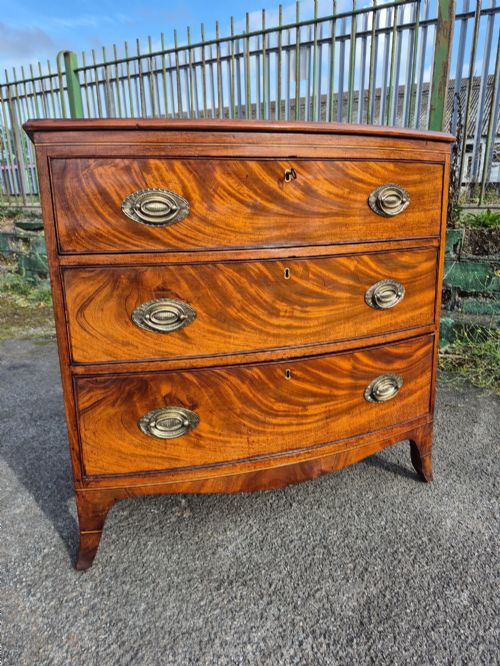
- Bow front
- A cabinet front that curves outward in a convex shape. This style gained popularity during the Regency and Victorian periods, adding visual softness to rectangular case furniture.
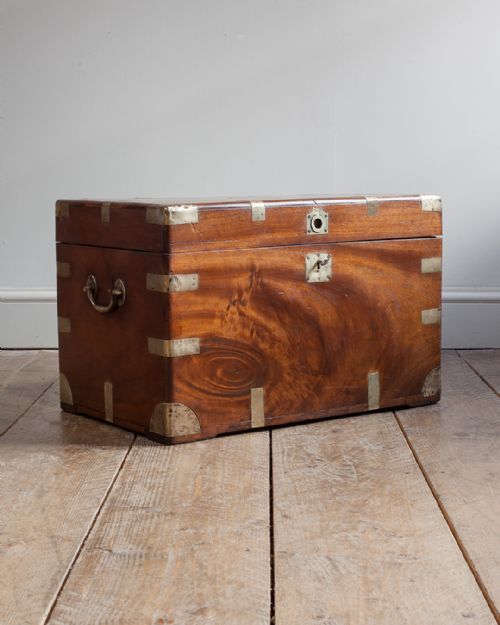
- Campaign chest
- Modular furniture designed to separate into sections for military transport. These units typically feature brass corner brackets, flush drawer pulls, and durable hardwood construction.
- Coffer bach
- A small Welsh chest used historically for household storage. These traditional items are frequently constructed from native oak.
- Commode
- A low piece of furniture containing drawers or doors. In nineteenth-century contexts, the term often describes decorative European drawer units.
19th Century Small Chest: Frequently Asked Questions
What is an apprentice piece chest?
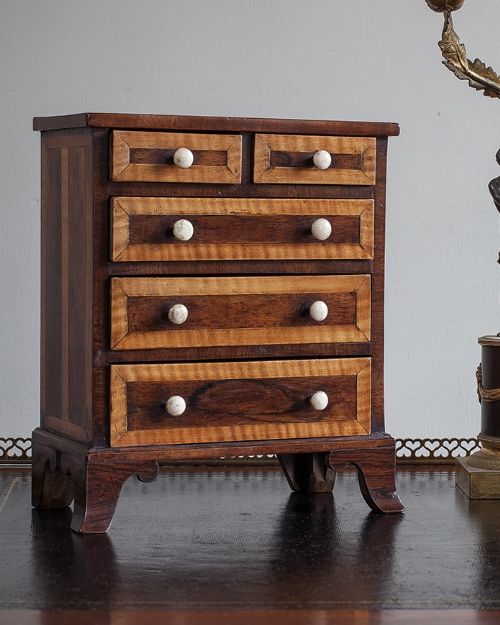
An apprentice piece is a miniature furniture model constructed by a craftsman in training to prove skill. These small chests replicate full-sized designs with exact miniature proportions and joinery.
Collectors prize them for their meticulous detail and rarity. They served as physical CVs for craftsmen seeking admission to professional guilds.
How were apothecary chests used?
Apothecary chests functioned as secure storage for medicinal herbs, powders, and remedies. They typically contain numerous small drawers to organise different substances.
Pharmacies, doctors, and wealthy households utilised these cabinets to keep volatile or valuable ingredients sorted. Their numerous small pulls give them a distinctive visual rhythm.
Where should I place a small chest?
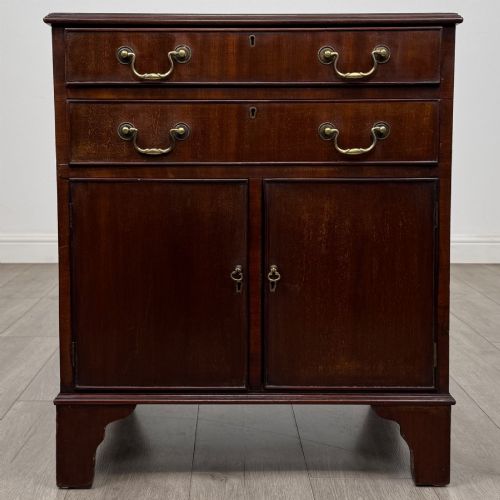
Small chests adapt easily to modern rooms as bedside tables, hall stands, or accent pieces. Their compact footprints allow them to fit into tight architectural spaces where standard furniture fails.
They provide practical surface space and concealed storage without dominating a room. Placing them in studies or bedrooms preserves their historical scale.
How do I identify a Regency period piece?
Regency chests often display classical restraint, clean lines, and architectural proportions. They frequently utilise figured mahogany with subtle brass mounts or ring handles.
Cabinetmakers of this era favoured contrasting wood veneers and restrained stringing over heavy ornamentation. Examining the interior linings and drawer construction helps confirm the early nineteenth-century date.