


Vintage Elm Storage Drawers
These vintage elm storage drawers bring practical timber grain and deep domestic utility into rooms that need character.
Vintage Elm Storage Drawers
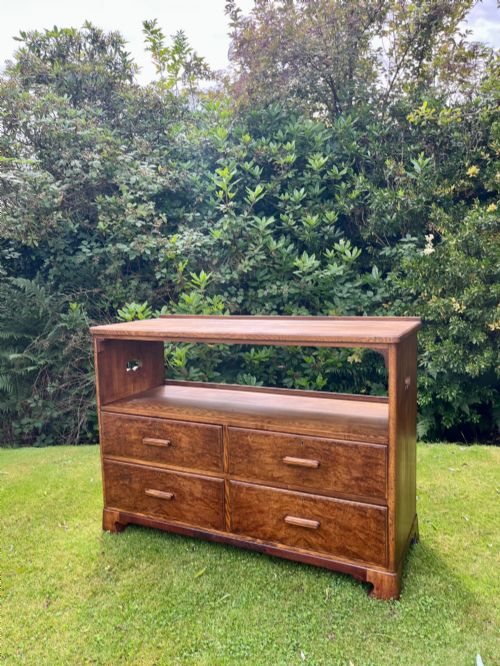
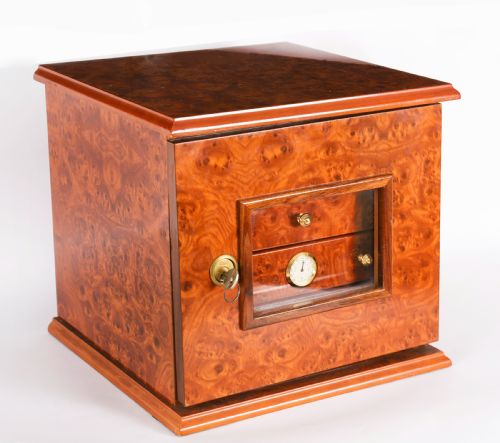
Vintage elm storage drawers span compact tabletop chests, side cabinets, and multi-drawer commodes built from dense domestic and imported hardwoods. When searching for vintage elm storage drawers, buyers encounter pieces ranging from eighteenth-century burr elm shaped fronts to twentieth-century sideboards and humidors.
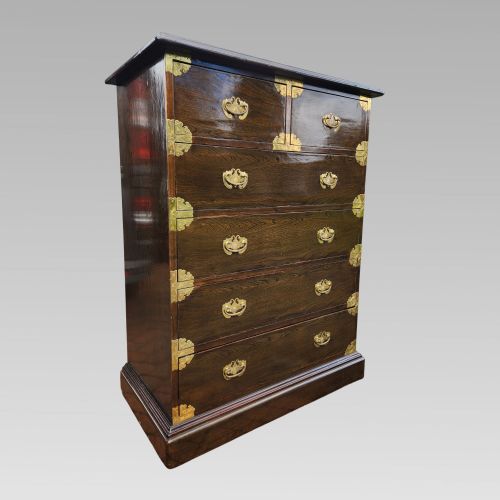
The selection includes regional forms such as Korean Bandaji chests, Japanese Tansu chests, and Dutch Baroque designs. Smaller nineteenth-century table top chests appear alongside large floor-standing chests of drawers.
Makers like Whytock and Reid contribute refined side cabinets alongside vernacular Eastern and European pieces. The unifying element across these disparate origins is the heavy use of elm timber, often paired with burr figuring.
How they were made
These pieces rely on solid elm and elm veneer fixed over secondary timbers, often highlighted with burr figuring for decorative grain patterns. Joinery matches the regional traditions of the workshop, from European dovetailing to traditional Asian chest framing.
Hardware forms an integral part of the construction, utilising brass handles, iron fittings, and occasionally glass elements. Some European variations incorporate fitted marble tops to balance the heavy timber bodies.
Listings span the eighteenth, nineteenth, and twentieth centuries, incorporating elm, burr elm, brass, iron, and marble materials.
What varies in quality
Quality rests primarily in the selection of the timber, where dense burr elm veneer or richly figured solid elm boards elevate a piece above standard utility furniture. The treatment of the grain across drawer fronts shows the care taken by the cabinetmaker.
Hardware integrity and the precision of the joinery distinguish fine regional pieces like Japanese Tansu or Dutch shaped fronts from simpler provincial items. Original brass or iron fittings maintained in good condition add considerable character.
Whytock and Reid
The Vintage Elm Storage Drawers Glossary
- Burr elm
- A growth deformity in the elm tree that produces highly figured, swirling grain patterns. Cabinetmakers slice this wood into veneers for decorative drawer fronts and cabinet doors.
- Bandaji
- A traditional Korean storage chest featuring prominent metal hardware and strapwork. These pieces combine heavy elm timber with functional domestic storage.
- Tansu
- A traditional Japanese mobile storage chest built in sections. These pieces utilise elm and other native timbers with elaborate iron locking plates.
- Commode
- A low chest of drawers or cabinet originating in French furniture design. Many examples feature decorative front profiles and occasionally marble tops.
- Humidor
- A specialised storage cabinet designed to maintain humidity for cigars. Examples utilise dense woods like elm and fitted interiors to preserve tobacco.
Vintage Elm Storage Drawers: Frequently Asked Questions
What periods do these storage drawers cover?
The pieces span from the eighteenth century through the nineteenth century and into the twentieth century. Examples include Georgian craftsmanship alongside Taisho period Japanese woodworking.
Makers and workshops from various international traditions contributed different forms across these decades, utilising elm and associated hardwoods.
How do regional styles differ?
European versions often feature Dutch shaped fronts or marble tops, reflecting formal cabinetmaking traditions. Eastern pieces like Korean Bandaji and Japanese Tansu focus on structural iron fittings and modular design.
Each region adapted elm timber to suit local domestic storage needs and aesthetic preferences.
Where should I place a tabletop chest?
Small table top chests suit desks, sideboards, or low tables where they provide accessible compartment storage. Their compact scale allows them to sit securely on existing furniture surfaces.
Ensure the surface can support the weight of solid hardwood construction.
How do I care for elm timber?
Keep elm furniture away from direct heat sources and drastic humidity changes to prevent the timber or veneer from splitting. Dust regularly with a dry cloth and apply occasional appropriate wax feeds.
Protect marble tops from acidic spills where applicable.