
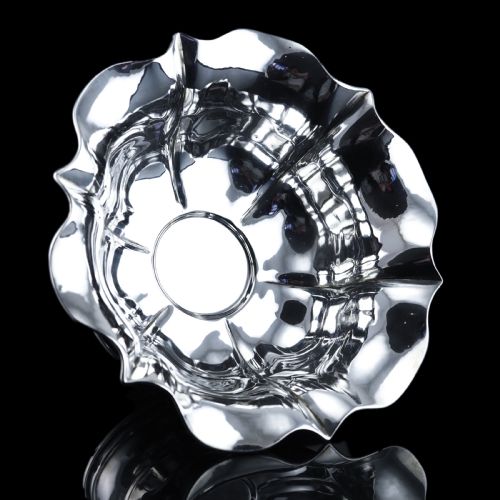
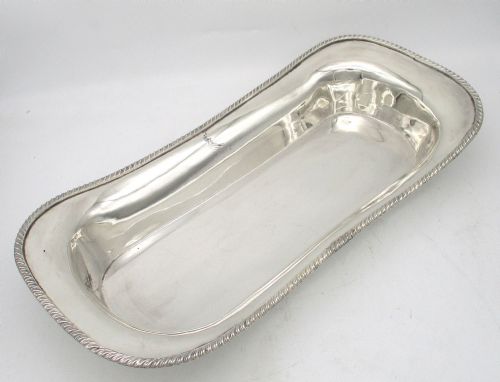


19th Century Silver Dishes
These 19th century silver dishes span opulent Victorian dining tables and grand European display cabinets, offering both solid silver and plated serveware for modern collectors.
19th Century Silver Dishes
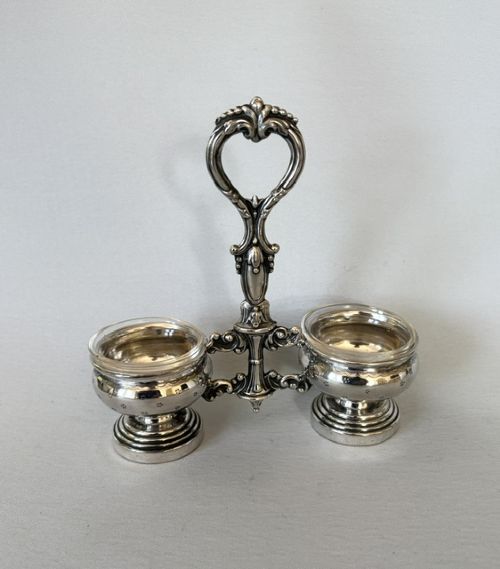
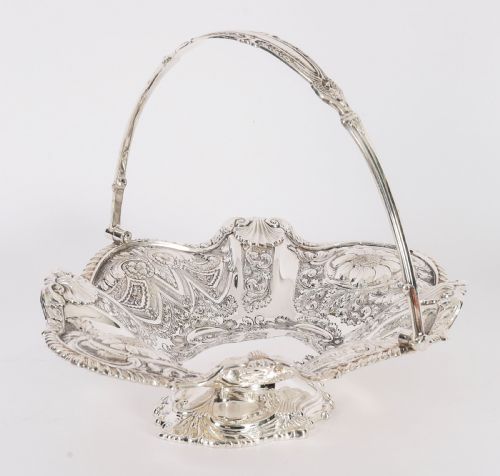
When you search for 19th century silver dishes, you encounter a diverse array of table items designed for functional service and formal display. The selection ranges from substantial entrée dishes and tureens to delicate salt cellars, fruit baskets, and decorative chargers.
Victorian and Georgian periods dominate the offerings, spanning the entire century from early Sheffield plate pieces to later electroplated wares. You will frequently find specialised forms such as condiment stands, wine tasters, and compotes alongside standard bowls and platters.
Origin points vary widely across the inventory, encompassing British silversmiths, continental European workshops from Vienna to Paris, and international silver inlay work. This geographical breadth reflects the global trade and eclectic tastes of the period.
Materials and construction methods
Makers utilised a combination of solid sterling silver, silver plate on copper, and electroplated nickel silver to construct these vessels. Early items often employ Old Sheffield plate techniques, while later Victorian pieces frequently showcase electroplating on base metals or bronze.
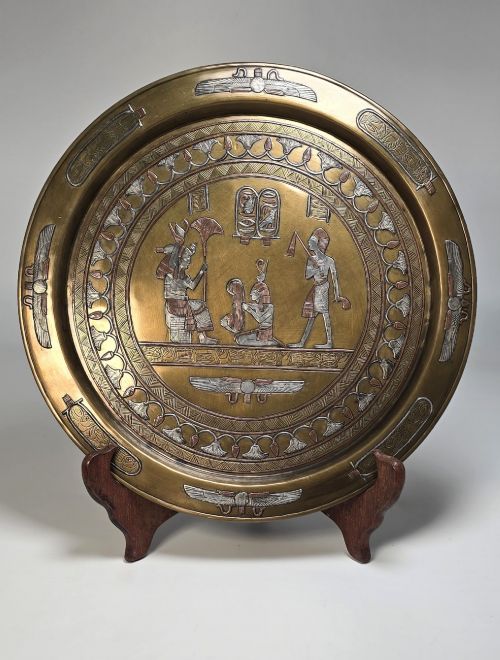
Artisans applied diverse decorative styles including Rococo Revival, Egyptian Revival, and structural wirework to shape the metal. Cutting, chasing, and silver inlay further embellished surfaces on chargers, trinket boxes, and centerpiece bowls.
Listings feature 19th century silver dishes across Victorian, Georgian, and Regency periods, utilising both solid silver and silver-plated copper.
Assessing craftsmanship and design
The distinction between standard production and exceptional quality lies in the depth of hand-chasing, the crispness of cast figural details, and the integrity of the base metal. Pieces featuring complex motifs like battle scenes or figural supports demonstrate superior artisan skill.
Maker attribution significantly influences standing, with documented output from prominent silversmiths commanding attention for precision hallmarks and balanced proportions. The integration of supplementary materials such as cut glass or opaline glass also elevates the execution.
George W. Scott & Sons Ltd·William Bennett·Henry Wilkinson·Posen of Frankfurt and Berlin·Tiffany & Co·Daniel and Arter of Birmingham·Samuel Hennell·Elkington·Matthew Linwood·William Hutton & Sons·Cresswick·Dan Holy·James Deakin
The 19th Century Silver Dishes Glossary
- Silver Plate
- A thin layer of silver fused or electroplated onto a base metal such as copper or nickel silver. This technique allowed makers to produce impressive dining vessels at a lower cost than solid silver.
- Old Sheffield Plate
- An early method of fusing a sheet of silver onto a copper ingot before rolling them together into sheets. Items made this way often reveal subtle traces of copper along cut edges.
- Entree Dish
- A covered serving vessel intended for the second course of a formal meal. Pairs of these dishes frequently fit inside warming stands or onto specialised platters.
- Tureen
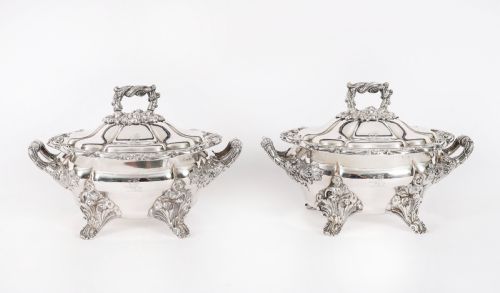
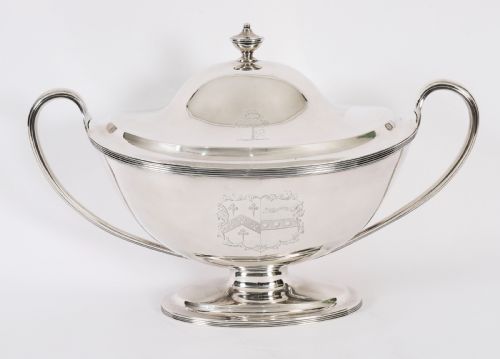
- A deep, bowl-shaped vessel equipped with a lid and handles, used for serving soups, sauces, or stews. They represent some of the most substantial and heavily ornamented items on the dining table.
- Charger
- A large decorative plate or platter placed underneath other courses or displayed on a sideboard. These surfaces often carry elaborate embossed or engraved figural scenes.
- Salt Cellar
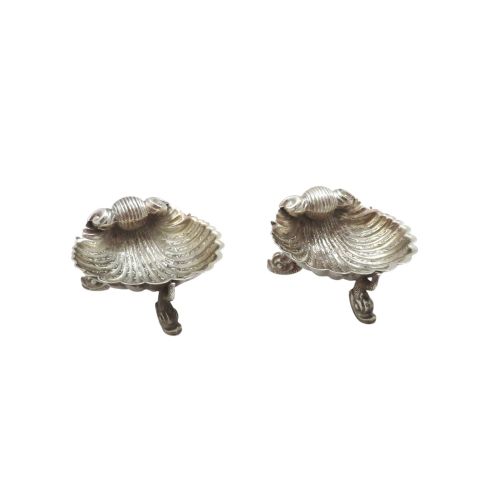
- A small open vessel or container designed to hold salt at the dining table before salt shakers became common. They appear frequently in pairs or sets, sometimes cast in whimsical figurative shapes.
19th Century Silver Dishes: Frequently Asked Questions
What is the difference between solid silver and silver plate?
Solid silver consists entirely of precious metal throughout its structure, usually meeting sterling standards of purity. Silver plate applies a thin protective coating of silver over a less expensive base metal like copper or nickel.
Items made from solid silver carry official hallmarks indicating the silver standard and assay office. Plated pieces generally display maker marks that denote electroplating techniques or Old Sheffield manufacturing.
How were entree dishes used at the table?
Entree dishes held cooked meats, vegetables, or savory portions served during the middle courses of large formal dinners. Their fitted lids kept the food warm while servants transported the dishes from the kitchen.
Many of these vessels paired with warming stands or hot water bases to maintain food temperature throughout long meals. After dining, hosts often displayed them on sideboards as decorative silver pieces.
Can I use these antique dishes for serving food today?
Most silver and silver-plated dishes remain suitable for serving dry foods, fruits, or pre-cooked dishes. Care must be taken with acidic foods that can react with older metal surfaces or worn plating.
Hand washing with mild soap and specialised silver cloth preserves the finish without damaging the antique material. Avoid automated dishwashers entirely to protect historical plating and chased details.
How do I identify the period of a silver dish?
Hallmarks stamped directly into the metal provide the most accurate dating evidence for British and continental silver. These stamps record the maker, assay office, and a specific date letter corresponding to the year of manufacture.
Stylistic cues such as Rococo Revival curves, aesthetic movement motifs, or Egyptian revival imagery also point to specific decades within the century. Examining construction seams and mounting techniques helps confirm whether a piece belongs to the early or late 1800s.