


19th Century Sauce Boat
These 19th century sauce boat examples combine utility and display, offering dining tables a touch of period elegance.
19th Century Sauce Boat
A 19th century sauce boat serves gravies, sauces, and melted butter with functional grace. Buyers seeking these items will encounter various forms, including lidded tureens with ladles and open vessels.
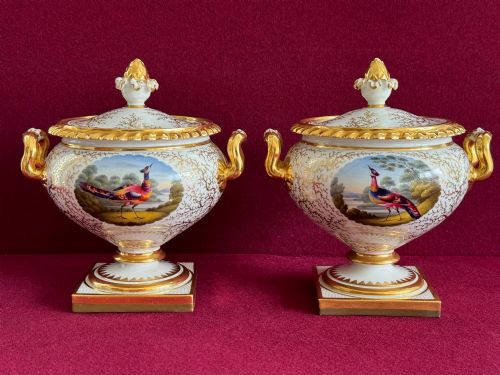
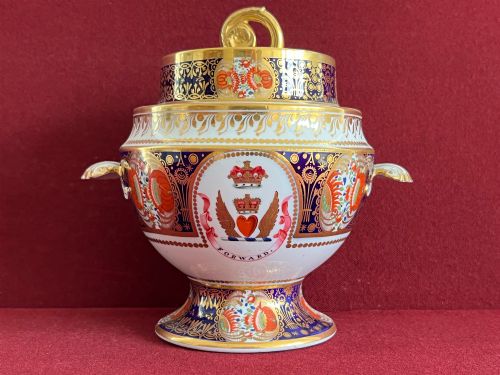
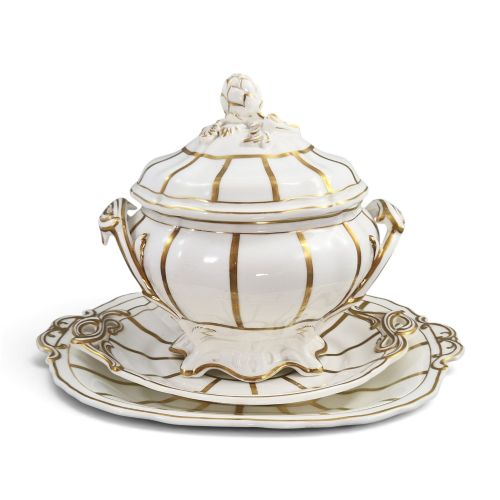
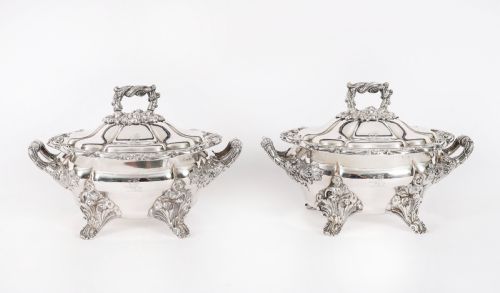
The pieces on this page span the 19th century, including Regency and Victorian eras, taking the form of porcelain vessels, ironstone tureens, and silver plated boats. Makers utilised ceramic bodies and metal alloys to create durable tableware.
Originating primarily from English potteries and silversmiths, these items reflect the dining habits of their period. Forms range from simple earthenware to elaborate porcelain sets with matching ladles.
Materials and construction methods
Ceramic examples rely on ironstone, bone china, and porcelain bodies, often decorated with enamel, glaze, and gold leaf or gilt highlights. Potters shaped these materials into tureens and boats, firing them to achieve durable household serveware.
Metal versions utilise Old Sheffield silver plate and sterling silver, sometimes incorporating copper elements. Silversmiths formed these metals into naturalistic designs, adding applied handles and decorative borders.
Squirrels and acorns occasionally peer from Victorian silver handles, reminding diners that formal meals shared space with woodland whimsy.
Assessing quality in period serveware
Quality rests in the crispness of the moulding and the execution of the decoration, whether hand-painted Imari patterns, blue and white transfers, or chased silver details. Finer ceramic pieces show precise registration of transfer prints and even glaze application.
In metalwork, the integrity of the silver plating over the base metal and the balance of applied handles dictate the standard of the piece. Well-preserved gilding and intact matching ladles elevate the standing of ceramic tureens.
Davenport Bone China·Padley Parkin And Staniforth·Flight Barr And Barr·Masons Ironstone
The 19th Century Sauce Boat Glossary
- Sauce tureen
- A deep, covered vessel designed to keep gravies and sauces warm at the table. These often include an integral or separate base and a matching ladle.
- Ironstone
- A dense, durable type of earthenware patented in the 19th century. It resists chipping and served as a robust alternative to porcelain.
- Old Sheffield plate
- An early method of fusing a thin layer of silver to a thicker copper core. This technique predates modern electroplating.
- Imari
- A decorative style inspired by Japanese export wares, featuring rich cobalt blue and iron red, frequently accented with gold. British factories adopted this palette extensively.
- Argyll
- A type of gravy warmer featuring a central compartment for hot water. This design kept sauces warm throughout long meals.
19th Century Sauce Boat: Frequently Asked Questions
How do I clean a silver plated sauce boat?
Use a soft cloth and a gentle silver polish specifically formulated for plated items. Avoid harsh abrasives that can wear away the thin silver layer.
Wash ceramic tureens by hand in warm soapy water rather than placing them in a dishwasher. This protects delicate gilt highlights and old earthenware bodies.
Are these sauce boats safe for daily use?
While structurally sound, antique ceramics and silver plate benefit from careful handling rather than heavy daily service. Older glazes and silver plate can react to acidic foods left in them for long periods.
Most collectors reserve these pieces for special dining occasions or display them as part of a traditional tableware collection.
What is the difference between a boat and a tureen?
A sauce boat is typically an open vessel with a pouring lip and a handle, designed for quick service. A sauce tureen includes a lid and often sits on an attached undertray.
Tureens generally accompanied ladles for serving thicker gravies, while boats allowed direct pouring of thinner liquids.
How can I date a piece to the Regency period?
Regency items often display classical neoclassical forms, crisp white porcelain bodies, and restrained gilding or Imari patterns. Look for specific factory periods indicated by backstamps.
Stylistic cues such as naturalistic plant motifs or heavier Victorian proportions help separate earlier Regency work from later 19th century designs.