
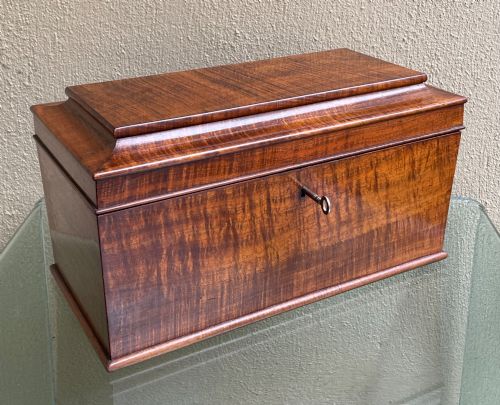
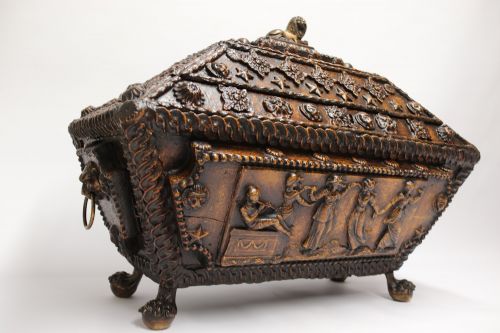


19th Century Sarcophagus Caddy
A 19th century sarcophagus caddy brings architectural dignity to a room, holding tea or keepsakes within a distinctive tapered tomb form.
19th Century Sarcophagus Caddy
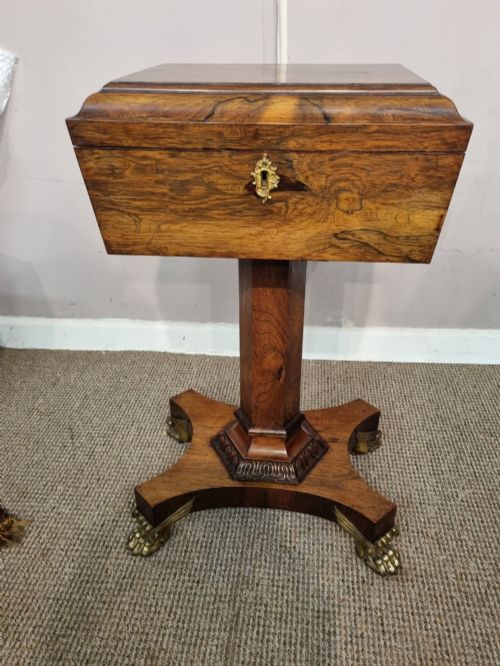
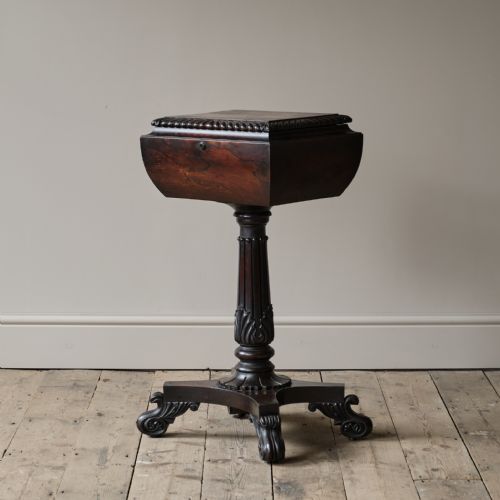
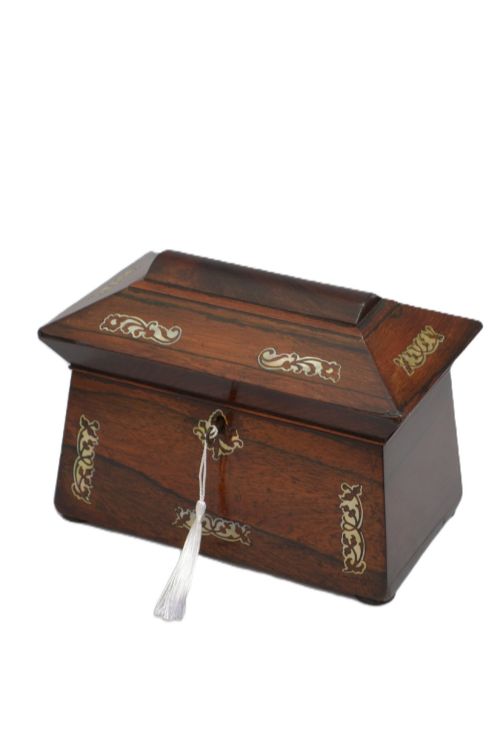
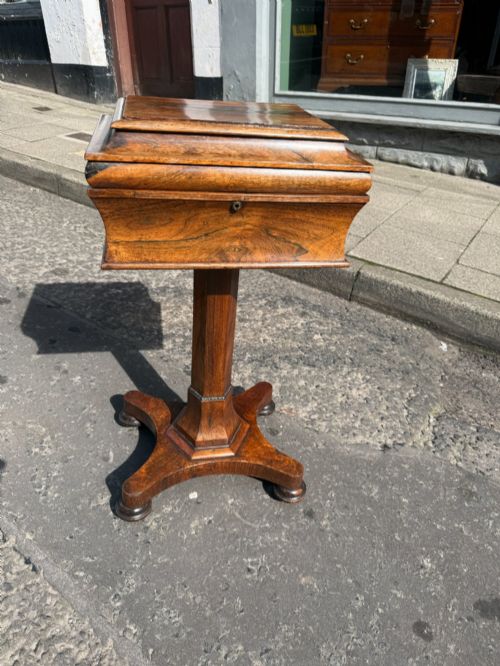
A 19th century sarcophagus caddy takes the shape of a classical stone coffin, scaled down for the drawing room table or sideboard.
Most examples found here date from the Regency and Victorian periods, constructed primarily as tea caddies, teapoys, and cellarettes.
Makers shaped these boxes in mahogany, rosewood, and coromandel, often resting the bodies on ball, bracket, or paw feet.
Distinctions in Execution
The standard of timber selection dictates much of the visual weight, with highly figured grains commanding greater attention.
The precision of brass inlay and the sharpness of carved wooden mounts separate standard workshop production from finer pieces.
Internal arrangements, including intact mixing bowls and working locks with original keys, elevate the completeness of surviving boxes.
Several boxes survived the centuries simply because someone lost the key to pry open the tea.
Freemans of Norwich
The 19th Century Sarcophagus Caddy Glossary
- Sarcophagus form
- A tapered box shape with a domed lid resembling a classical stone coffin popular in the Regency period.
- Teapoy
- A freestanding container on a pillar and base, or a large tea caddy designed for a drawing room.
- Cellarette
- A large cabinet or box designed to hold bottles of wine, sharing the sarcophagus silhouette of tea caddies.
- Penwork
- A surface decoration technique using ink to draw fine Chinoiserie scenes or geometric patterns onto wood.
- Marquetry
- The art of applying small pieces of varied wood veneer to form intricate decorative patterns on the lid.
19th Century Sarcophagus Caddy: Frequently Asked Questions
What is a sarcophagus caddy?
A sarcophagus caddy is a 19th century wooden box shaped like a classical tomb, utilised originally to store dry tea leaves.
These pieces typically feature domed lids and tapered bodies resting on small feet.
How were tea caddies used?
Tea was an expensive commodity in the Georgian and Victorian eras, kept securely locked inside these boxes by the lady of the house.
Internal compartments separated different varieties of leaf before blending them in a central glass bowl.
How do I date a caddy?
Dating relies on observing the timber choices, such as Regency rosewood versus later Victorian mahogany, alongside the style of brass feet and handles.
Inlay motifs and internal paper linings also offer clues to the exact decade of manufacture.
Can I use them for storage?
These boxes adapt well to modern living as containers for jewellery, stationery, or keepsakes on a desk or dressing table.
The sturdy wooden construction and compartmented interiors protect small personal items.