

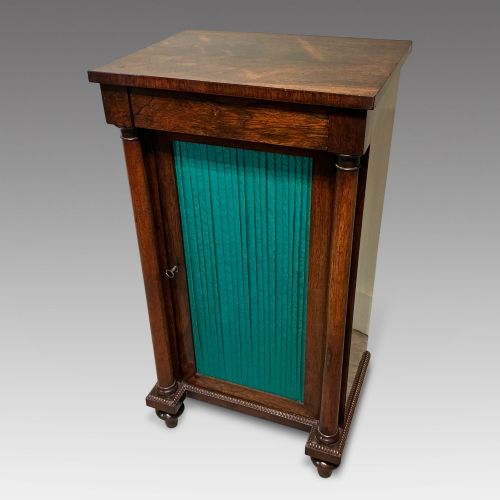
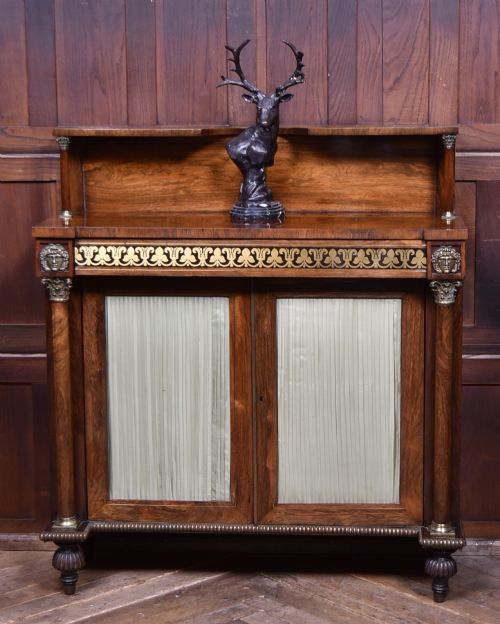
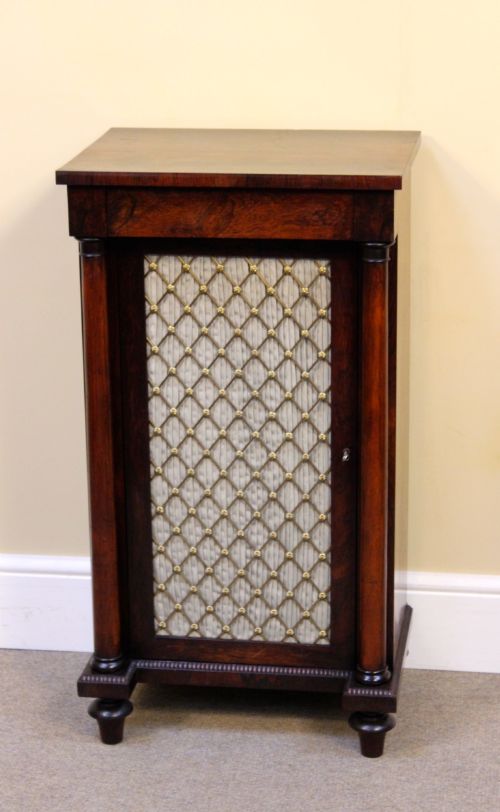
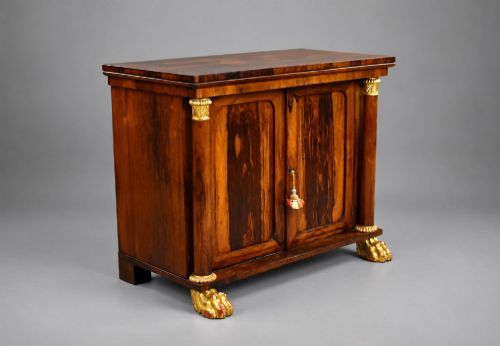


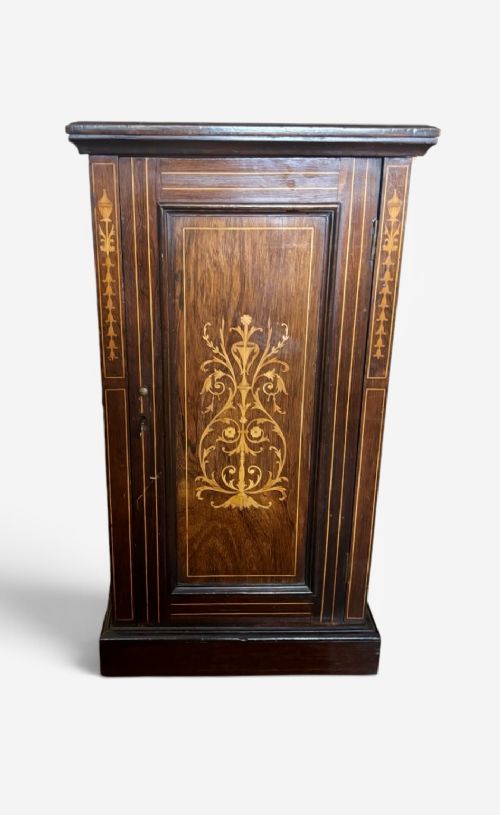
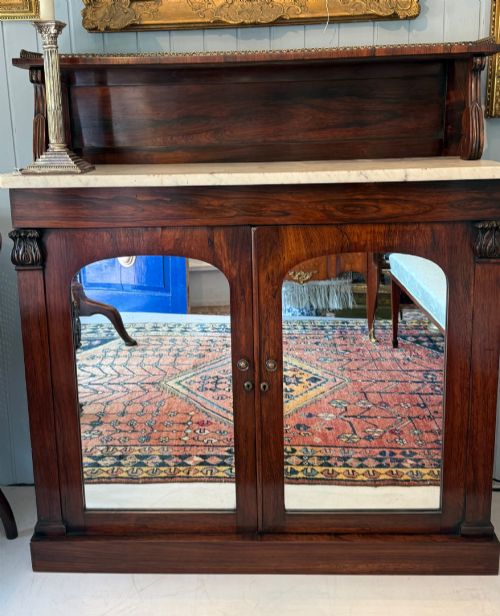
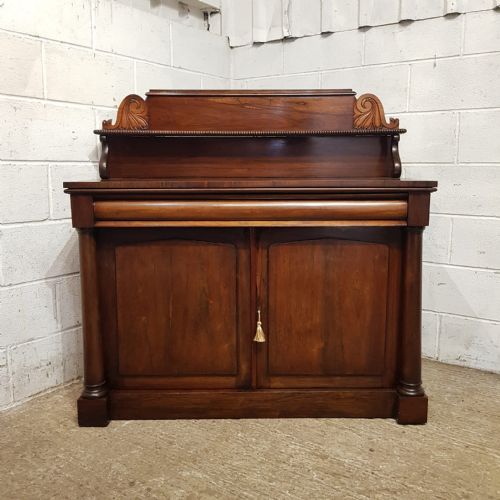
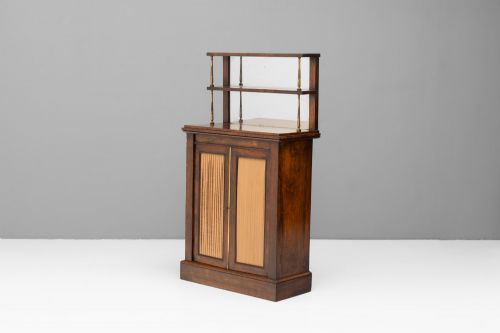
19th Century Rosewood Cupboard
A 19th century rosewood cupboard brings rich dark timber and refined period craft into a room, offering practical storage with distinct character.
19th Century Rosewood Cupboard
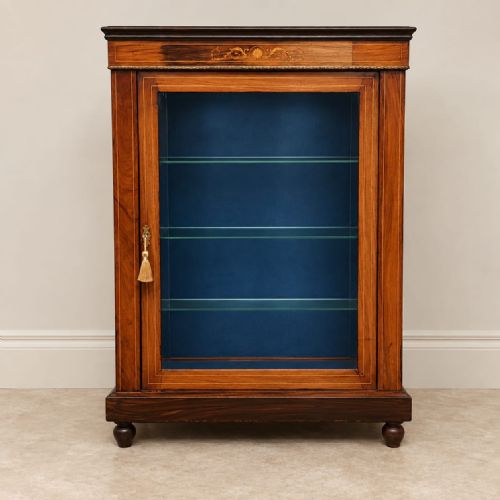
When you search for a 19th century rosewood cupboard, you encounter a variety of forms including chiffoniers, side cabinets, pier cabinets, and display pieces. These items span periods from the Regency era through to the late Victorian years, reflecting changing domestic tastes.
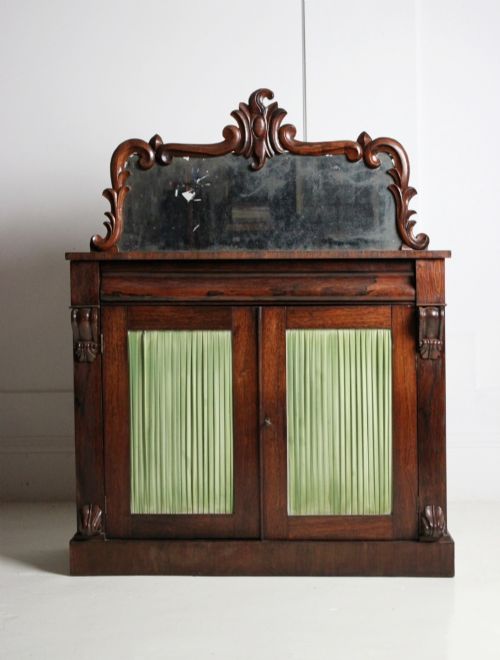
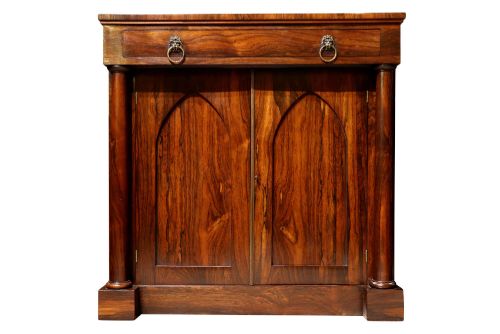
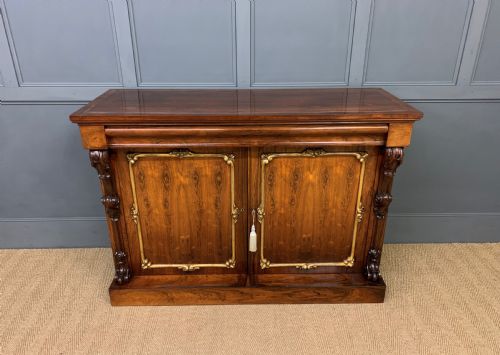
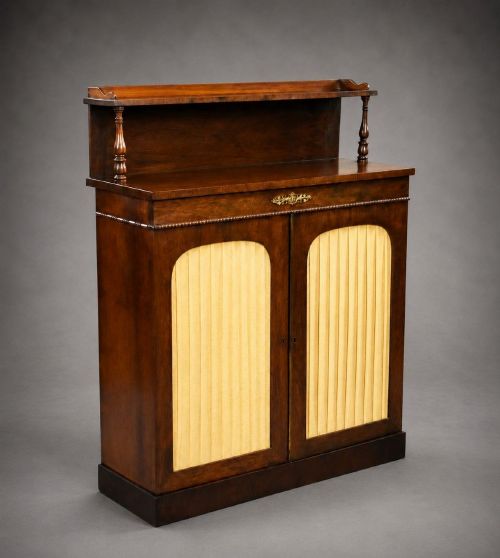
The version you are most likely to meet on this page is the chiffonier or side cabinet, frequently featuring low proportions, enclosed lower doors, and occasionally upper shelving or mirrored backs. Origins range from English workshops to Anglo-Indian and continental makers, incorporating diverse stylistic influences.
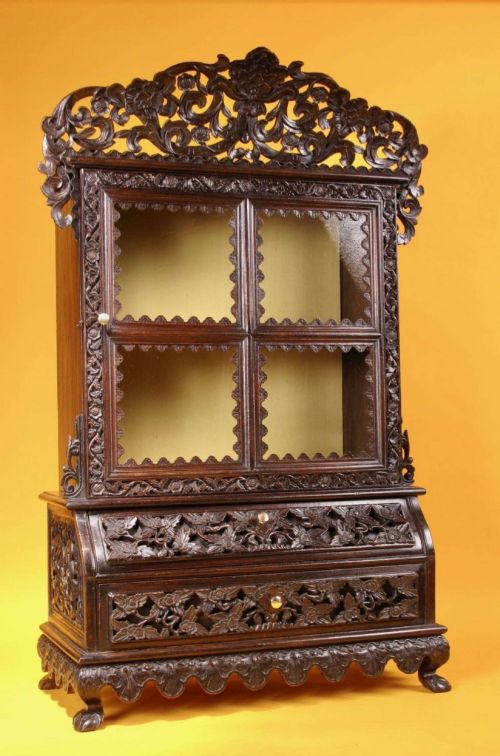
Makers utilised dense tropical hardwoods to build functional furniture for holding books, linens, and sheet music. Pieces often display specific regional characteristics, such as the brass inlay of the Regency period or the intricate carving found in Anglo-Indian examples.
How they were made
Craftsmen built carcasses from solid hardwoods and applied carefully matched veneers to create striking grain patterns across the main surfaces. Secondary timbers such as pine or mahogany provided structural stability for interiors and carcase backs.
Decoration relied on contrasting materials, with brass stringing, satinwood inlay, and ebony details set directly into the primary timber. Metal mounts, marble tops, glass panels, and pleated fabric behind doors completed the construction of finer examples.
19th Century Rosewood Cupboard Retail Price Guide 2026
Typical asking prices for 19th century rosewood cupboard among the pieces listed under this phrase on Sellingantiques today, from the lower quarter to the upper quarter. They describe what is for sale here now, not the wider market.
Listings feature periods spanning from the Georgian era through Regency and William IV to the late Victorian period.
What varies in quality
The standard of a piece depends heavily on the precision of its timber selection and the execution of its decorative details. Finer items exhibit seamless veneer matching and tightly fitted brass or satinwood inlay that remains flush with the surrounding rosewood.
Construction methods also dictate grade, distinguishing robustly jointed furniture from more utilitarian builds. Superior examples retain original mounts, glass, and internal fittings, whereas lesser pieces often show later alterations or replaced components.
Louis Constantin Le Gaigneur·Holland & Sons
The 19th Century Rosewood Cupboard Glossary
- Chiffonier
- A low cabinet with enclosed cupboards below, often featuring a shelf or small superstructure on top. This form became popular during the Regency and Victorian periods for storing dining silver or household linen.
- Pier cabinet
- A narrow cabinet designed specifically to fit the wall space between windows. These pieces frequently incorporated glass doors and velvet-lined shelving to display porcelain and small decorative objects.
- Crossbanding
- A border technique where thin strips of veneer are laid so that the grain runs at right angles to the central panel. This framing method adds visual contrast to the primary surface.
- Ormolu
- Gilt-bronze mounts applied to furniture for decorative effect. The technique involves treating bronze with an amalgam of gold and mercury.
- Shodana
- A traditional Japanese multi-tiered display cabinet featuring staggered shelving and sliding doors. These items arrived in Europe following trade expansion in the later nineteenth century.
19th Century Rosewood Cupboard: Frequently Asked Questions
What is a 19th century rosewood cupboard used for?
These cabinets served various domestic functions, from storing sheet music and books to housing tableware in the parlour or dining room. Lower cupboards kept items concealed while upper shelves or glass panels displayed prized household objects.
Today, they adapt easily to modern interiors as sideboards, media consoles, or accent furniture in hallways and living spaces. Their compact proportions make them suitable for rooms requiring both surface display and enclosed storage.
How do you tell a Regency piece from a Victorian one?
Regency pieces often display classical restraint, featuring clean architectural lines, simulated rosewood paint, or precise brass inlay inspired by ancient Roman and Greek motifs. Proportions tend to be neat, and brass grilles or pleated silk frequently front the lower doors.
Victorian examples generally show heavier carving, darker finishes, and more eclectic styling such as Gothic panels or elaborate marquetry. Later nineteenth-century variants may also incorporate Japanese aesthetic influences or marble tops.
Where were these cupboards placed in a home?
Chiffoniers and side cabinets typically stood against the main walls of a dining room or drawing room to hold serving utensils or writing materials. Pier cabinets occupied narrow wall spaces between windows where standard furniture would not fit.
Display cabinets and bookcases found homes in libraries or parlours, designed to showcase collected porcelain, bound volumes, and curiosities. Their placement depended entirely on the social rituals of the household.
How do you care for antique rosewood furniture?
Maintain stable environmental conditions by keeping wooden furniture away from direct sunlight and strong heat sources like radiators. Excessive temperature fluctuations cause timber to dry out and veneers to lift from the carcase.
Dust regularly with a soft, dry cloth and apply occasional treatments of appropriate furniture wax to nourish the timber. Avoid using modern silicone sprays or abrasive cleaning products that damage the historic polish.