


19th Century Rosewood Casket
A 19th century rosewood casket brings substantial timber grain and fitted compartments into a room, offering a tactile way to store jewellery, documents and keepsakes.
19th Century Rosewood Casket
A 19th century rosewood casket encompasses a variety of functional containers designed for domestic organisation, spanning jewellery boxes, work boxes, sewing boxes, tea caddies and document cases. These pieces emerge from several periods across the century, including Regency, William IV, Victorian and French Napoleon III styles.
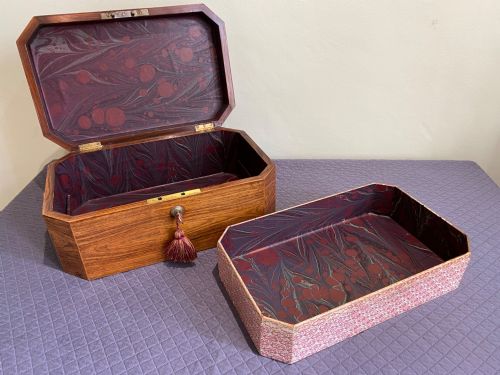
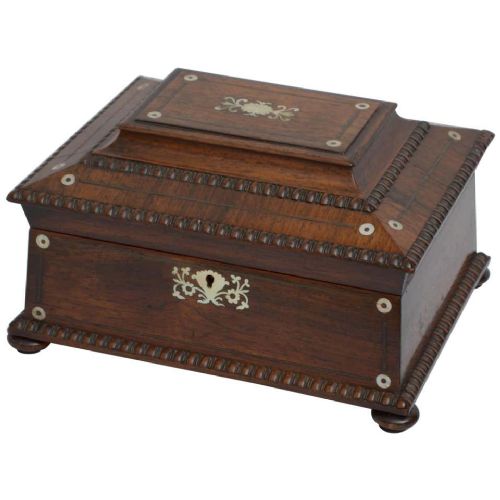
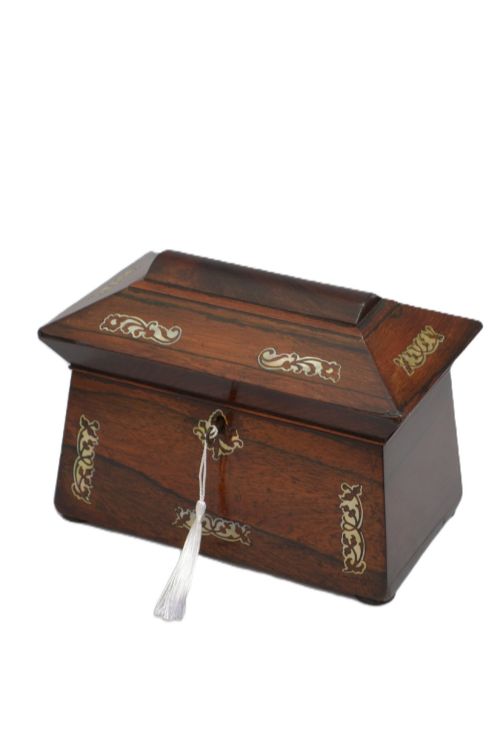
The most common form met on this page is the fitted jewellery or work box, often featuring internal compartments, lift-out trays and velvet or silk linings. Sarcophagus shapes, rectangular campaign boxes and table caskets appear frequently among the listings.
How they were made
Cabinet makers utilised dense rosewood timber for the primary carcass, frequently employing veneer over secondary hardwoods to display rich grain patterns. Brass banding, campaign handles and escutcheons reinforced the corners and edges of travel or document boxes.
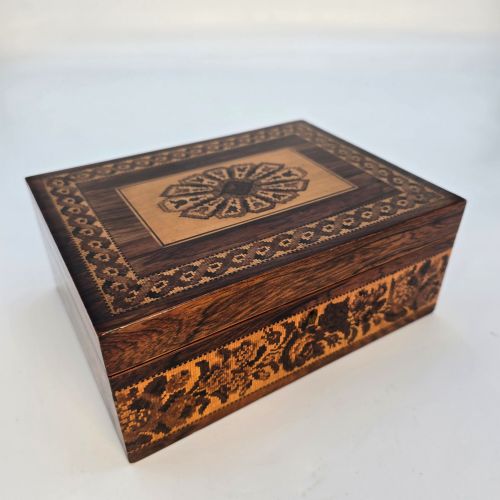
Decorative surfaces incorporated contrasting materials such as mother-of-pearl inlay, boxwood stringing and intricate Tunbridge Ware marquetry mosaics. Interiors were lined with marbled paper, leather or fitted fabric compartments for specific domestic uses.
Some work boxes incorporate secret compartments designed to conceal personal letters from prying eyes.
What varies in quality
The standard of execution in inlay work and marquetry distinguishes simpler utility containers from exhibition pieces. Precision in the fit of boxwood stringing and the complexity of mosaic pictorial panels demonstrate the maker's skill.
Internal complexity and the preservation of original fitted trays, mirrors and compartments dictate the integrity of the piece. The robustness of the rosewood timber carcass and the survival of original brass hardware further separate examples.
Edmund Nye
The 19th Century Rosewood Casket Glossary
- Tunbridge Ware
- A form of British woodworking originating in Kent, characterised by minute mosaic tiles assembled from different coloured woods to create pictorial scenes or geometric bands.
- Campaign Box
- A sturdy container designed for travel and military use, typically fitted with recessed brass handles and reinforced corners for durability.
- Sarcophagus-Shaped
- A box profile featuring a sloping, pedestal-based form reminiscent of classical monumental tombs popular during the Regency and William IV periods.
- Work Box
- A specialised lidded container organised with internal trays and compartments to hold sewing equipment, threads and needlework tools.
- Marquetry
- The art of applying decorative veneer pieces of various woods, and occasionally mother-of-pearl, to a structural carcass to form geometric or floral patterns.
19th Century Rosewood Casket: Frequently Asked Questions
How do I tell Regency from Victorian?
Regency pieces often display clean classical lines, brass banding and campaign styling associated with the early decades of the century. Victorian examples frequently introduce ornate mother-of-pearl inlay or intricate Tunbridge Ware marquetry.
Looking at the construction methods and the specific decorative motifs helps determine the exact period of manufacture.
What were these boxes used for?
These caskets served specific domestic and personal functions, holding valuable jewellery, letters, sewing implements and tea leaves. Interiors were partitioned and lined with velvet or silk to protect delicate items during storage.
Many boxes included removable trays and secret compartments for private documents.
Can I store jewellery inside today?
Original velvet, satin and paper linings provide a soft environment suitable for modern rings, necklaces and trinkets. Ensuring the hinges and locks function securely protects contents during daily use.
Gentle placement prevents friction against historical interior fabrics.
How do I care for rosewood?
Rosewood benefits from stable indoor humidity and shelter from direct sunlight to prevent timber splitting and fading. A dry cloth removes dust from the polished exterior surfaces.
Avoiding harsh cleaning products preserves the original finish.