



Victorian Rosewood Marquetry Box
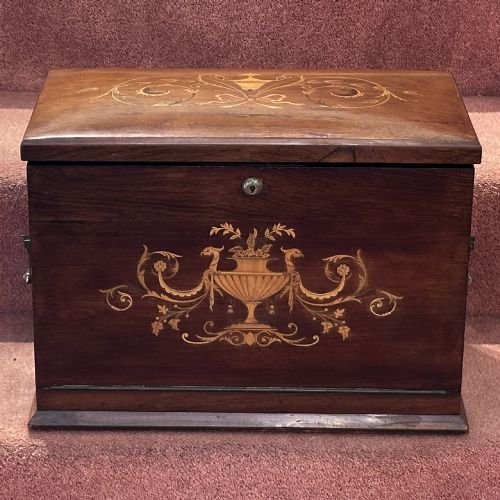
A victorian rosewood marquetry box brings together rich timber and intricate inlaid details to hold letters, tea, or music.
Victorian Rosewood Marquetry Box
When you search for a victorian rosewood marquetry box, you encounter items designed for practical utility and decorative display during the nineteenth century. The evidence shows these objects spanning tea caddies, writing boxes, stationery boxes, and sewing containers.
Most examples date from the Victorian period, with specific dates pointing to the decades between eighteen sixty and eighteen ninety. Alongside traditional boxes, the listings include related forms such as music boxes, work tables, and coal scuttles.
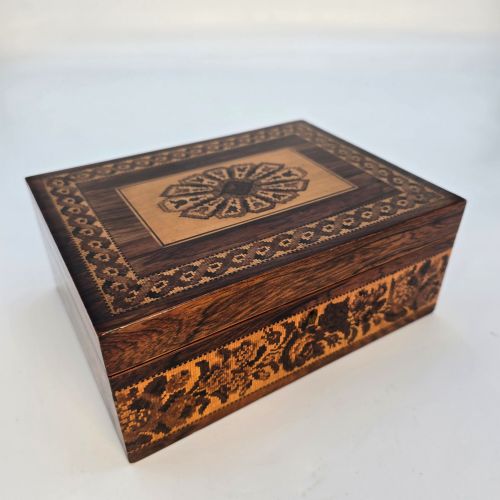
Makers and regional workshops produced diverse variations, including Tunbridge Ware examples featuring specialised mosaic wood inlay. Buyers also find French pieces incorporating ormolu and distinct marquetry patterns.
What varies in quality
The standard of craftsmanship depends on the precision of the marquetry and the complexity of the wood inlay. Finer examples display tight, seamless joints and intricate botanical or geometric patterns executed across the rosewood surfaces.
Condition of the internal fittings, such as original silk linings, compartments, and functioning locks or keys, influences the overall character of each piece. Mechanical items like music boxes derive distinction from the preservation and restoration of their internal movements.
Object types range from music boxes and tea caddies to stationery boxes, writing slopes, and coal scuttles.
Edmund Nye·Henry Hollamby·Nicole Freres
The Victorian Rosewood Marquetry Box Glossary
- Marquetry inlay
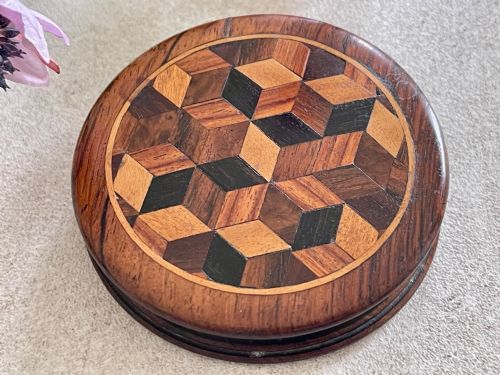
- Decorative patterns formed by fitting small pieces of veneer into a prepared wooden ground. This technique allows for elaborate pictorial designs on box lids and panels.
- Tunbridge Ware
- A specialised form of woodworking originating in Kent involving tiny mosaic tiles made from natural woods. These tiles create pixel-like pictures of flora and geometric borders.
- Tea caddy
- A container originally built to store loose tea leaves securely. They often feature internal compartments and mixing bowls.
- Writing slope
- A portable desk with a hinged sloping lid that opens to reveal a writing surface and storage for stationery and ink. Some include hidden drawers and compartments.
- Writing box
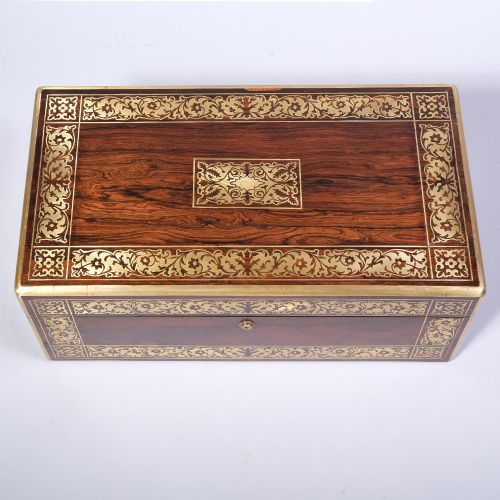
- A rectangular chest fitted to hold writing materials, documents, and correspondence. They frequently incorporate brass inlay and leather writing surfaces.
Victorian Rosewood Marquetry Box: Frequently Asked Questions
What were tea caddies used for?
Tea caddies served to store expensive tea leaves securely under lock and key in the Victorian household. The box interior typically contained separate lidded canisters to keep different tea varieties fresh.
Because tea was a valuable commodity, these containers sat prominently in reception rooms. The use of rosewood and marquetry reflected the status of the beverage and the owner.
How do music boxes work?
Music boxes operate using a pinned metal cylinder that plucks the tuned teeth of a steel comb as it rotates. Many Victorian examples played multiple airs and incorporated accessories like bells.
Spring-driven clockwork mechanisms powered the cylinders, controlled by small levers for starting and stopping the tune. Restored works from makers like Nicole Freres demonstrate the precision of these internal movements.
What is Tunbridge Ware?
Tunbridge Ware is a distinct type of decorative woodwork characterised by mosaic patterns made from thousands of minuscule wood blocks. Craftsmen arranged natural timbers of varying colours without artificial dyes to depict flowers, butterflies, and geometric bands.
This technique appeared frequently on small items such as trinket boxes, stamp boxes, and needlework caskets. The regional industry centred in Kent during the nineteenth century, producing highly collectible souvenirs.
How do I care for rosewood boxes?
Rosewood furniture and boxes require stable environmental conditions away from direct sunlight and extreme humidity changes. Excessive dryness can cause the delicate marquetry veneers and boxwood stringing to lift or crack.
Periodic dusting with a soft, dry cloth preserves the polished wooden surface. Avoid applying modern silicone polishes, which can damage antique French polish and inlaid details.
How can I date a box?
Dating a box involves examining the construction methods, lock types, secondary woods, and decorative styles present. Victorian pieces often display distinct stylistic markers such as Tunbridge Ware decoration or French ormolu mounts.
Documented signatures, maker labels inside the lid, and patent stamps on hardware also provide specific chronological markers. Comparing the hinges and interior compartments to known periods helps narrow the manufacturing decade.