


19th Century Religious Art
19th century religious art gathers devotional oil paintings, hand-carved wooden santos figures, and icons that bring centuries of sacred ritual into a domestic interior.
19th Century Religious Art
Collectors seeking 19th century religious art encounter a diverse array of devotional objects spanning oil paintings, carved wood figures, and icons. These pieces reflect the spiritual traditions of various European and Asian cultures, ranging from formal church furnishings to intimate domestic devotional items.
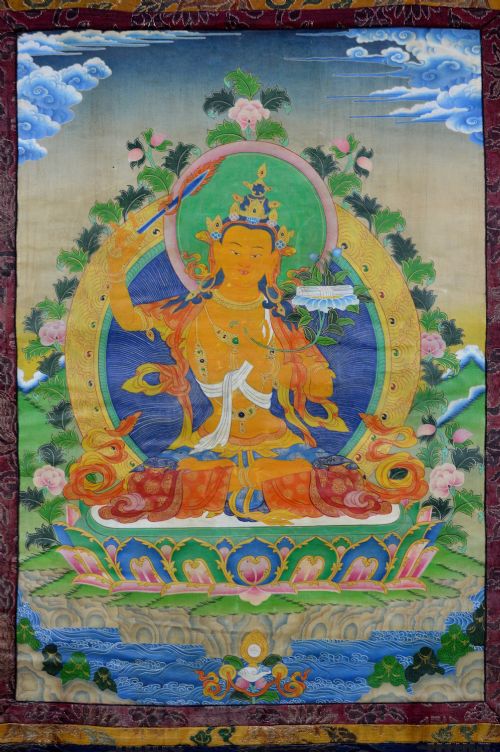
Regional diversity shapes the category significantly, with items originating from Italy, Russia, Germany, and Buddhist traditions in Asia. Buyers might select a folk art carving from Central Europe or an intricate bronze Buddha, each serving distinct ritual or decorative functions within its original context.
Materials and Construction Techniques
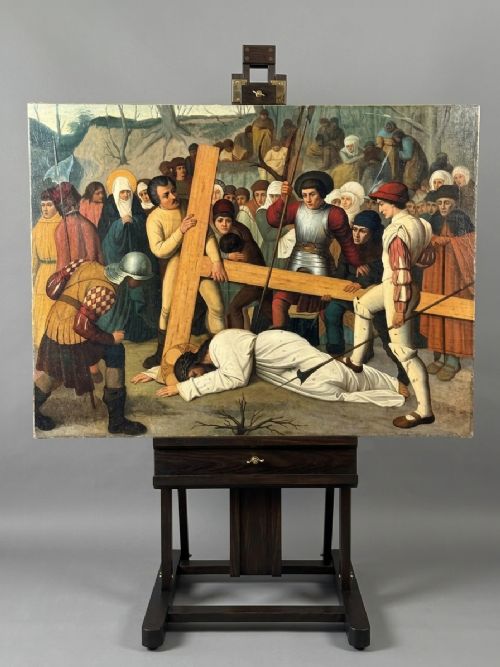
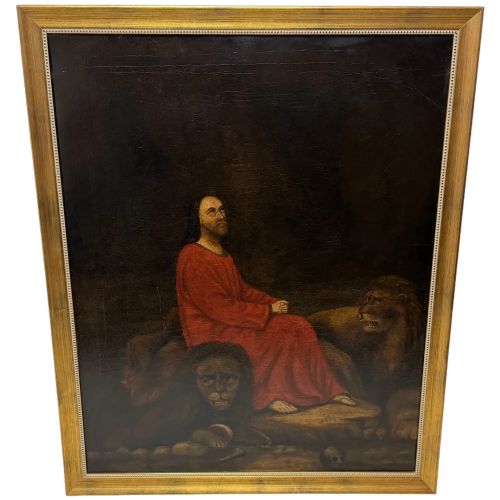
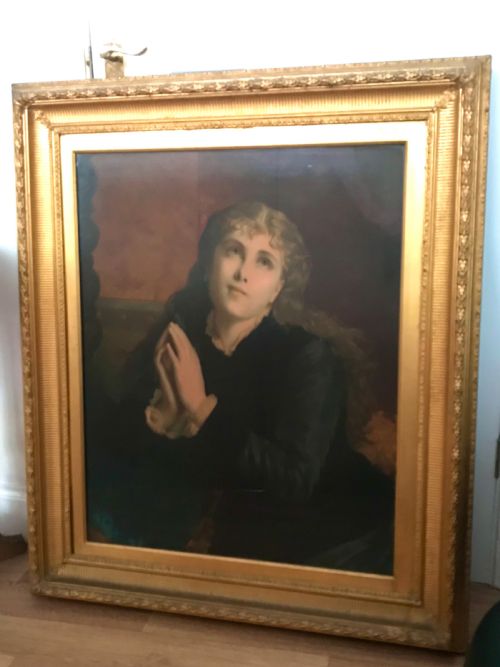
Canvas and wood form the primary structural foundations for these devotional works, utilised alongside oil paints, tempera, and gold leaf. Painters applied pigments to stretched canvas or wooden panels, frequently building up rich surfaces that mimic earlier Renaissance styles.
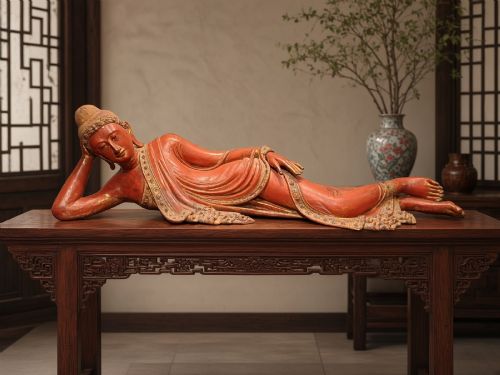
Sculptural pieces rely heavily on carved wood, gesso, and cast bronze, often enhanced with polychrome paint or delicate gilding. Artisans shaped these materials using traditional hand-carving and casting methods, creating high-relief ritual figures and processional sculptures designed for veneration.
Materials span oil on canvas, carved wood, patinated bronze, glass, and gold leaf across multiple European and Asian traditions.
Distinctions in Quality
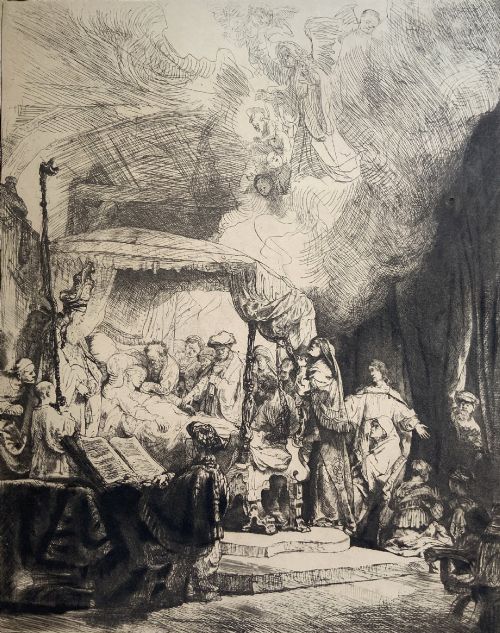
Quality within this category depends largely on the technical execution of the brushwork or the precision of the carving. Fine oil paintings demonstrate subtle handling of light and shadow, particularly in works associated with established schools or followers of major historical masters.
George Minne·Ernst Stierhof·Amand-Durand
The 19th Century Religious Art Glossary
- Icon
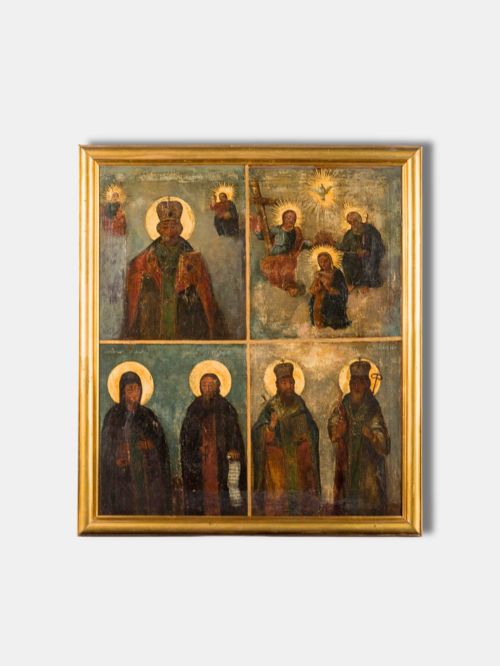
- A devotional painting on wood representing Christ, the Virgin Mary, or a saint, traditionally associated with Eastern Christian churches. These works employ tempera and gold leaf upon a prepared panel.
- Santos
- A carved wooden figure representing a saint or holy person, originating from Spanish or Italian traditions. They often served a central role in religious processions and domestic prayer.
- Tempera
- A permanent, fast-drying painting medium consisting of coloured pigment mixed with a water-binder, frequently egg yolk. It provides a luminous, matte surface seen on early icons.
- Polychrome
- Decorated in a variety of colours, particularly applied to wood or stone sculptures. This technique brings realism and devotional warmth to carved figures.
- Ex Voto
- A votive offering presented to a saint or divinity in fulfilment of a vow, often left at a shrine or carried as a token of gratitude.
- Gesso
- A paint mixture consisting of a binder mixed with chalk, gypsum, or pigment, used to prepare a surface for painting or gilding.
19th Century Religious Art: Frequently Asked Questions
How are wooden santos figures identified?
Wooden santos figures are identified by their carved construction, regional costume details, and surface treatments like polychrome paint and gesso. Many retain structural elements intended for processional use or domestic shrines.
Examination of the tool marks and the ageing of the wood helps distinguish nineteenth-century examples from later reproductions.
What defines a Russian Orthodox icon?
Russian orthodox icons are characterised by their strict iconographic traditions, typically painted in tempera with gold leaf accents on a wooden panel. They depict sacred subjects such as Christ, the Passion, or specific feast days.
These panels often display intricate metal rizzas or covers, though many remain focused on the layered paint surface beneath.
Why are so many paintings after Raphael?
Nineteenth-century artists frequently copied works by Renaissance masters like Raphael as part of their training or to satisfy a strong market demand for devotional imagery. These interpretations allowed middle-class homes to display versions of famous altarpieces.
Such paintings are judged on the skill of the execution rather than direct authorship by the primary master.
How do you display religious art at home?
Religious art integrates into modern interiors when placed with consideration for lighting and framing, allowing oil paintings and icons to serve as focal points. Placing carved figures on designated shelves or within cabinets protects delicate polychrome surfaces from damage.
Grouping smaller devotional objects together creates a dedicated display area that respects the original function of the pieces.