


19th Century Pottery Dogs
These 19th century pottery dogs bring domestic character to a mantelpiece through hand-painted ceramic figures of spaniels, pugs, and greyhounds.
19th Century Pottery Dogs
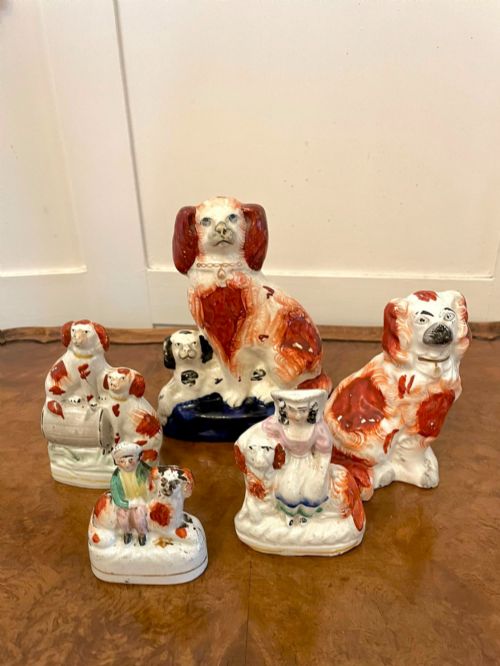
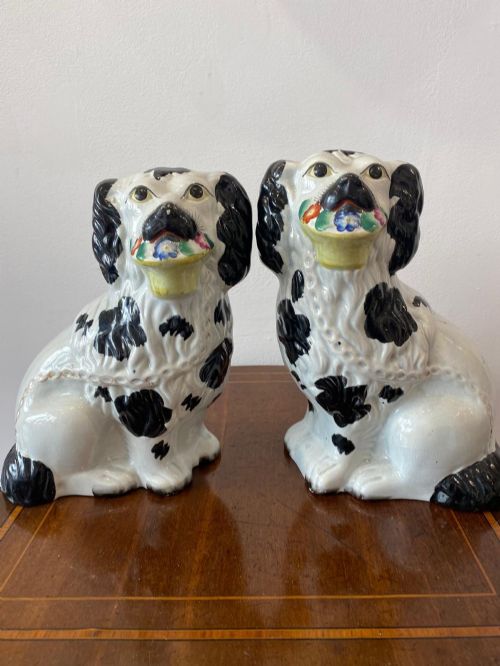
When you search for 19th century pottery dogs, you encounter decorative ceramic figures modelled on popular canine breeds from the Victorian and Georgian eras. These ornaments served as domestic mantle decorations across British households during the nineteenth century.
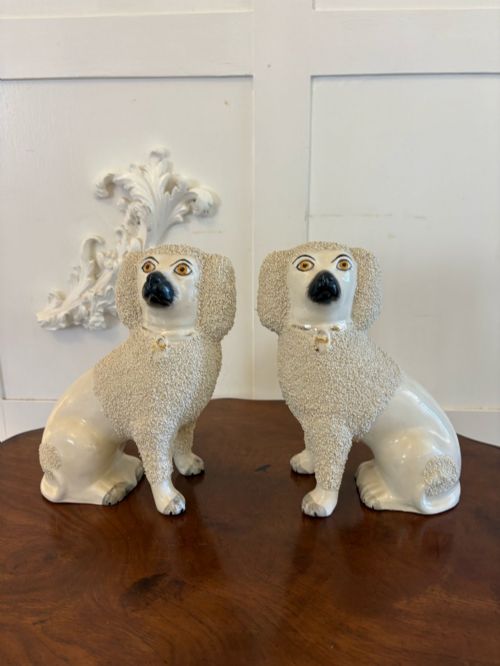
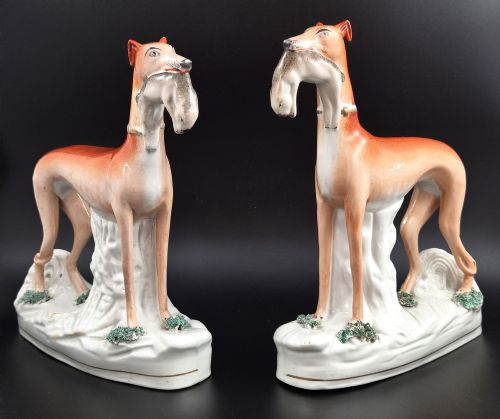
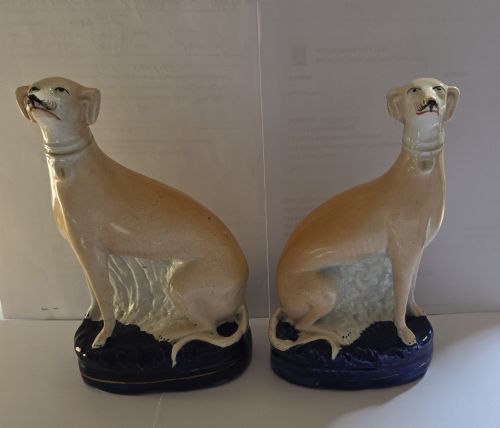
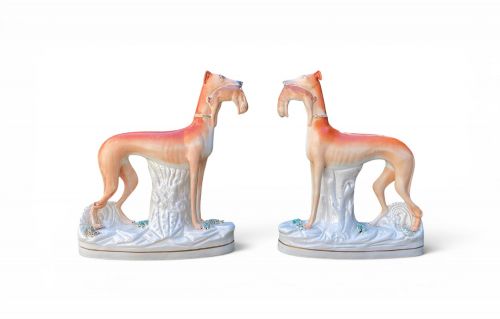
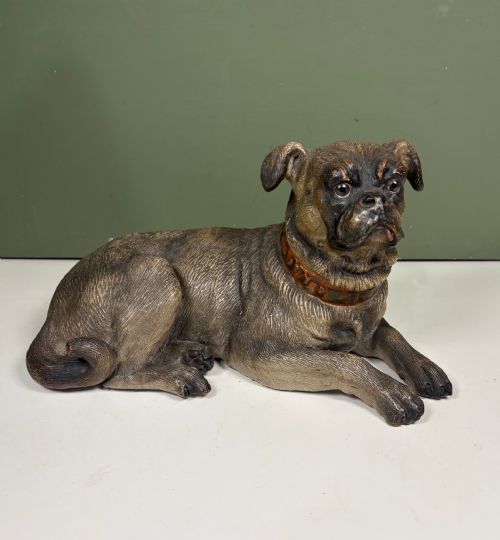
The most common versions met on this page are Staffordshire earthenware figures, often formed as seated pairs of spaniels, greyhounds, or pugs. Artisans produced these animals in various colourways, including white with gilt, black and white, or rich red and white coats.
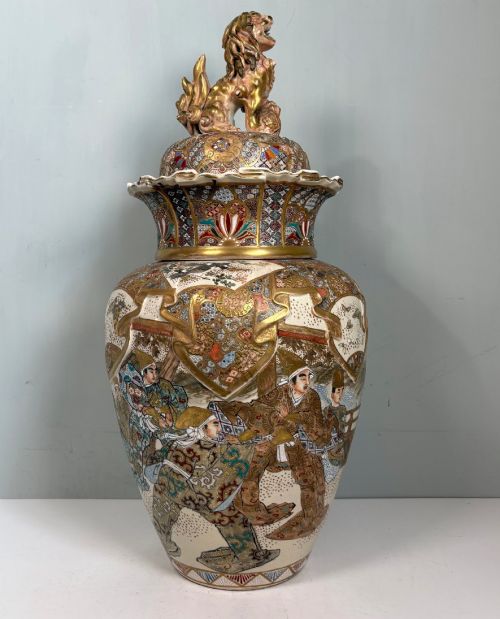
Alongside British Staffordshire figures, the selection occasionally encompasses Chinese pottery models such as Shiwan Buddhistic lion dogs and Sancai glazed temple figures. These diverse ceramic dogs share a common purpose as sculptural interior ornaments.
How they were made
Potters shaped these figures using earthenware, ceramic, and stoneware bodies, frequently formed in moulds to achieve consistent animal silhouettes. Artisans then applied lead glaze, enamel colours, and occasional gold leaf or gilt highlights to decorate the fired clay.
Many Staffordshire pieces received hand-painted details to accentuate the facial expressions, collars, and coats of spaniels and greyhounds. Certain models incorporated functional elements like inkwells or quill holders into the ceramic base.
Certain Victorian dogs double as inkwells or hold quill pens, proving that nineteenth-century mantel ornaments occasionally went to work.
What varies in quality
Matched pairs command greater attention from collectors than solitary figures, particularly when both dogs retain their original colour saturation and glaze condition. The presence of secondary elements like cushions, hares, or functional inkwells also elevates the character of the object.
Thomas Parr·Wooley
The 19th Century Pottery Dogs Glossary
- Earthenware
- A porous pottery body fired at lower temperatures, commonly used for British domestic figures. It requires a protective glaze to hold liquids and achieve a smooth surface.
- Lead glaze
- A glossy coating containing lead oxide applied to pottery before firing. It creates a lustrous finish that protects the underlying ceramic body and enamel colours.
- Enamel
- Opaque glass-like colour applied over the fired glaze and refired to fuse it to the surface. It provides the bright reds, blacks, and golds seen on Staffordshire coats.
- Gilt
- A thin layer of gold applied to the ceramic highlights, such as collars and chains. It adds decorative warmth to the finished ornament.
- Shiwan ware
- Chinese pottery produced in Guangdong province, known for expressive modelled figures and striking glazes. Pieces include Buddhistic lion dogs dating to the late nineteenth century.
19th Century Pottery Dogs: Frequently Asked Questions
How do I identify Staffordshire dogs?
Staffordshire dogs typically feature earthenware bodies with hand-painted enamel details and glazed finishes depicting spaniels or greyhounds. They usually appear as symmetrical pairs designed for mantle display.
Look for characteristics such as hollow bases, gilt highlights, and painted chain collars that indicate nineteenth-century British production.
Where were pottery dogs displayed?
Owners traditionally placed these ceramic figures in pairs upon mantelpieces, flanking the central clock or ornament. This symmetrical arrangement suited Victorian interior decoration.
Some specialised pieces, such as Dalmatian inkwells or quill holders, served functional roles on writing desks.
Are these figures always made in pairs?
Many nineteenth-century pottery dogs were manufactured and sold as left and right-facing pairs to balance a mantelpiece. However, individual dogs and larger collections also appear.
Matched pairs generally hold higher appeal for collectors seeking complete decorative sets.
What dog breeds are commonly represented?
King Charles spaniels and pugs are among the most frequently encountered breeds in Staffordshire pottery. Greyhounds, dalmatians, and poodles also feature regularly.
Asian equivalents include Buddhistic lion dogs, also known as Foo dogs.