





19th Century Porcelain Candelabra
These 19th century porcelain candelabra bring elaborate Continental grandeur to a mantelpiece, combining soft-paste bodies with gleaming cast metal mounts.
19th Century Porcelain Candelabra
When you search for 19th century porcelain candelabra, you encounter multi-branch lighting fixtures alongside clock garnitures that pair central timepieces with matching candle holders. The pieces on this page originate predominantly from European workshops, spanning German factories and French ateliers during the Victorian era and the later decades of the eighteen-hundreds.
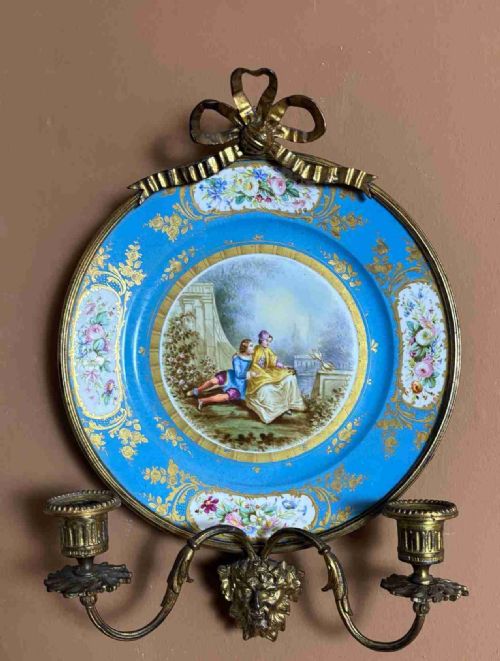
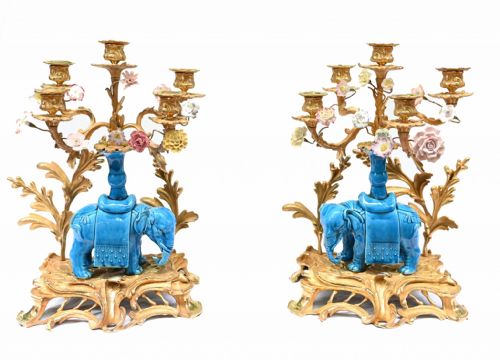
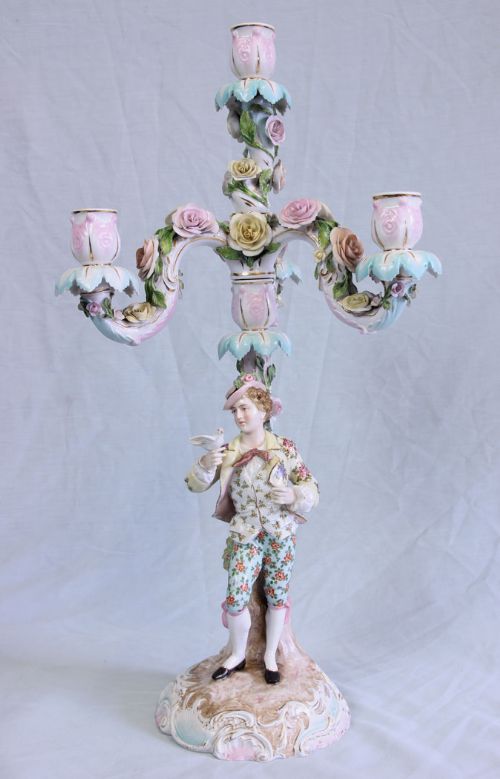
You meet pairs featuring figural groups, avian subjects, and elephant motifs, often styled after the French Rococo revival or the distinctive aesthetic of Sevres. These items served a decorative function in nineteenth-century drawing rooms, providing both illumination and visual symmetry on mantelpieces.
How they were made
Maker's workshops combined hard-paste porcelain elements with cast ormolu and gilt bronze mounts, securing the porcelain components with internal threaded rods and nuts. Ormolu mounts were meticulously cast, chased, and gilded to frame the fragile ceramic bodies.
Surface decoration frequently incorporated hand-painted enamels, applied floral details, and gold leaf highlights. Firing porcelain at high temperatures created durable bodies capable of supporting heavy metal branch attachments.
19th Century Porcelain Candelabra Retail Price Guide 2026
Typical asking prices for 19th century porcelain candelabra among the pieces listed under this phrase on Sellingantiques today, from the lower quarter to the upper quarter. They describe what is for sale here now, not the wider market.
The site's listings for 19th century porcelain candelabra include French Sevres style works, German factory productions, and pieces incorporating Imari ceramics.
What varies in quality
The sophistication of the modeling separates standard factory production from superior artistic output, particularly in figural pieces where facial expressions and hand-painted details reveal the artisan's skill. Finer examples display crisp chasing on the ormolu mounts and careful integration between the metalwork and the ceramic body.
The preservation of delicate applied elements, such as porcelain leaves and petals, influences the integrity of the piece. Superior specimens retain their original gilding and show minimal restoration across the branching arms.
Meissen·Sitzendorf·Samson
The 19th Century Porcelain Candelabra Glossary
- Ormolu
- Gilded bronze, where a layer of gold amalgam is applied to a cast brass or bronze base through heat processing. This technique produced a rich, warm finish on nineteenth-century mounts.
- Garniture
- A set of matching decorative objects, typically comprising a central mantel clock flanked by two candelabra or vases. These sets were designed to create a balanced display on a fireplace mantel.
- Rococo Revival
- A nineteenth-century design style emulating the asymmetry, scrolling curves, and naturalistic motifs of the eighteenth-century French movement. It heavily influenced porcelain and metal ornamentation.
- Hard-paste porcelain
- A dense, durable ceramic composed of kaolin and petuntse, fired at high temperatures. It formed the robust foundation for many European candelabra and figural groups.
- Imari
- A style of Japanese export porcelain featuring underglaze blue and overglaze iron red and gold, which inspired European makers to produce their own versions.
19th Century Porcelain Candelabra: Frequently Asked Questions
How do I clean them?
Dust these candelabra gently using a soft, dry brush to protect the delicate applied porcelain flowers and painted surfaces.
Avoid liquid cleaners and harsh chemicals, as they can damage or strip the delicate gold leaf and ormolu finishes.
Are they safe to use?
These candelabra are primarily decorative antique items and should be used with caution if you intend to burn actual candles. Wax drips can permanently stain or damage the porous porcelain and intricate metal mounts.
If you light the candles, monitor them closely to ensure the heat does not weaken the historical structural adhesives or mounts.
How do I spot Meissen pieces?
Meissen pieces often feature the distinct blue crossed swords mark painted under the glaze on the base of the porcelain. The modeling exhibits high technical skill, particularly in figural subjects and floral encrustations.
German factories during this period maintained strict quality standards, resulting in crisp detailing on both the ceramic bodies and the accompanying metal mounts.
What is a clock garniture?
A clock garniture consists of a central mantel clock accompanied by two matching side pieces, such as candelabra or urns. They were designed to create a symmetrical display across a fireplace mantel or sideboard.
These matching sets unified the materials and decorative themes of a room, combining porcelain bodies with ormolu mounts across all components.