


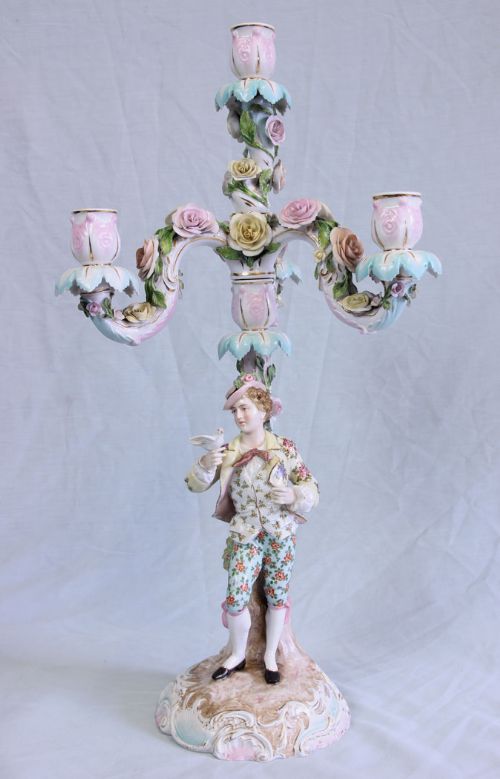


Porcelain Figurine Candlestick
Porcelain figurine candlesticks combine candle holders with sculpted human or animal figures, offering eighteenth-century table charm and nineteenth-century display presence for collectors.
Porcelain Figurine Candlestick
A porcelain figurine candlestick fuses functional lighting with sculptural pottery, often depicting musicians, dancers, or gardeners modelled in high relief. When you search for porcelain figurine candlestick, you meet eighteenth-century pairs from factories such as Derby and Bow alongside later nineteenth-century German and English interpretations.
Most examples survive as matched pairs rather than single items, designed to flank a mirror or centrepiece on a dining table or mantelpiece. The forms range from simple chambersticks with a single figure to elaborate candelabras featuring multiple sconces nestled within floral backdrops.
The aesthetic leans heavily into rococo revivals, utilising scroll-moulded bases, applied floral decoration, and foliage known as bocage. These pieces reflect historical tastes for pastoral romance, exotic dancers, and theatrical subjects translated into ceramic art.
What varies in quality
The crispness of the modelling sets the standard for these figures, separating sharp facial expressions and detailed hand-painting from softer, worn mouldings. Superior pieces retain intricate applied elements like bocage leaves and flower petals with minimal loss or later restoration.
The richness of the palette and the precision of the gilding dictate the visual impact of the piece. High-grade examples display careful enamel work that adheres strictly to the contours of the moulded design without messy overlapping or fading.
Porcelain Figurine Candlestick Retail Price Guide 2026
Typical asking prices for porcelain figurine candlestick among the pieces listed under this phrase on Sellingantiques today, from the lower quarter to the upper quarter. They describe what is for sale here now, not the wider market.
Foxes wearing hunting coats trade their usual quarry for porcelain duties, holding aloft sconces with unwavering canine dedication.
Derby·Minton·Sitzendorf·Bow·Royal Worcester·James Hadley·Royal Bayreuth
The Porcelain Figurine Candlestick Glossary
- Bocage
- An open background of modelled leaves and branches behind a figure. It is common in eighteenth-century English porcelain figures and fragile to handle.
- Soft-paste porcelain
- An artificial ceramic body fired at lower temperatures than hard paste. It has a warm, milky glaze that absorbs enamels effectively.
- Chamberstick
- A short candlestick fitted with a wide drip pan and a loop handle. It was used for carrying a light through a house at night.
- Enamel
- Opaque vitreous colours painted onto glazed porcelain before a secondary firing. They provide the vibrant surface hues seen on figurines.
- Sconce
- The socket at the top of a candlestick that holds the candle in place. In these pieces, it is frequently integrated into the surrounding foliage.
Porcelain Figurine Candlestick: Frequently Asked Questions
How do I clean porcelain candlesticks?
Use a soft dry brush to remove dust from the intricate folds and applied floral bocage without applying pressure to fragile protrusions.
Avoid submerging pieces with old gilding or cold-painted highlights in water to prevent surface damage.
Were these candlesticks meant for daily use?
Many eighteenth-century examples were primarily decorative or used for light illumination during formal dining.
Over time, candle heat and wax drips caused thermal stress, making surviving pairs uncommon.
How can I tell eighteenth-century pieces apart?
Early English pieces often feature unglazed patch marks underneath from kiln furniture alongside softer paste bodies.
Later nineteenth-century reproductions tend to have heavier bases and shinier glazes without the characteristic shrinkage cracks.
What is a patch mark period?
This refers to unglazed spots on the underside of Derby porcelain caused by small fireclay supports used in the kiln.
It serves as a helpful indicator for dating early production wares.